Aconite
Aconite refers to members of two distinct genera of perennial herbs within the buttercup family (Ranunculaceae):
What is aconite?
Aconite refers to members of two distinct genera of perennial herbs within the buttercup family (Ranunculaceae):
- Aconitum: Commonly known as monkshood, this genus includes over 200 species of showy, often purple or blue, hood-shaped flowers. While some are grown as ornamentals, all species are extremely poisonous, containing the potent toxin aconitine. Historically, the roots of Aconitum napellus were used in minute amounts for medicinal purposes, such as treating fever or neuralgia, though they were also used as a poison.123
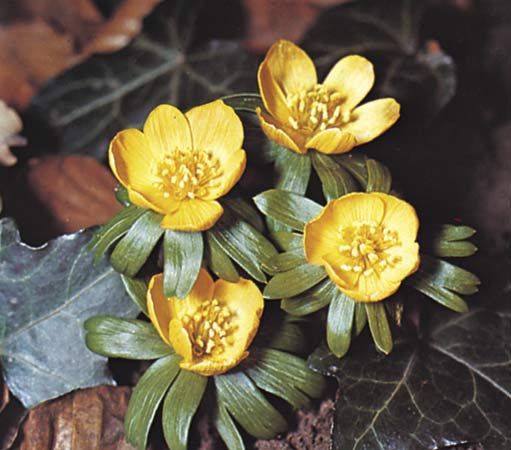
- Eranthis: Known as winter aconite, these are spring-flowering ornamental plants.13
It is important to note that while some species have been used in traditional medicine, the extreme toxicity of Aconitum makes it dangerous, and it should never be handled or ingested without expert medical supervision.
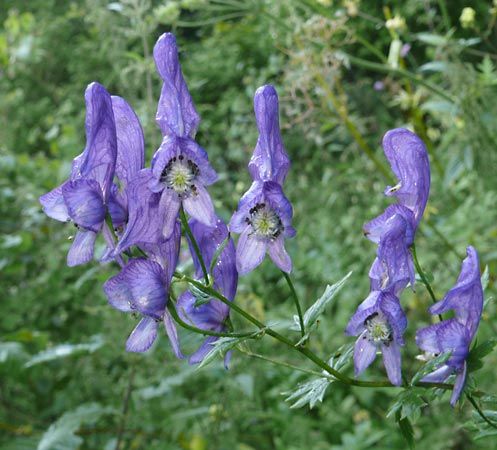
What is the chemical compound aconitine?
Aconitine is a highly potent alkaloid found in plants of the genus Aconitum, commonly known as monkshood. It serves as the primary toxic principle in these plants, which are recognized as extremely poisonous.15
Chemically, aconitine is a complex compound that can be hydrolyzed to produce aconine, which is a colorless alkaloid with the chemical formula C25H41NO9C_{25}H_{41}NO_9.6
When ingested, aconitine causes severe physiological reactions, including:
- Tingling and burning sensations in the tongue, throat, and skin.5
- Restlessness and respiratory distress.5
- Muscular uncoordination, vomiting, diarrhea, and convulsions.5
- Potential death resulting from heart failure.5
Due to its extreme toxicity, any exposure to plants containing aconitine is considered dangerous.5
Why is monkshood also called wolfsbane?
The name “wolfsbane” for monkshood (genus Aconitum) originates from the plant’s historical use as a poison to kill wolves.78
While the term “monkshood” refers to the plant’s distinctive hood-shaped flowers, the name “wolfsbane” reflects its reputation as a lethal substance. Historically, the roots of certain species, such as Aconitum napellus and A. lycoctonum, were used to create toxic baits to eliminate wolves, a practice that led to the plant being associated with the destruction of these predators.8273
Because all species of Aconitum contain the highly potent toxin aconitine, the plant has been feared and utilized throughout history for its deadly properties, ranging from its use in ancient times to execute criminals to its application in traditional medicine in extremely small, controlled doses.2
What are other examples of poisonous plants in the buttercup family?
The Ranunculaceae family, commonly known as the buttercup family, is characterized by the presence of various alkaloids that can be highly toxic to both humans and livestock. Beyond the well-known monkshood, several other genera within this family are recognized for their poisonous properties:9
- Baneberry (genus Actaea): As the name suggests, these plants are considered poisonous.10
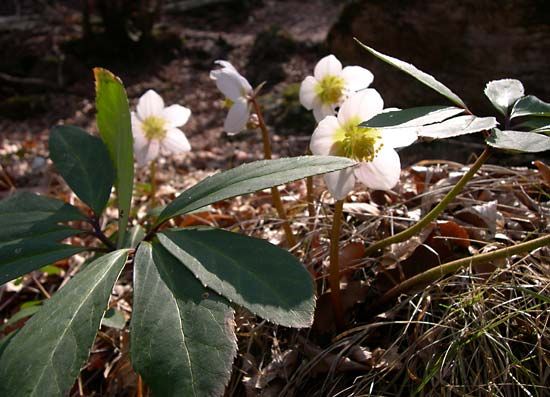
- Hellebore (genus Helleborus): These perennial herbs, including the Christmas rose, are known to be toxic.1011
- Larkspur (genus Delphinium): These plants contain toxic alkaloids that pose risks to animals and humans.109
- Buttercup (genus Ranunculus): While popular as wildflowers, many species in this genus contain compounds that can be irritating or toxic if ingested.109
- Marsh marigold (Caltha palustris): This plant is also noted for its toxicity.109
It is important to exercise caution with plants in this family, as their chemical defenses are a common evolutionary trait across the order Ranunculales.9
Sources
- aconite — Encyclopædia Britannica
- monkshood — Merriam-Webster
- monkshood — Encyclopædia Britannica
- aconite — Merriam-Webster
- poison - Plant poisons (phytotoxins) — Encyclopædia Britannica
- aconine — Merriam-Webster
- wolfsbane — Merriam-Webster
- foxbane — Merriam-Webster
- list of plants in the family Ranunculaceae — Encyclopædia Britannica
- Ranunculaceae — Encyclopædia Britannica
- Ranunculales — Encyclopædia Britannica
- hellebore — Encyclopædia Britannica
Published on · 3 min read