Ranunculaceae
Ranunculaceae, commonly known as the buttercup family, is a diverse group of flowering plants within the order Ranunculales. It comprises approximately 2,252…

What is Ranunculaceae?
Ranunculaceae, commonly known as the buttercup family, is a diverse group of flowering plants within the order Ranunculales. It comprises approximately 2,252 species across 62 genera, consisting primarily of herbaceous plants that are widely distributed throughout temperate and subtropical regions.12
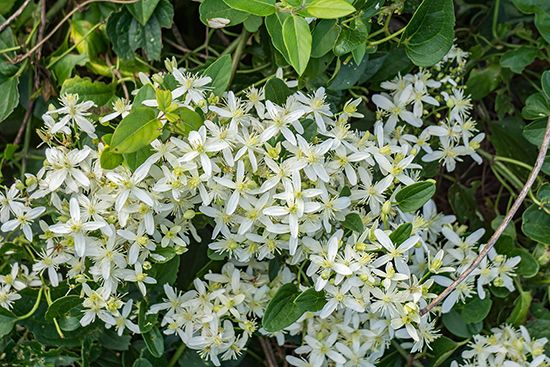
These plants are characterized by leaves that are typically arranged alternately along the stem. Their flowers are often showy, featuring numerous stamens and pistils that are separate from one another. While some species are popular wildflowers, many are cultivated as garden ornamentals, including well-known varieties such as anemone, buttercup, larkspur, clematis, and columbine.12
What makes buttercups unique among other flowers?
Buttercups (genus Ranunculus) are distinguished by several specific botanical features that set them apart from many other flowering plants.
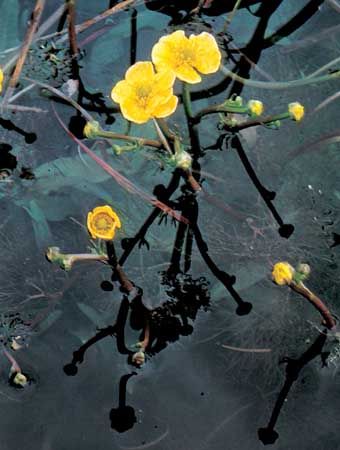
A primary characteristic is their floral structure: buttercups possess five green sepals and five to many glossy yellow or white petals. These flowers exhibit radial symmetry, meaning they are regular or actinomorphic; any line drawn through the center of the flower divides it into two identical halves.41
Furthermore, buttercups are notable for their reproductive anatomy. Unlike many other plants where floral parts may be fused, buttercups feature numerous stamens and pistils that are always separate from one another. While they are members of the Ranunculaceae family—which also includes plants with more complex, irregular floral structures like the spurred petals found in larkspur and columbine—the buttercup remains a classic example of a simple, regular flower.451
Are any plants in the Ranunculaceae family poisonous?
Yes, many plants within the Ranunculaceae family are poisonous. Members of this family generally contain a variety of alkaloids that can be highly toxic to both humans and livestock.3
Notable examples of toxic plants in this family include:
- Monkshood (Aconitum): Also known as wolfsbane, this genus contains some of the deadliest poisons known, such as Aconitum ferox. Ingestion can lead to severe symptoms, including respiratory distress, muscular uncoordination, and death.36
- Larkspur (Delphinium): These plants contain alkaloids like delphinine and are a significant cause of death in grazing livestock. Ingestion causes symptoms such as nausea, vomiting, and respiratory distress.6
- Dumbcane (Dieffenbachia): While widely cultivated, this plant contains protoanemonine and calcium oxalate, which cause burning and swelling of the mouth and throat, as well as difficulty breathing.6
Because many species in the Ranunculales order produce these noxious chemical constituents, it is important to exercise caution and avoid ingesting plants from this family unless they are specifically known to be safe.
How do botanists classify flowering plants into families?
Botanists classify flowering plants into families primarily by determining their evolutionary relationships, or phylogeny, using the Angiosperm Phylogeny Group IV (APG IV) system. This modern approach represents a significant shift from older classification methods, such as the Cronquist system, which relied heavily on observable physical characteristics.89
Key methods used in contemporary plant taxonomy include:
- Molecular Analysis: The primary tool for modern classification is the study of DNA sequences from plant cell nuclei and chloroplasts. By measuring the degree of molecular similarity between different plants, botanists can determine their evolutionary history and group them into monophyletic families—lineages where all members share a common ancestor.109
- Morphological Studies: While molecular data is central, botanists continue to use morphology—the study of physical form and structure—to identify and describe taxa. Advances in transmission electron microscopy and scanning electron microscopy have refined our understanding of these physical traits.10
- Chemotaxonomy: This field examines the biochemistry of a plant’s natural metabolic products. Differences in chemical compounds can provide objective, quantitative evidence to support or supplement other taxonomic data.10
- Numerical Taxonomy: Also known as taximetrics, this method uses computer techniques to determine relationships between species quantitatively, often depicting these connections graphically.10
Botanists organize these findings into a hierarchy where families are typically identified by the suffix -aceae and orders by -ales.8
Sources
- Ranunculaceae — Encyclopædia Britannica
- Ranunculaceae — Merriam-Webster
- list of plants in the family Ranunculaceae — Encyclopædia Britannica
- buttercup — Encyclopædia Britannica
- angiosperm - The corolla — Encyclopædia Britannica
- Ranunculales — Encyclopædia Britannica
- poison - Plant poisons (phytotoxins) — Encyclopædia Britannica
- angiosperm — Encyclopædia Britannica
- Asparagales - Organization and taxonomy — Encyclopædia Britannica
- botany - Taxonomic aspects — Encyclopædia Britannica
- taxonomy - Ranks — Encyclopædia Britannica
- angiosperm - Eudicots — Encyclopædia Britannica
- angiosperm - Annotated classification — Encyclopædia Britannica
Published on · 3 min read