Baneberry
The baneberry belongs to the genus Actaea, which comprises approximately eight species of perennial herbaceous plants within the buttercup family…
What are the defining characteristics of the baneberry plant genus?
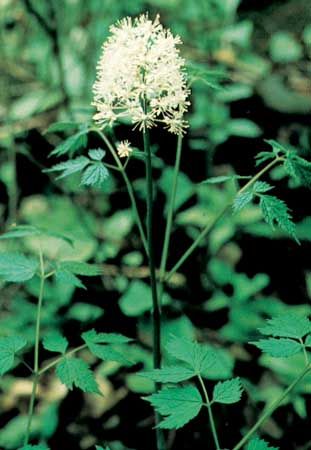
The baneberry belongs to the genus Actaea, which comprises approximately eight species of perennial herbaceous plants within the buttercup family (Ranunculaceae)1. These plants are native to woodlands in the north temperate zone.12
Key characteristics of the genus include:
- Morphology: They typically feature ternately compound leaves and produce small white flowers arranged in terminal racemes.3
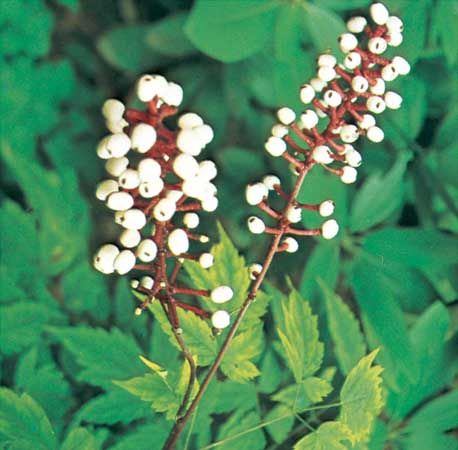
- Fruit: The plants are distinguished by their berries, which can be white, red, or purplish black depending on the species.23
- Toxicity: A defining feature of the genus is that the berries and roots contain acrid, irritant resins. These substances possess a cathartic action and are known to induce vomiting if ingested, rendering the plants poisonous.21
While some species, such as the cohosh (A. spicata), have historically been used to produce dyes, these plants are most commonly cultivated today as subjects for shady wild gardens.2
What is the scientific name for the baneberry plant genus?
The scientific name for the baneberry plant genus is Actaea.1
What role do baneberry plants play in their native ecosystems?
Baneberry plants (Actaea) are native to woodlands within the north temperate zone, where they function as part of the understory vegetation in these forest ecosystems.1
While the provided information highlights their botanical classification within the buttercup family (Ranunculaceae) and their chemical properties—specifically the presence of irritant resins that act as a deterrent to ingestion—the specific ecological interactions, such as their role in supporting local wildlife or their relationship with pollinators, are not detailed in the current knowledge base.1
What are the distinctive features of baneberry fruits and flowers?
Baneberry plants (Actaea) are perennial herbs in the buttercup family (Ranunculaceae) characterized by their distinct fruit.13
Fruit Characteristics
The most notable feature of the genus is its berries, which contain irritant resins that are poisonous and produce a cathartic effect if ingested. The appearance of these fruits varies by species:13
- White baneberry (A. pachypoda): Bears white berries.1
- Cohosh (A. spicata): Produces purplish-black berries.1
- Red baneberry (A. rubra): Features red or ivory-colored fruits.1
While the berries are a defining trait, the plants are also valued for their suitability in shady wild gardens. Information regarding the specific morphology of their flowers is not detailed in the current search results.1
Sources
- baneberry — Encyclopædia Britannica
- red baneberry — Merriam-Webster
- baneberry — Merriam-Webster
Published on · 2 min read