Acorales
The order Acorales, which consists of the single genus Acorus, exhibits a broad geographic distribution across the Northern Hemisphere.
How are plants in the Acorales order distributed geographically?
The order Acorales, which consists of the single genus Acorus, exhibits a broad geographic distribution across the Northern Hemisphere.
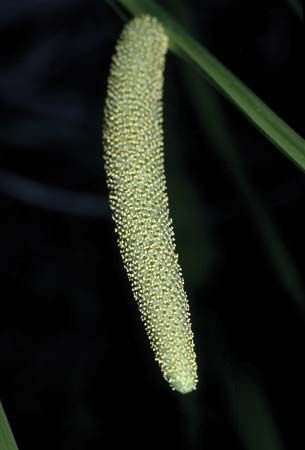
The species Acorus calamus, commonly known as sweet flag, is found in wetlands throughout North America and across a range extending from India to Indonesia. Other species within the order are distributed across temperate regions of Asia and Europe, where they typically inhabit pond margins or the banks of fast-moving streams.1
These plants are recognized as the most basal lineage among the monocotyledons and are frequently cultivated as ornamentals in gardens due to their iris-like appearance.1
Which plant families are included in the Acorales order?
The Acorales order is a highly specialized group of flowering plants that includes only one family: Acoraceae.1
This family consists of a single genus, Acorus, which contains between two and four species. While these plants were historically classified within the family Araceae due to the appearance of their flowers, modern botanical research—supported by DNA sequencing—has confirmed that they represent a distinct, basal lineage of monocotyledons. This unique evolutionary position, combined with specific morphological differences such as leaf structure and fruit type, justifies their placement in their own separate family and order.1
How have genetic studies contributed to our understanding of the Acorales order?
Genetic studies have been instrumental in clarifying the evolutionary position of the Acorales order. While the genus Acorus was historically grouped with the family Araceae due to superficial similarities in flower structure, investigations employing DNA sequencing techniques have fundamentally reshaped this classification.1
These molecular analyses provided the evidence necessary to distinguish Acorus from the Araceae, confirming that it represents a distinct, basal lineage. Consequently, botanists now recognize Acorales as the most basal group among all monocotyledons. This genetic data, when combined with observed morphological differences—such as the presence of ethereal oils instead of raphides and unique leaf and fruit structures—has solidified the consensus that placing these plants in their own separate family and order is scientifically justified.1
How ancient is the Acorales lineage, and what does this tell us about plant evolution?
The Acorales order represents the most basal lineage among all monocotyledons, meaning it diverged from the common ancestor of all other monocots earlier than any other existing group in this category.1
This evolutionary position is significant because it provides a “window” into the early development of monocots. By studying the unique traits of the genus Acorus—such as its unifacial leaves, dry fruits, and the presence of ethereal oils—botanists can better understand the ancestral characteristics that existed before the diversification of the rest of the monocot lineage. The fact that Acorus was long misclassified within the Araceae highlights the importance of using both morphological analysis and DNA sequencing to accurately map the evolutionary history of plants. Its status as a basal group confirms that the Acorales order is a critical link in the broader history of flowering plant evolution.1
Sources
- Acorales — Encyclopædia Britannica
- Acorus — Merriam-Webster
Published on · 2 min read