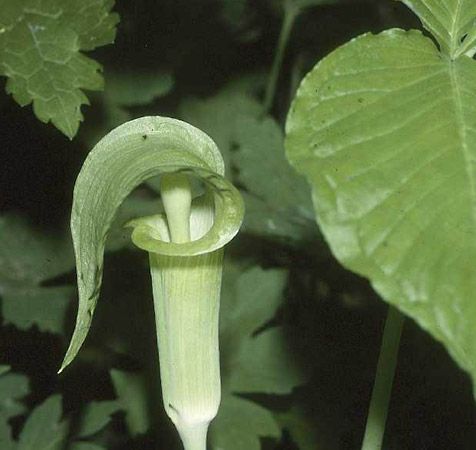
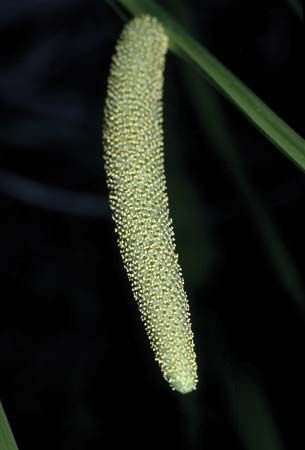
Alismatales
Plants in the order Alismatales are broadly distributed across temperate and tropical regions on every continent except Antarctica. While the order includes…
What types of habitats do Alismatales plants typically inhabit?
Plants in the order Alismatales are broadly distributed across temperate and tropical regions on every continent except Antarctica. While the order includes a diverse range of species, many are characterized by their aquatic nature.1
These plants typically inhabit the following environments:
- Freshwater Habitats: Many species grow in marshes, swamps, and shallow water.12
- Shorelines and Banks: Members of the order are frequently found on muddy banks or wet sand, where they help stabilize shorelines.12
- Marine Environments: Certain species are adapted to marine habitats.1
These herbaceous plants can grow fully submerged, partially exposed to the air, or floating on the water’s surface. By forming complex communities with other emergent vegetation, they play a vital role in ecological succession, often contributing to the transition of aquatic areas into land-based environments.12

How do the reproductive structures of Alismatales differ from other flowering plants?
The reproductive structures of plants in the order Alismatales are distinguished primarily by their unique method of endosperm development, which is typically helobial—a combination of cellular and nuclear development processes.4
Beyond this, their reproductive strategies are highly adapted to aquatic environments:
- Pollination Mechanisms: While some aerial flowers are pollinated by insects or wind, many aquatic species utilize water as a primary transfer vector. In the family Hydrocharitaceae, this involves elaborate processes where staminate flowers are released to float on the water’s surface, eventually contacting a meniscus formed by a carpellate flower to transfer pollen.4
- Marine Adaptations: Certain marine species are dioecious and permanently submersed. To ensure successful fertilization, their pollen adheres in chains, forming long, thread-like structures that are more likely to contact a stigma while drifting in water currents.4
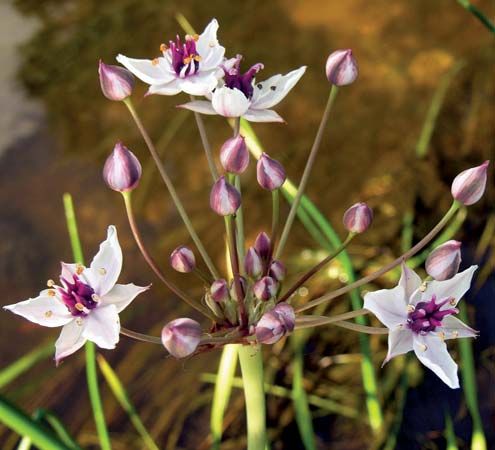
- Floral Morphology: Many species produce flowers in whorls or umbels. While some families like Alismataceae feature showy, bisexual flowers with distinct perianth structures, others have evolved to be inconspicuous or imperfect (unisexual) to suit their submersed or floating lifestyles.42
What is the economic and ecological importance of Alismatales plants?
The order Alismatales holds both economic and ecological significance, though its modern nutritional impact is largely limited to specific crops like taro (Colocasia esculenta).6
Economic Importance
Historically, the carbohydrate-rich rhizomes and tubers of various species, such as the arrowhead and flowering rush, served as vital food sources for many societies. In some tropical regions, species like Limnocharis flava are consumed as vegetables or utilized as fodder and fertilizer.61
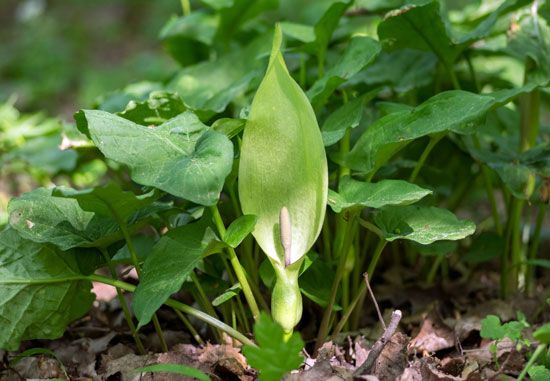
The order is highly valued in the ornamental industry. Many Araceae members, including peace lily, Monstera, and Philodendron, are popular houseplants, while various aquatic species are staples in landscaped water gardens and aquariums.62
Ecological Importance
Ecologically, these plants are essential for maintaining aquatic health. They provide critical habitats for fish and help stabilize shorelines. By forming complex communities, they facilitate vegetational succession, gradually transforming aquatic areas into land-based environments through the accumulation of plant matter and silt. Conversely, some species are managed as weeds when they obstruct irrigation or navigation.2
What is the evolutionary history and relationships of Alismatales within the monocot group?
The order Alismatales is a significant lineage within the monocotyledon (monocot) group, a large clade of flowering plants characterized by having a single seed leaf in their seedlings.2
Evolutionary Position
Under the APG IV system, which utilizes molecular data to organize plant phylogeny, the monocots are recognized as a monophyletic group that evolved from within a more-basal group of primitive dicotyledonous angiosperms. Within the monocot hierarchy, Alismatales are classified as part of the “non-commelinid” assemblage.1
The evolutionary relationships within the monocots place Alismatales near the base of the lineage. Specifically, the order Acorales (containing the genus Acorus) is identified as the basalmost branch of the monocots, followed by the Alismatales.1
Diversity and Classification
The order Alismatales is highly diverse, encompassing nearly 4,800 species across 14 families, including Alismataceae, Araceae, and Hydrocharitaceae. These families are broadly distributed across temperate and tropical regions globally. While older classification schemes, such as the Cronquist system, relied heavily on morphological and anatomical characters, modern molecular techniques—primarily DNA sequencing of chloroplasts and nuclei—have provided a more robust understanding of these evolutionary relationships, leading to the current hierarchical structure.21
Sources
- Alismatales — Encyclopædia Britannica
- Alismataceae — Encyclopædia Britannica
- Alismatales - Alismataceae — Encyclopædia Britannica
- Alismatales - Order characteristics — Encyclopædia Britannica
- Alismataceae — Merriam-Webster
- Alismatales - Economic value — Encyclopædia Britannica
- angiosperm - Annotated classification — Encyclopædia Britannica
- Algae - Evolution and paleontology of algae — Encyclopædia Britannica
Published on · 3 min read