Adda River
The Adda River is a vital resource for energy production in northern Italy, particularly within the Valtellina region. Its steep descent from the Rhaetian…
How does the Adda River contribute to Italy’s hydroelectric power generation?
The Adda River is a vital resource for energy production in northern Italy, particularly within the Valtellina region. Its steep descent from the Rhaetian Alps provides the necessary elevation and flow to support extensive hydroelectric power generation.1
While the Adda is specifically noted for its role in the Valtellina, Italy’s broader hydroelectric capacity is heavily supported by its Alpine geography. The region’s numerous Alpine lakes, formed by glacial excavation, are of major importance for these hydroelectric schemes. Similar to the Adda, other major northern rivers, such as the Adige River, also utilize their upper Alpine sections to supply hydroelectric power before transitioning to irrigation roles in the lowlands.23
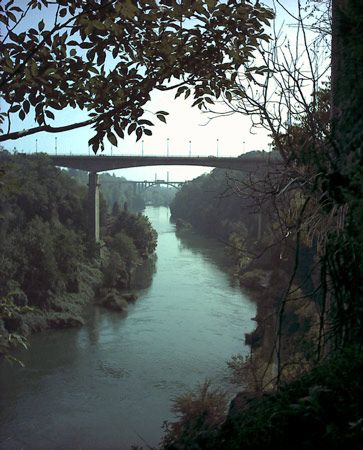
What are some of the main cities and towns along the Adda River?
Several notable cities and towns are situated along the course of the Adda River as it flows through northern Italy.
In its upper course, known as the Valtellina, the river passes through or near the following locations:
- Bormio: Located near the river’s source in the Rhaetian Alps.
- Tirano: A town situated along the river’s southward path before it turns west.
- Sondrio: A key town in the valley that serves as a central point along the river’s course.
- Morbegno: Another significant town within the Valtellina region.
- Chiavenna: Also identified as a chief town of the valley.
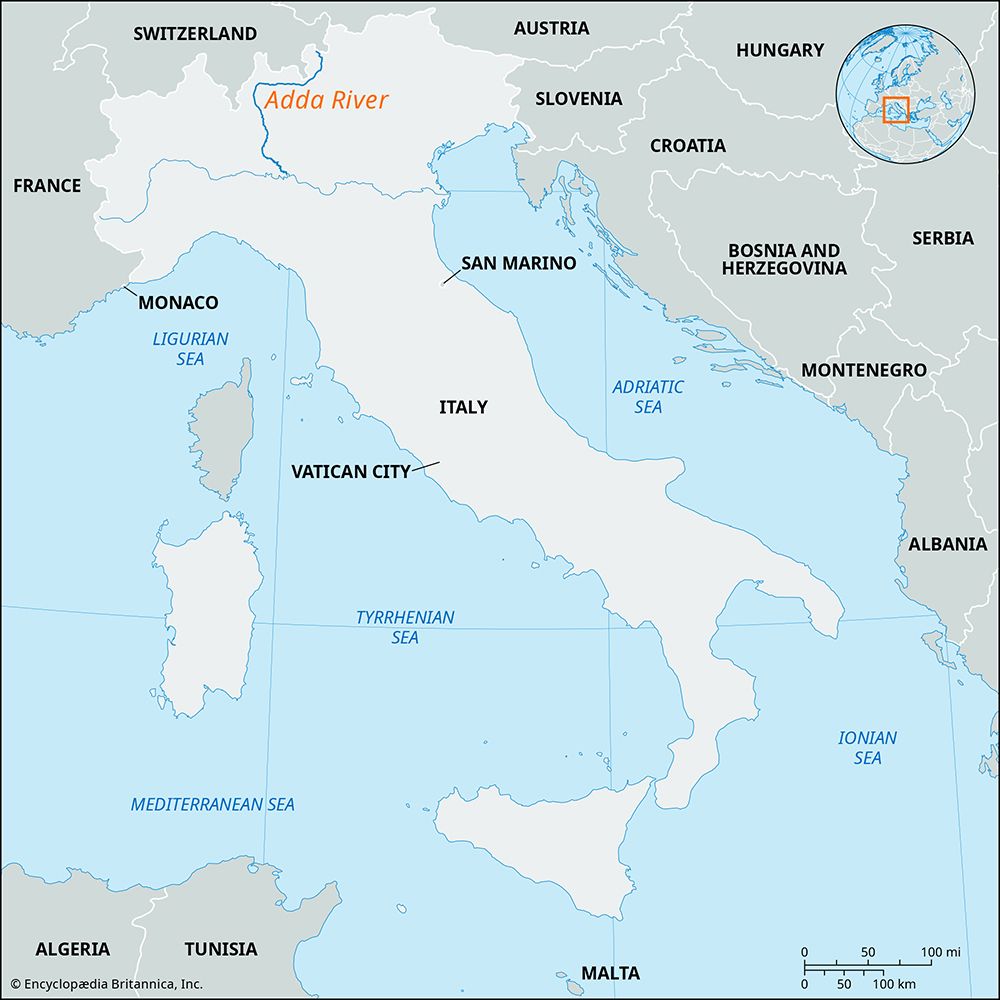
As the river continues its journey, it enters Lake Como and exits the lake at the town of Lecco. Further downstream, as it crosses the Lombardy Plain, the river flows past Lodi, a town historically significant for its strategic position on the river’s right bank. Finally, the Adda joins the Po River just upstream from the city of Cremona.
How does the Adda River connect to other bodies of water, such as lakes or the sea?
The Adda River originates from small lakes in the Rhaetian Alps at an elevation of 7,660 feet (2,335 m). As it flows southward and then westward through the Valtellina, it eventually enters Lake Como near the lake’s northern end.1
Upon exiting Lake Como at the town of Lecco, the river continues its course across the Lombardy Plain. It ultimately serves as a major tributary to the Po River, joining it just upstream from the city of Cremona. While the Adda does not flow directly into the sea, it contributes its waters to the Po, which subsequently empties into the Adriatic Sea through a complex delta system.16
Where is the Adda River located in Italy, and what are its major geographical features?
The Adda River is located in the Lombardy (Lombardia) region of northern Italy. It originates from small lakes in the Rhaetian Alps at an elevation of 7,660 feet (2,335 m) and flows for 194 miles (313 km) before joining the Po River near Cremona.1
Key geographical features include:
- The Valtellina: The river’s upper course, a fertile valley enclosed by the Bernina, Ortles, and Orobie Alps, known for its agriculture, viticulture, and hydroelectric plants.15
- Lake Como: The Adda flows into the northern end of Lake Como and exits the lake at the town of Lecco.1
- Lombardy Plain: After leaving the lake, the river crosses this plain, where it is utilized extensively for irrigation.1
- Drainage Basin: The river’s basin covers approximately 3,000 square miles (7,800 square km).1
Historically, the Adda has served as a strategic defense line dating back to the Roman period. Today, it remains vital for both hydroelectric power production and regional agriculture.1
Sources
- Adda River — Encyclopædia Britannica
- Italy - Lakes — Encyclopædia Britannica
- Adige River — Encyclopædia Britannica
- Lodi — Encyclopædia Britannica
- Valtellina — Encyclopædia Britannica
- Po River — Encyclopædia Britannica
Published on · 3 min read