Adige River
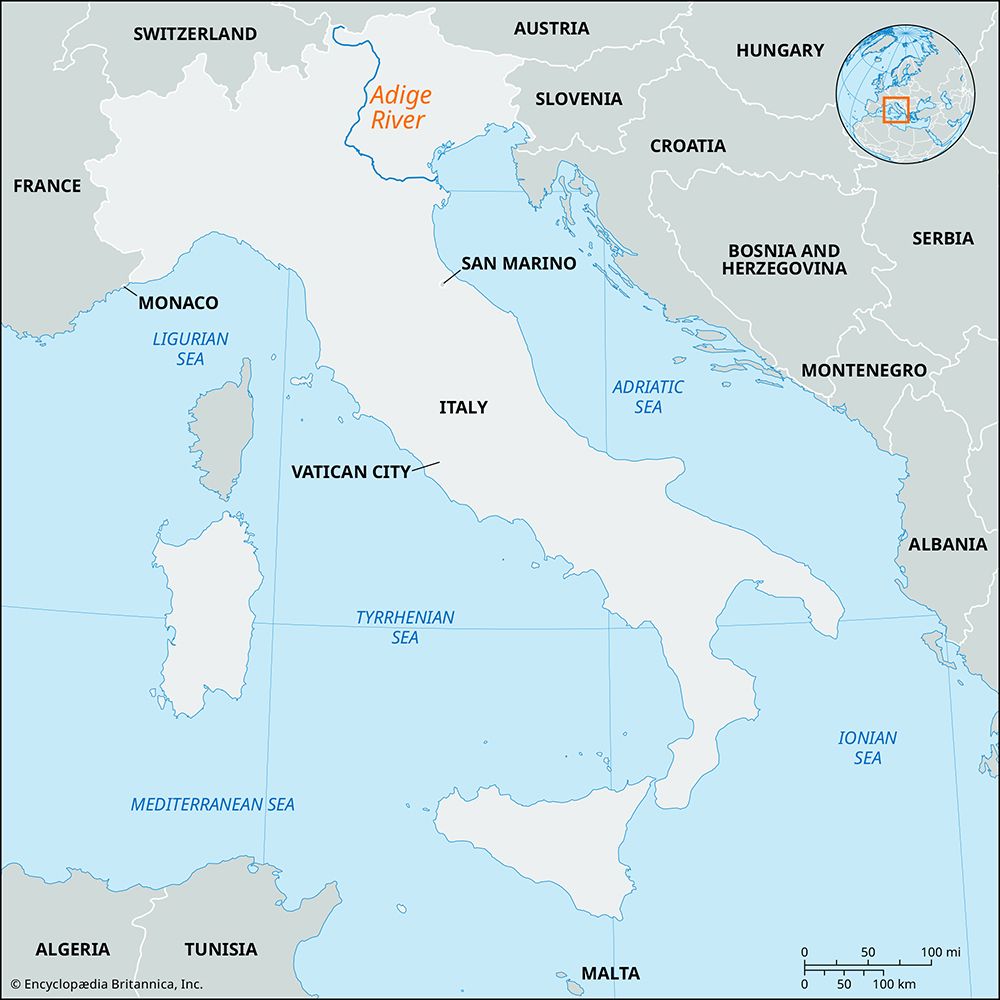
The Adige River, the second-longest river in Italy, originates in the Alps near the Resia Pass and flows through several significant regions and cities on…
What are the main cities and regions that the Adige River flows through?
The Adige River, the second-longest river in Italy, originates in the Alps near the Resia Pass and flows through several significant regions and cities on its 255-mile journey to the Adriatic Sea.12
Key Regions and Cities
- Trentino-Alto Adige: The river flows through the Venosta Valley, passing the cities of Merano and Bolzano. It continues through the middle course of the region, known as the Lagarina Valley.1
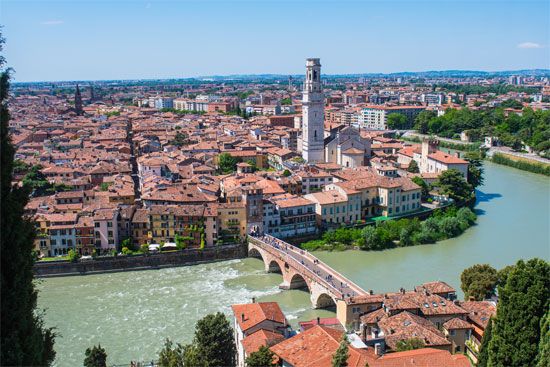
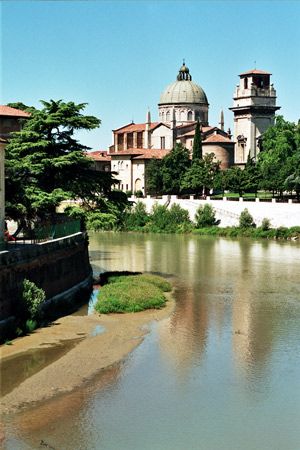
- Veneto: Upon entering the Po lowland, the river flows through the city of Verona. In its lower course, it provides essential irrigation for the Veneto region before reaching the sea near Chioggia and Adria.13
The river’s path has been heavily managed over centuries, with the final 50 miles of its course being entirely man-made to control flooding and support regional infrastructure.1
What is the geographical location and course of the Adige River in Italy?
The Adige River is the second-longest river in Italy, spanning 255 miles (410 km) with a drainage basin of 4,710 square miles (12,200 square km).14
Geographical Course
The river originates in the Alps from two mountain lakes located below the Resia Pass. From its source, the Adige follows this general path:1
- Upper Course: It flows rapidly south and east through the Venosta Valley, passing Merano and Bolzano, where it receives the waters of the Isarco River.1
- Middle Course: The river turns south through the Trentino-Alto Adige region, traversing the Lagarina Valley and passing through the city of Trento.15
- Lower Course: Upon entering the Po lowland near Verona, the river veers southeast. It eventually empties into the Adriatic Sea just south of Chioggia and north of the Po River delta.1
The river’s current path is largely the result of a significant shift around 589 CE, and its final 50 miles are entirely man-made to manage flooding and support regional infrastructure.1
How long is the Adige River, and what are its major tributaries?
The Adige River is 255 miles (410 km) long, making it the second-longest stream in Italy after the Po River.1
The river is fed by several significant tributaries, particularly as it traverses the mountainous terrain of the Trentino-Alto Adige region. Its major tributaries include:
- Isarco River: Joins the Adige at Bolzano.14
- Noce River: A key tributary that also supports hydroelectric power generation in the region.4
- Avisio River: Another primary river that drains the mountain masses into the Adige.4
These rivers are essential to the region’s geography, as their valleys are densely populated and intensively cultivated.4
How does the Adige River compare in size and importance to other major rivers in Italy?
The Adige River holds a significant position among Italian waterways, ranking as the second-longest river in Italy after the Po River. While the Po is considered the “prince” of Italian rivers due to its greater length of 400 miles (645 km) and its extensive drainage across the Lombardy Plain, the Adige remains a vital geographical and economic feature of the northeast.13
In terms of importance, the Adige serves several critical functions:
- Energy and Agriculture: The river is a key source of hydroelectric power in its upper Alpine reaches and provides essential irrigation for the Veneto region in its lower course.1
- Infrastructure: Its course is heavily managed, with the final 50 miles (80 km) being entirely man-made to mitigate the risks of flooding, which has historically caused significant damage.1
- Regional Connectivity: It flows through major urban centers such as Bolzano, Trento, and Verona, acting as a central artery for the Trentino-Alto Adige and Veneto regions.13
Sources
- Adige River — Encyclopædia Britannica
- Adige — Merriam-Webster
- Italy - Rivers — Encyclopædia Britannica
- Trentino–Alto Adige/Südtirol — Encyclopædia Britannica
- Adria — Encyclopædia Britannica
Published on · 3 min read