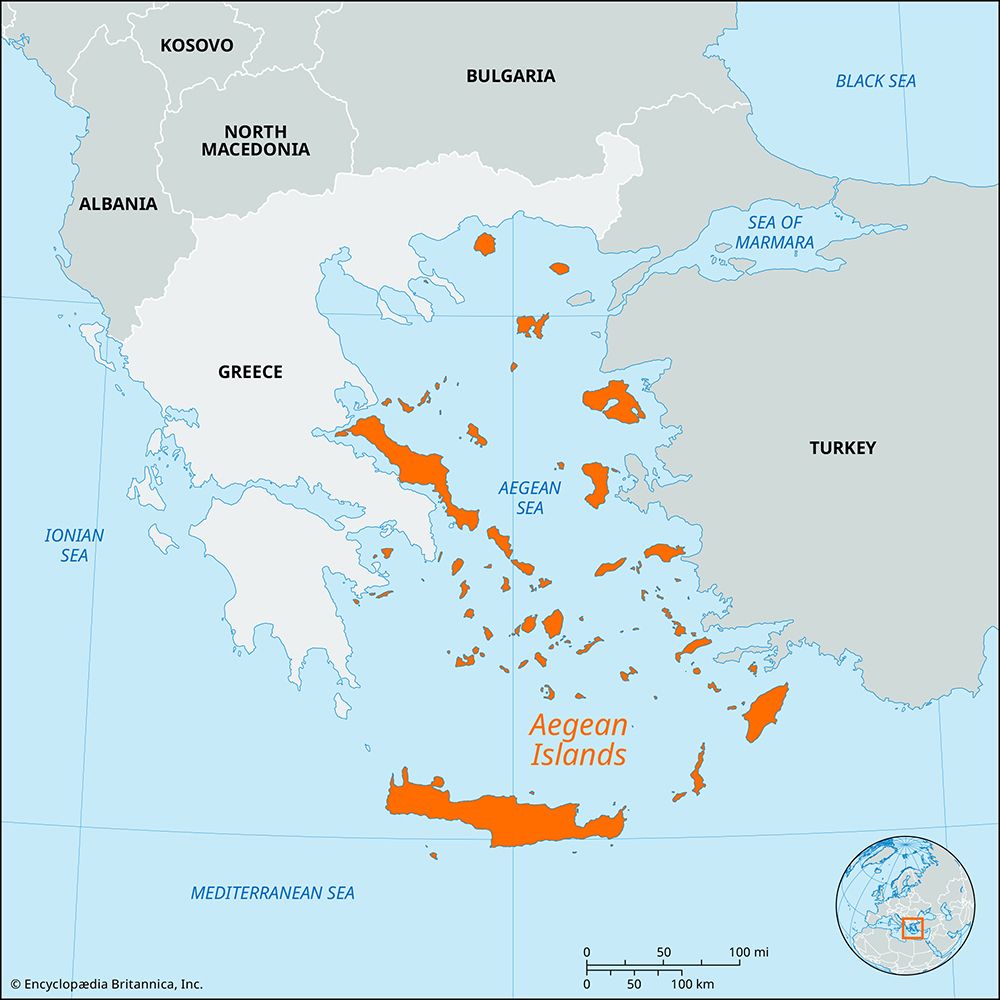
Aegina
The relationship between Aegina and Athens was defined by intense economic rivalry and shifting political alliances throughout the 5th century BCE.
How did Aegina’s relationship with Athens change throughout history?
The relationship between Aegina and Athens was defined by intense economic rivalry and shifting political alliances throughout the 5th century BCE.
Initially, Aegina’s status as a leading maritime power and its economic competition with Athens led to frequent wars and Aegina’s collaboration with Persia. However, this hostility briefly paused during the Battle of Salamis in 480 BCE, where the two forces fought together against the Persians.1
Following this, tensions resumed, leading to the subjugation of Aegina by Athens in 458 BCE, after which the island was forced to pay tribute. This reduction of a major Dorian power undermined Athens’ claim that it led only a voluntary association of cities. The ongoing dispute over Aeginetan autonomy became a secondary cause of the Peloponnesian War2. In 431 BCE, Athens deported the entire Aeginetan population, replacing them with Athenian settlers. Although the original inhabitants were permitted to return in 404 BCE following Athens’ defeat, the island never fully recovered its former prominence.21
What is the historical significance of Aegina in ancient Greek civilization?
Aegina held significant historical importance in ancient Greek civilization, primarily as a dominant maritime and economic power. From the 7th century BCE, the island utilized its strategic location to establish a robust trade network, and its silver coins—distinguished by the turtle emblem—became a standard currency across most Dorian states and much of the Aegean.13
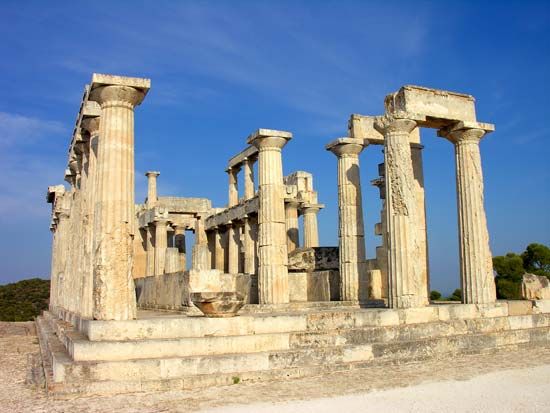
The island’s influence was particularly pronounced during the 5th century BCE, a period often considered its “golden age.” This era is marked by significant cultural and architectural achievements, most notably the well-preserved Temple of Aphaea, which showcases the sophisticated Doric architecture of the time. The island’s prestige was also immortalized in the poetry of Pindar.1
Politically, Aegina was a formidable rival to Athens, a competition that shaped regional power dynamics and contributed to the causes of the Peloponnesian War. Despite these tensions, Aegina played a crucial role in the defense of Greece during the Battle of Salamis in 480 BCE, where its naval contingent was recognized for its exceptional bravery.1
How did Aegina’s role as a maritime power influence its development?
Aegina’s development was fundamentally shaped by its status as a leading maritime power, a role necessitated by the island’s geography. With limited arable land—capable of supporting only a fraction of its estimated Classical population—Aegina was compelled to rely on trade to sustain its inhabitants.13
This maritime focus drove several key developments:
- Economic Influence: Beginning in the 7th century BCE, Aegina leveraged its strategic location to build a robust trade network. The island’s wealth was such that individuals like Sostratus of Aegina amassed “fabulous wealth” through international commerce, including trade with Etruria and Naukratis in Egypt.13
- Standardized Currency: Aeginetan maritime ascendancy facilitated the spread of its own weight standard for coinage. Its silver coins, marked with a turtle emblem, became a dominant currency across the Dorian states and the Aegean, serving as a primary medium for major commerce.12
- Political and Military Rivalry: The island’s commercial success fueled intense economic competition with Athens. This rivalry eventually led to military conflict, the subjugation of Aegina by Athens in the 5th century BCE, and its eventual deportation during the Peloponnesian War.14
What are the main archaeological sites and attractions on Aegina?
Aegina is home to significant archaeological sites that reflect its historical importance as a maritime power and a center of ancient Greek culture.
Key Archaeological Sites and Attractions
- Temple of Aphaea: Situated on a wooded crest in the eastern part of the island, this well-preserved 5th-century BCE temple is the island’s most prominent monument. It is a classic example of Doric peripheral construction, built from local gray limestone, and has undergone partial restoration.1
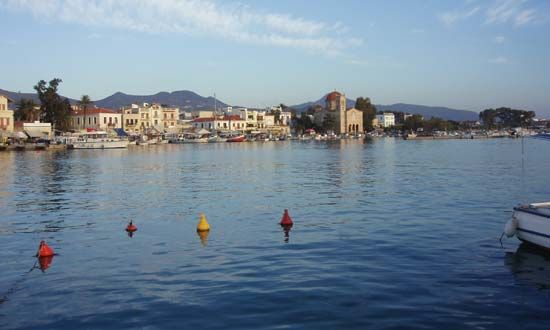
- Ancient Town of Aegina: The modern chief town and port on the west coast of the island is built directly over the site of the ancient town of the same name. Visitors can explore the area where this once-prosperous maritime center flourished.1
- National Archaeological Museum (Athens): While not located on the island itself, this museum in Athens houses critical artifacts from Aegina. Specifically, it contains sculptural fragments from the pediments of the Temple of Aphaea, which are essential for understanding the pre-Classical phase of Greek sculpture.5
Sources
- Aegina — Encyclopædia Britannica
- ancient Greek civilization - The subjugation of Aegina — Encyclopædia Britannica
- coin - Early developments, c. 650–490 bc — Encyclopædia Britannica
- ancient Greek civilization - The Lelantine War — Encyclopædia Britannica
- National Archaeological Museum — Encyclopædia Britannica
- Aegean Sea — Encyclopædia Britannica
Published on · 3 min read