African Cypress
The provided search results do not contain information regarding how African cypress trees (Widdringtonia) adapt to different soil types. The available data…
How do African cypress trees adapt to different soil types?
The provided search results do not contain information regarding how African cypress trees (Widdringtonia) adapt to different soil types. The available data focuses on their classification, physical characteristics, fire-adaptation mechanisms, and conservation status.1
What are the main characteristics of the African cypress plant genus?
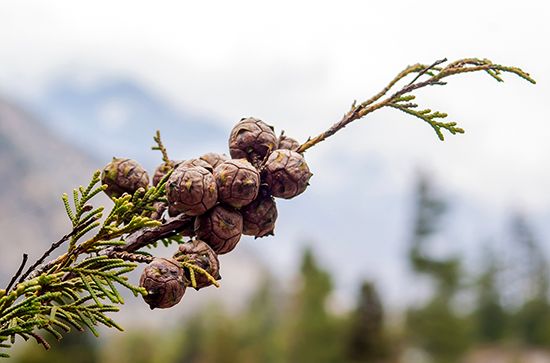
The African cypress (Widdringtonia) is a genus comprising four species of coniferous trees and shrubs native to southern Africa, belonging to the Cupressaceae family.1
Key characteristics include:
- Physical Structure: These plants feature evergreen, scalelike leaves arranged in opposite pairs. They vary significantly in size, ranging from small shrubs like the Berg cypress (2–4 metres) to tall trees like the Mulanje cedar, which can reach 45 metres.1
- Reproduction: Female cones typically mature to about 3 cm and contain four woody scales. Most species are fire-adapted, meaning they release their seeds only after the heat of a wildfire forces the cones to open.1
- Economic and Conservation Status: Some species produce fragrant, durable wood used for cabinetwork and local construction. However, species such as the Clanwilliam cedar and the Mulanje cedar are currently listed as critically endangered species.13
How do African cypress trees compare to other cypress species found in different parts of the world?
African cypress trees (Widdringtonia) share the Cupressaceae family with many other conifers globally, but they possess distinct evolutionary and ecological traits compared to other “cypress” groups.
Key Comparisons
- Geographic Distribution: While true cypresses (Cupressus) are native to warm-temperate and subtropical regions of Asia, Europe, and North America, African cypresses are endemic to southern Africa. Similarly, cypress pines (Callitris) are native to Australasia.
- Fire Adaptation: A defining characteristic of most African cypress species is their fire-adaptation; they release seeds only after the heat of a wildfire forces their cones to open. This mechanism is also found in several species of Australian cypress pine, whereas many true cypresses retain their seeds for years until the cones naturally break open.
- Leaf Arrangement: African cypresses and true cypresses both feature scalelike leaves in opposite pairs. In contrast, cypress pines are characterized by leaves arranged in whorls of three.
- Habitat and Morphology: Unlike the bald cypress, which thrives in North American wetlands and develops specialized root structures called “knees” for oxygenation, African cypresses are typically found in varied, often arid or mountainous terrain.
Are there any notable cultural or historical significance of African cypress trees in African societies?
The African cypress (Widdringtonia) holds historical and local significance primarily due to the utility of its wood and resin rather than specific cultural or symbolic roles in African societies.
The genus is valued for its fragrant, durable yellowish or brownish wood, which has been historically utilized for cabinetwork and local construction projects. Additionally, some species produce a resin that has been used locally for various purposes.17
The Mulanje cedar (Widdringtonia whytei), in particular, was once recognized as the most valuable timber tree within the genus, reflecting its economic importance to regional industries before it became a critically endangered species. Similarly, the Clanwilliam cedar is noted for its historical yield of timber and gum, with its name derived from the town of Clanwilliam in South Africa’s Western Cape province.13
While these trees are integral to the landscapes of regions like the Cederberg Mountains, their primary historical narrative is defined by their exploitation as a natural resource.
Sources
- African cypress — Encyclopædia Britannica
- cypress — Encyclopædia Britannica
- African cypress — Merriam-Webster
- cypress pine — Encyclopædia Britannica
- Cupressaceae — Encyclopædia Britannica
- bald cypress — Encyclopædia Britannica
- Clanwilliam cedar — Merriam-Webster
Published on · 3 min read