Cycadeoidea
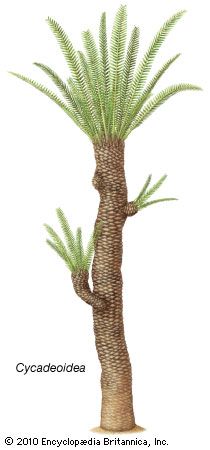
Cycadeoidea was a genus of extinct seed plants characterized by several distinct anatomical features that differentiate them from modern cycads:
What are the key anatomical features of Cycadeoidea fossils?
Cycadeoidea was a genus of extinct seed plants characterized by several distinct anatomical features that differentiate them from modern cycads:
- Trunk Structure: These plants possessed a squat, barrel-shaped, and typically unbranched trunk, often compared to a large pineapple. The trunk was protected by an “armour” composed of sturdy, persistent leaf bases and scales.1234
- Internal Anatomy: Internally, the trunk featured a thick pith surrounded by a relatively narrow zone of vascular tissue. Unlike cycads, which exhibit “girdling” leaf traces (vascular strands that follow a circuitous route), Cycadeoidea had vascular strands that extended directly from the stem into the leaf bases.34
- Reproductive Structures: The most defining features were the cones (strobili) embedded directly into the trunk, with only their tips exposed between the leaf bases. These cones were often bisexual, containing both pollen-bearing organs and ovules, and were frequently encased in a whorl of petal-like bracts.235
- Foliage: While no mature leaves have been found attached to fossilized trunks, evidence suggests they bore pinnate, tough leaves similar to those of modern cycads.23
How has the study of Cycadeoidea contributed to our understanding of plant evolution?
The study of Cycadeoidea has been pivotal in understanding the evolutionary history of angiosperms (flowering plants). As a member of the order Bennettitales, Cycadeoidea exhibited reproductive structures that significantly distinguish it from other gymnosperms.2
Key contributions to evolutionary theory include:
- Structural Similarities to Angiosperms: Unlike typical gymnosperms, Cycadeoidea possessed bisexual cones containing both pollen and ovules. These cones were encased in petal-like bracts, an arrangement that led many paleobotanists to propose an evolutionary link to flowering plants.2
- Chemical Evidence: The hypothesis that Cycadeoidea is related to angiosperms has been further bolstered by the identification of chemical markers within the fossils that are characteristic of flowering plants.2
- Extinction Insights: Research into their reproductive biology suggests that Cycadeoidea may have relied on self-pollination. Some scientists argue that this reliance on inbreeding may have contributed to their eventual extinction during the Late Cretaceous Period.2
How did the reproductive structures of Cycadeoidea function?
The reproductive structures of Cycadeoidea were unique among gymnosperms, featuring bisexual cones embedded directly into the trunk with only their tips exposed between leaf bases.2
These structures functioned through a specific arrangement of components:
- Pollen and Ovules: Pollen was produced in sacs on a whorl of modified leaves that surrounded the central, ovule-bearing structure. The ovules were clustered together and separated by sterile scales.2
- Protective Bracts: The entire reproductive unit was encased in a whorl of petal-like bracts, a feature that has led many researchers to compare them to angiosperms.2
- Pollination Mechanism: While it was once debated whether these structures opened to allow for insect-mediated pollination, the prevailing scientific view is that the cones remained closed at maturity. This suggests that Cycadeoidea relied on self-pollination. Because only cones containing mature seeds have been observed in an open state, it is widely believed that these plants were exclusive self-pollinators, a trait that may have led to detrimental inbreeding and eventual extinction.2
How do scientists determine the age of Cycadeoidea fossils?
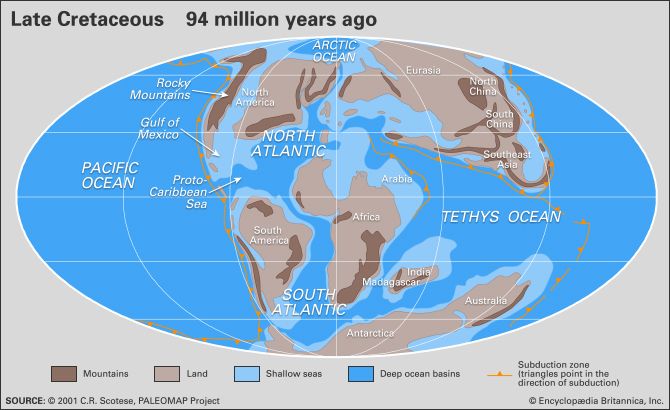
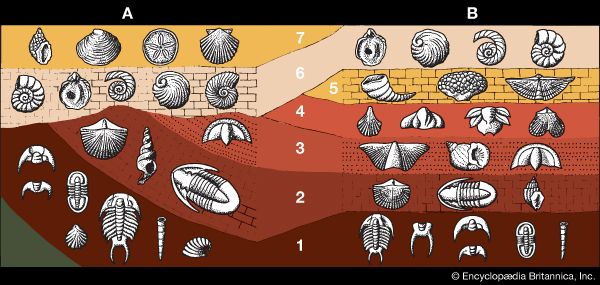
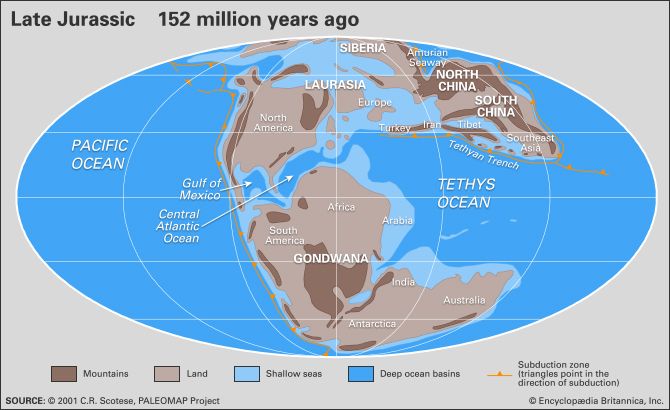
Scientists determine the age of Cycadeoidea fossils primarily through the principles of stratigraphy and faunal succession. Because these plants are extinct gymnosperms that lived during the Jurassic and Cretaceous periods, their age is often established by the specific rock layers in which they are found.789
Key methods include:
- Biostratigraphy: Geologists use index fossils—distinctive species that existed for a relatively short, well-defined period—to correlate the age of the sedimentary rocks containing Cycadeoidea with other known geologic formations.101
- Radiometric Dating: While fossils themselves cannot always be dated directly, scientists use radioisotopic dating on associated volcanic materials, such as volcanic ash layers (often called key beds), found within the same stratigraphic sequence. By measuring the decay of radioactive isotopes, researchers can provide absolute ages that verify the relative ages determined by fossil assemblages.21011
- Integrated Geochronology: Modern dating often combines these methods with magnetostratigraphy, which tracks the history of Earth’s magnetic field reversals recorded in rocks, to create a high-resolution timeline.21
Sources
- Cycadeoidophyta — Encyclopædia Britannica
- Cycadeoidea — Encyclopædia Britannica
- Bennettitales — Merriam-Webster
- Bennettitaceae — Merriam-Webster
- cycadophyte - Stem — Encyclopædia Britannica
- cycadophyte - Cycadeoids — Encyclopædia Britannica
- Tertiary Period - Correlation of Tertiary strata — Encyclopædia Britannica
- dating - Principles and techniques — Encyclopædia Britannica
- Cretaceous Period - Correlation — Encyclopædia Britannica
- dating: Top Questions — Encyclopædia Britannica
- cycadeoid — Merriam-Webster
Published on · 3 min read