Agalega Islands
The Agalega Islands are a two-island dependency of Mauritius located in the western Indian Ocean. Situated approximately 600 miles (1,000 km) north of…
What is Agalega Islands?
The Agalega Islands are a two-island dependency of Mauritius located in the western Indian Ocean. Situated approximately 600 miles (1,000 km) north of Mauritius, the territory comprises North Island and South Island, covering a total land area of 27 square miles (70 square km).1
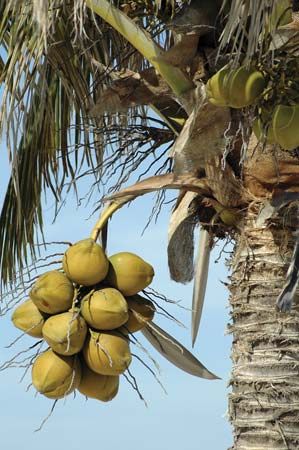
The local economy centers on the production and export of copra and coconut oil, supplemented by subsistence farming and the raising of poultry and cattle. The population, estimated at 300 in 2003, resides primarily in the villages of Vingt Cinq on North Island and Sainte Rita on South Island. Infrastructure is limited, featuring some roads but very few motor vehicles.1
What is the relationship between Mauritius and its dependencies?
Mauritius maintains administrative control over several outlying territories, which are officially designated as dependencies. These territories include the Agalega Islands, the Cargados Carajos Shoals, and Rodrigues Island. While the main island of Mauritius is organized into districts for local government, these outlying areas hold a distinct dependency status within the national administrative framework.234
Additionally, Mauritius has long asserted sovereignty over the Chagos Archipelago, including Diego Garcia. Although this claim was historically contested by Britain—which had separated the archipelago to form the British Indian Ocean Territory in 1965—the two nations reached a tentative agreement in 2024 to resolve the dispute. A final agreement to formally cede sovereignty of the archipelago to Mauritius was signed in May 2025.45
How does the geography of the Indian Ocean affect island life?
The geography of the Indian Ocean profoundly shapes island life through its geological origins, climate, and economic opportunities. Many islands, such as Mauritius and Réunion, are of volcanic origin, while others like the Maldives are defined by their low-lying coral structures.78
These physical characteristics influence daily life in several ways:
- Economic Livelihoods: Abundant coral reefs and nutrient-rich waters support fisheries. Small nations often leverage their exclusive economic zones to generate national income by selling fishing rights to major international fleets.9
- Tourism: The warm climate and scenic coastal features—including beaches and lagoons—have made remote islands like the Seychelles major tourist destinations, which now serve as vital components of their local economies.10
- Environmental Vulnerability: Island life is increasingly threatened by climate change. Rising sea levels pose an existential risk to low-lying atolls, while historical human activities like guano mining and the introduction of exotic species have permanently altered native ecosystems.11
What is the process of producing copra from coconuts?
The production of copra—the dried meat of the coconut—involves several key steps to prepare the kernel for oil extraction:
- Husking and Cracking: The coconut palm fruit is first husked by striking it against a sharp point, either manually or mechanically. The shell is then cracked into two halves to expose the meat, which initially contains high levels of water and oil.14
- Drying: The meat must be dried to reduce moisture content to 4–5 percent, which increases the oil concentration to 63–70 percent. Common methods include:
- Sun Drying: Exposing kernels to air and sunlight, which produces high-quality white copra.
- Kiln Drying: Placing the meat on a grid over a fire pit, a method often used in high-humidity regions.
- Hot-Air Drying: Passing the copra through a heated tunnel against a countercurrent of hot air, which yields a superior, high-value product.14
Once dried, the copra is cleaned and crushed to extract coconut oil through pressing or solvent extraction.14
Sources
- Agalega Islands — Encyclopædia Britannica
- history of Mauritius — Encyclopædia Britannica
- Mauritius - Local government and justice — Encyclopædia Britannica
- history of Mauritius - Early history and colonial administration — Encyclopædia Britannica
- Mauritius - Finance and trade — Encyclopædia Britannica
- list of islands - Mauritius — Encyclopædia Britannica
- Indian Ocean - Islands — Encyclopædia Britannica
- Indian Ocean - Hydrology — Encyclopædia Britannica
- Indian Ocean - Coasts — Encyclopædia Britannica
- Indian Ocean - Climate — Encyclopædia Britannica
- Indian Ocean - Fisheries — Encyclopædia Britannica
- Indian Ocean - Tourism — Encyclopædia Britannica
- Indian Ocean - Environmental impact of human activity — Encyclopædia Britannica
- Copra — Encyclopædia Britannica
Published on · 3 min read