Agavoideae
The Agavoideae subfamily, which belongs to the Asparagaceae family, is widely distributed across tropical, subtropical, and temperate regions globally. These…
What is the geographical distribution of Agavoideae plants and how has it changed over time?
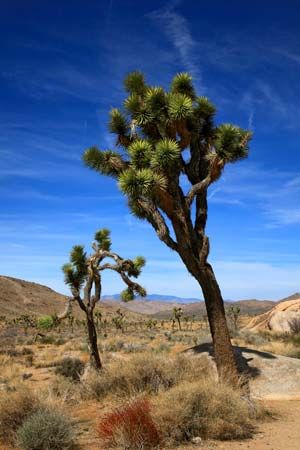
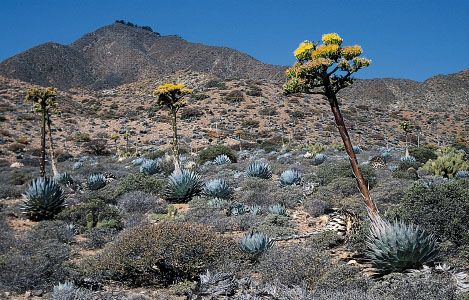
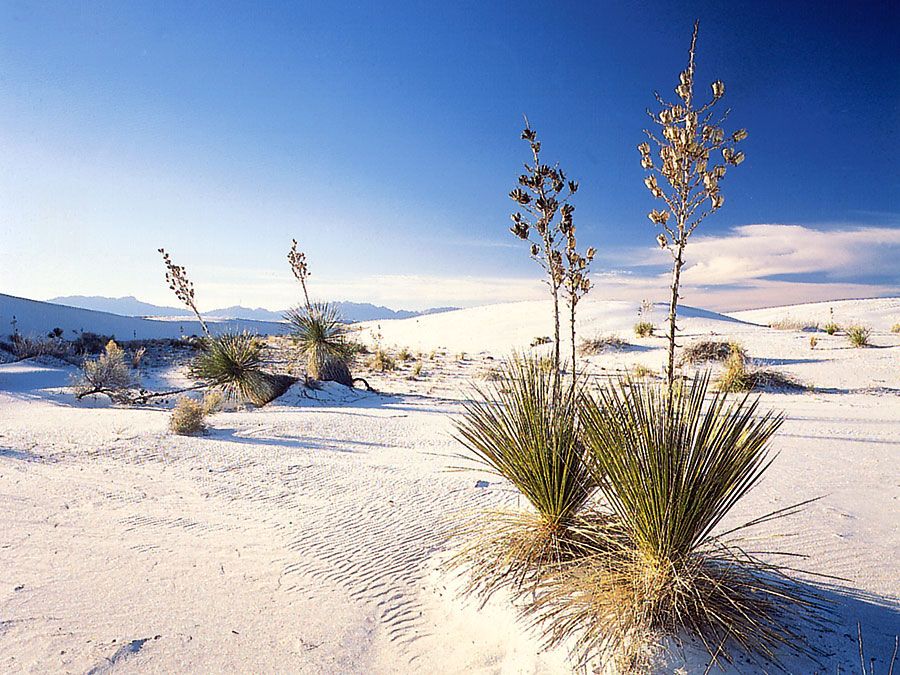
The Agavoideae subfamily, which belongs to the Asparagaceae family, is widely distributed across tropical, subtropical, and temperate regions globally. These plants are characterized by their clustered, often fleshy or toothed leaves and are frequently associated with desert environments.1
Regarding your question about how their distribution has changed over time, the provided information does not contain data on historical shifts or changes in the geographical range of these plants. While the subfamily was formerly classified as its own family, known as Agavaceae, it has been recategorized as a subfamily under the Angiosperm Phylogeny Group III (APG III) botanical classification system, reflecting a change in scientific taxonomy rather than a change in the plants’ physical distribution.1
What is the evolutionary history of the Agavoideae subfamily?
The evolutionary history of the Agavoideae subfamily is primarily understood through modern molecular evidence rather than a comprehensive fossil record. As a member of the order Asparagales, the subfamily is part of a group currently undergoing significant taxonomic refinement as researchers utilize DNA analysis to clarify relationships among angiosperms.2
Historically, these plants were often treated as a distinct family, Agavaceae, but they have been reclassified as a subfamily within the Asparagaceae family under the Angiosperm Phylogeny Group III (APG III) system. This shift reflects a broader scientific effort to reorganize the order Asparagales based on molecular data and patterns of pollen development, as unique morphological traits are not always obvious across these families.32
While the broader evolutionary history of vascular plants is documented through fossils dating back to the Ordovician Period, specific evolutionary milestones for the Agavoideae lineage remain a subject of ongoing study. Current research relies heavily on molecular clock methodology to estimate the divergence of these species from common ancestors.1
Are there any endangered species within the Agavoideae subfamily, and what conservation efforts exist?
While the Agavoideae subfamily includes 637 species, the provided search results do not specify which individual species are currently classified as endangered. However, it is well-established that many plant species face threats of extinction, and the scientific community employs rigorous methods to protect them.15
Conservation efforts for rare and threatened plants are primarily led by botanical gardens, which serve as vital scientific institutions rather than mere parks. These organizations contribute to biodiversity preservation through several key strategies:5
- Living Collections: Gardens maintain genetic diversity by cultivating rare or threatened species, sometimes keeping plants alive that are already extinct in the wild.5
- Seed Banks: Institutions like the Millennium Seed Bank Partnership store millions of seeds to guard against extinction and support future restoration projects.5
- Herbaria: These collections of dried, identified specimens provide the essential genetic and historical data needed for taxonomic research and the identification of new or misidentified species.56
How are plants in the Agavoideae subfamily adapted to their environments?
Plants in the Agavoideae subfamily are highly adapted to arid and semiarid environments, functioning as xerophytes that utilize specialized mechanisms to manage water scarcity and maximize survival in harsh conditions.
Water Storage and Physical Adaptations
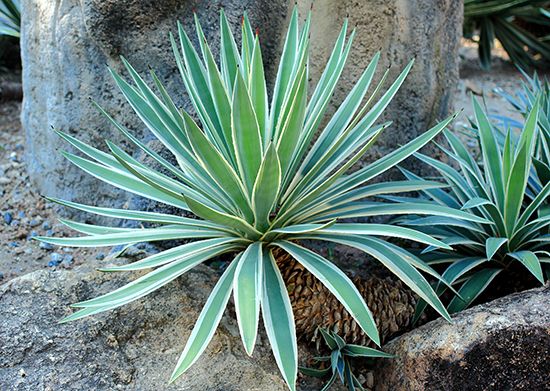
A primary adaptation of Agavoideae is their succulence. Unlike many other succulents that store water in their stems, members of this subfamily, such as agaves, store water primarily in their thick, fleshy leaves. These leaves are often clustered at the base of the plant, providing a structural reservoir. Additional xerophytic adaptations include:
- Waxy leaf coatings: These help minimize water loss through evaporation.
- Leaf morphology: Some species can fold or reposition their leaves to reduce direct sunlight absorption.
- Root systems: Many possess broad or deep root systems designed to capture available moisture efficiently.
Metabolic Adaptations
To thrive in hot, dry climates, Agavoideae utilize crassulacean acid metabolism (CAM). This photosynthetic pathway allows them to separate the stages of carbon fixation temporally:
- Nocturnal CO₂ uptake: Their stomata remain closed during the hot, dry day to prevent transpiration and open at night when temperatures are cooler and humidity is higher.
- Carbon storage: During the night, they fix carbon dioxide into organic acids, primarily malate, which is stored in large vacuoles.
- Daytime processing: During the day, with stomata closed, the stored malate is decarboxylated to release CO₂, which is then fixed by Rubisco in the Calvin-Benson cycle.
This metabolic strategy allows Agavoideae to maintain high productivity while requiring significantly less water than plants using standard C₃ or C₄ pathways.
Sources
- Agavoideae — Encyclopædia Britannica
- Asparagales - Order growth characteristics — Encyclopædia Britannica
- Asparagales - Organization and taxonomy — Encyclopædia Britannica
- plant - Evolution and paleobotany — Encyclopædia Britannica
- How Botanical Gardens Save Plants with Science — Encyclopædia Britannica
- Botanical garden - Layouts and facilities — Encyclopædia Britannica
- succulent — Encyclopædia Britannica
- photosynthesis - Carbon fixation via crassulacean acid metabolism (CAM) — Encyclopædia Britannica
- plant - Specific variations in photosynthesis — Encyclopædia Britannica
- xerophyte — Encyclopædia Britannica
Published on · 3 min read