Fossil
Paleontology is the scientific study of life from the geologic past. It encompasses the biology of ancient organisms, including their structure, evolutionary…
What is paleontology and how does it relate to the study of fossils?
Paleontology is the scientific study of life from the geologic past. It encompasses the biology of ancient organisms, including their structure, evolutionary patterns, taxonomic relationships, and their interactions with past environments.1
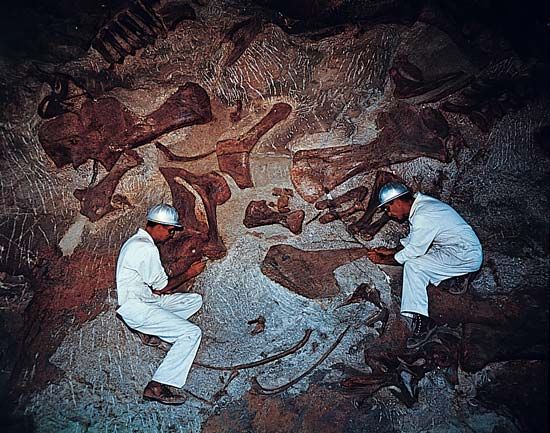
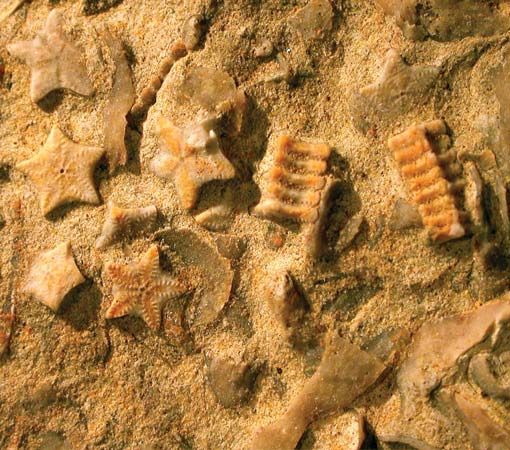
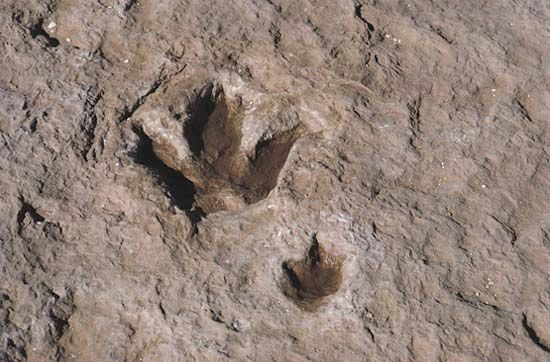
The study of fossils—the preserved remains, impressions, or traces of ancient life—is central to paleontology. Paleontologists analyze these remnants to reconstruct the history of life on Earth and to understand how various life-forms have evolved over time. Because fossils are typically found in sedimentary rock, the field is deeply interconnected with geology and stratigraphy, as fossils help scientists identify and correlate rock layers.2314
Beyond evolutionary biology, paleontological research provides critical data for locating natural gas and oil deposits, and it helps geologists determine the age of rock strata. By examining the fossil record, researchers can also infer past climates and environmental conditions.143
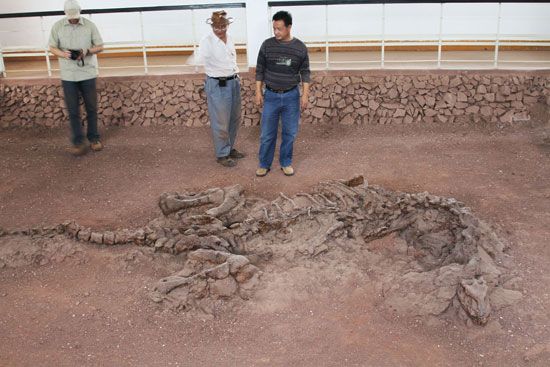
What information can scientists gather from studying fossils?
Studying the fossil record allows scientists to reconstruct the history of life on Earth and gain insights into the planet’s past. Key information gathered from fossils includes:
- Evolutionary History: By observing progressive morphological changes in successive generations, scientists can document the evolution of animal and plant groups. This includes identifying transitional forms that illustrate how species have adapted or changed over millions of years.267
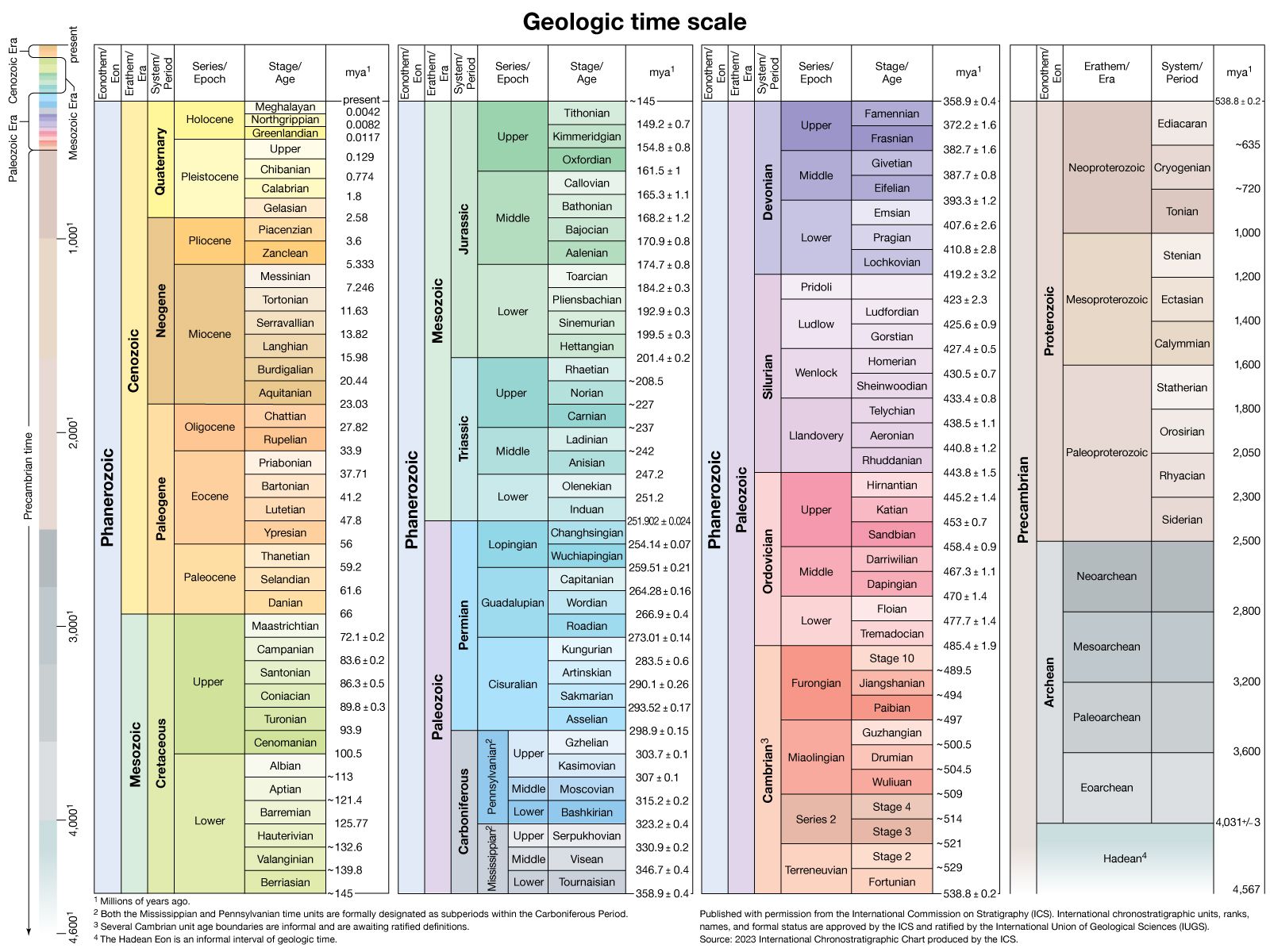
- Geologic Dating: Fossils serve as essential tools for stratigraphy. Through the principle of faunal succession, specific index fossils allow geologists to assign relative ages to rock strata and correlate layers across different geographic regions.486
- Environmental Reconstruction: Fossils act as indicators of ancient climates and ecosystems. For example, the presence of specific coral or plant species can reveal whether a site was once a warm, shallow sea or a swampy environment, helping researchers infer past shifts in Earth’s crust.286
- Resource Exploration: Fossils are vital in the search for fossil fuels. Analyzing microfossils in core samples helps geologists identify the stratigraphic positions of coal seams and map subsurface structures containing oil and natural gas.86
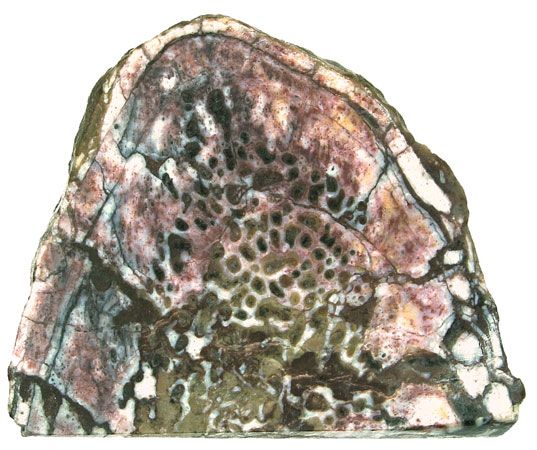
How do paleontologists determine the age of fossils?
Paleontologists determine the age of fossils using two primary approaches: relative dating and absolute dating.
Relative Dating
Relative dating establishes the sequence of events without providing a specific numerical age. This is primarily achieved through biostratigraphy, which involves identifying and arranging fossils within sedimentary rock strata.9
A key tool in this process is the use of index fossils. To be effective, an index fossil must be:
- Distinctive and easily recognizable.
- Abundant in the fossil record.
- Widely distributed geographically.
- Limited to a short, specific span of geologic time.10
By correlating these fossils across different locations, scientists can determine the relative order in which organisms lived and when rock layers were formed.11
Absolute Dating
Absolute dating provides a specific numerical age by measuring the decay of radioactive isotopes within rocks or fossils. This process, known as radiometric dating, relies on the constant rate of decay of parent atoms into daughter atoms.1112
- Carbon-14 Dating: Used for organic materials, this method measures the decay of carbon-14 into nitrogen. It is effective for dating specimens between 500 and 50,000 years old.13
- Isotopic Dating: For older samples, scientists use isotopes with longer half-lives, such as uranium-lead chronometers. By measuring the ratio of parent to daughter isotopes in a sample, researchers can calculate the time elapsed since the mineral or rock formed.1412
Absolute dating is essential for calibrating the fossil record, providing a precise timeline that relative dating alone cannot offer.11
How has our understanding of evolution been shaped by fossil evidence?
Fossil evidence has been fundamental in shaping our understanding of evolution by providing a tangible, historical record of life on Earth. By documenting the remains or imprints of organisms in sedimentary rock, scientists can reconstruct the history of biological change over millions of years.16
Key ways fossils inform evolutionary theory include:
- Documenting Morphological Change: Fossils allow researchers to observe progressive changes in animal groups. These shifts are often interpreted as adaptations to specific environments, driven by the selection of beneficial mutations.16
- Identifying Transitional Forms: The discovery of transitional fossils—specimens exhibiting characteristics of both ancestral and derived forms—provides direct evidence of evolutionary transitions, such as the emergence of feathered dinosaurs or walking whales.2
- Revealing Evolutionary Patterns: The fossil record highlights periods of “explosive” evolution, often triggered by environmental shifts or biological innovations, such as the development of metamorphosis in insects.17
- Refining Phylogeny: While molecular genetics now plays a major role, fossils remain essential for determining the phylogeny of groups with hard body parts and for calibrating the divergence times of species.18
Sources
- paleontology — Encyclopædia Britannica
- fossil record — Encyclopædia Britannica
- What is the difference between archaeology and paleontology? — Encyclopædia Britannica
- fossil — Encyclopædia Britannica
- How are fossils formed? — Encyclopædia Britannica
- dating - Principles and techniques — Encyclopædia Britannica
- geology - Paleontology — Encyclopædia Britannica
- evolution - The fossil record — Encyclopædia Britannica
- index fossil — Encyclopædia Britannica
- dating: Top Questions — Encyclopædia Britannica
- carbon-14 dating — Encyclopædia Britannica
- Did you know? — Merriam-Webster
- dating - Principles of isotopic dating — Encyclopædia Britannica
- dating - Distinctions between relative-age and absolute-age measurements — Encyclopædia Britannica
- biostratigraphy — Merriam-Webster
- insect - Insect fossil record — Encyclopædia Britannica
- primate - Renewed interest in primate origins — Encyclopædia Britannica
- transitional fossil — Merriam-Webster
- reptile - Historical development — Encyclopædia Britannica
- phylogeny - Evidence for specific phylogenies — Encyclopædia Britannica
Published on · 4 min read