Agnathan
Agnathans, or jawless fishes, play distinct roles in aquatic ecosystems primarily as scavengers and parasites.
What role do agnathans play in aquatic ecosystems?
Agnathans, or jawless fishes, play distinct roles in aquatic ecosystems primarily as scavengers and parasites.
- Scavengers: Hagfishes act as important scavengers in deep-sea environments. They locate food by scent and feed on dead or crippled fishes and soft-bodied invertebrates, helping to process organic matter on the ocean floor.12
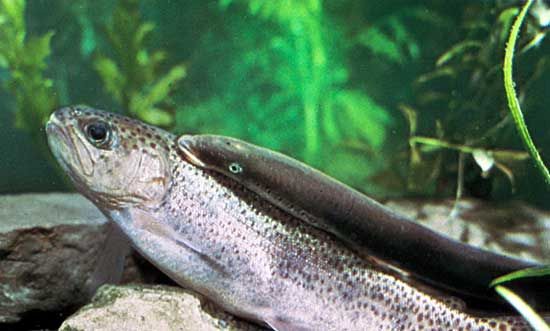
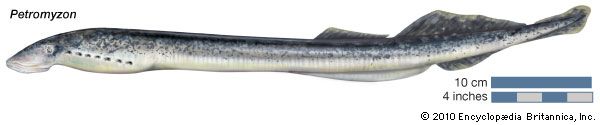
- Parasites: Lampreys often function as parasites in their adult stage. They attach to host fishes using their specialized, sucker-like mouths to feed on blood and tissues. While this is a natural ecological interaction, it can have a devastating impact on fish populations when introduced to non-native environments, such as the Great Lakes of North America, where they have significantly reduced numbers of lake trout.34
- Larval Role: During their larval stage, lampreys are filter feeders that live in freshwater burrows, consuming microorganisms and contributing to the nutrient cycling of those habitats.53
Beyond these roles, agnathans are of significant scientific interest as they represent the most primitive living vertebrates and provide insights into early evolutionary history.46
What adaptations do agnathans have for feeding and locomotion?
Agnathans, or jawless fishes, exhibit specialized adaptations for feeding and locomotion that reflect their primitive evolutionary status and diverse ecological niches.18
Feeding Adaptations
- Hagfishes: These scavengers locate food primarily by scent. They possess a mouth equipped with comblike, horny tooth plates that protrude and retract to bite into prey, such as soft-bodied invertebrates or dead fishes. When feeding on larger carcasses, they often coil their bodies around the prey to gain leverage.942
- Lampreys: Adult lampreys are characterized by a suctorial oral disk lined with horny teeth, which allows them to attach to host fishes. They rasp into the host’s flesh using a toothed, tonguelike structure and secrete an anticoagulant to facilitate the consumption of blood and tissue.94
- Larval Feeding: Lamprey larvae, known as ammocoetes, are filter feeders that use a mucus-secreting organ called the endostyle to strain microorganisms from the water.94
Locomotion and Body Form
- Burrowing Habit: Many agnathans, particularly hagfishes and larval lampreys, have elongated, eel-like bodies adapted for burrowing into soft sediments.59
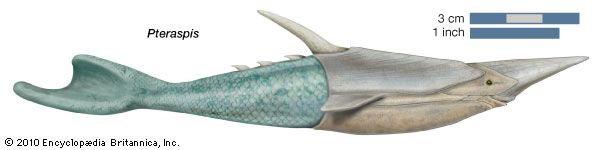
- Swimming: While they lack paired fins, many agnathans possess well-developed caudal (tail) fins that provide propulsion. Extinct forms, such as the nektonic heterostracans, were adapted for mid-water swimming, while others utilized heavy dermal armor for protection, often at the cost of agility.9251

How have agnathans evolved over time, and what is their evolutionary significance?
Agnathans, or jawless fishes, represent a critical stage in vertebrate evolution, serving as a link between primitive protochordates and the jawed vertebrates (gnathostomes).9
Evolutionary History
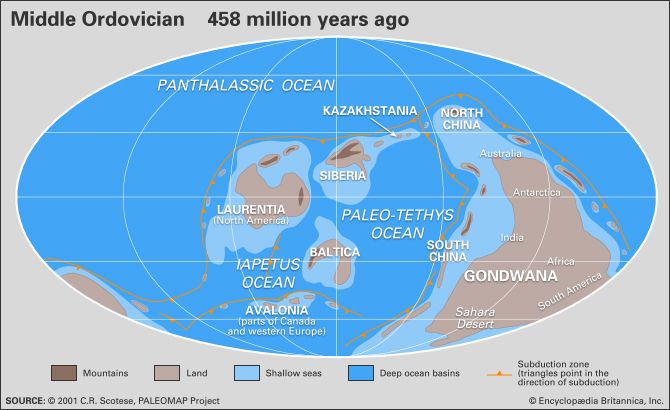
The earliest evidence of agnathans dates back to the Upper Ordovician Period, approximately 450 million years ago, in the form of dermal armor fragments. By the end of the Silurian Period, diverse groups of armored jawless fishes, known as ostracoderms, were well established. These early forms likely evolved in freshwater environments, where heavy armor provided protection against predatory invertebrates.102
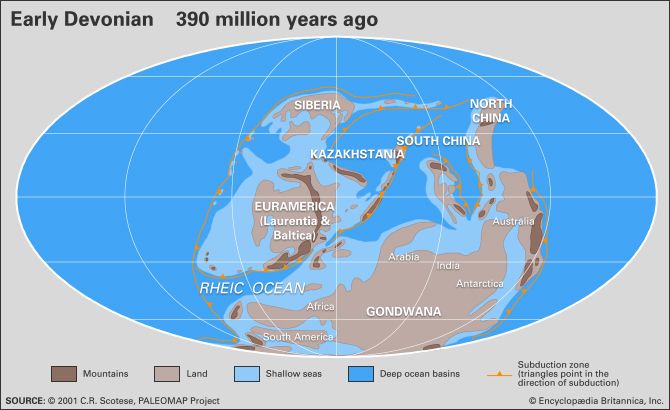
Most armored agnathans went extinct by the end of the Devonian Period, likely outcompeted by more agile jawed fishes. However, the lineage survived through the cyclostomes—modern lampreys and hagfishes—which lack the hard armor of their ancestors.104
Evolutionary Significance
Agnathans are significant because they possess the earliest known craniate fossils and retain primitive characteristics that provide insight into the development of vertebrate systems. Key evolutionary milestones include:411
- Development of Bone: The early appearance of bone and cartilage provided the structural foundation for later vertebrate diversification.10
- Physiological Complexity: While simpler than gnathostomes, agnathans possess the same basic central nervous system, heart, and digestive tract found in higher vertebrates.109
- Feeding Transitions: Early agnathans were filter feeders, but the evolution of a rasping, suctorial mouth in cyclostomes allowed them to adopt predatory and parasitic lifestyles, ensuring their survival.10
How do agnathans differ from other vertebrate groups like fish, amphibians, or mammals?
Agnathans, or jawless fishes, are distinguished from other vertebrate groups—such as jawed fishes, amphibians, and mammals—primarily by the absence of several key anatomical features that define more advanced vertebrates.
Key Differences
Agnathans lack the following structures found in gnathostomes (jawed vertebrates):
- Jaws: Unlike all other vertebrate groups, agnathans do not possess a hinged jaw apparatus.1314
- Vertebrae: While they are members of the subphylum Vertebrata, living agnathans (cyclostomes) lack true bony vertebrae, relying instead on a persistent notochord for structural support throughout their lives.101314
- Paired Fins: They lack lateral fins supported by fin rays, which are characteristic of most other fish groups.1314
- Ear Structure: They do not possess a horizontal semicircular canal in the ear, a feature common to other vertebrates.1314
- Genital Ducts: Agnathans lack the specialized ducts for reproduction found in higher vertebrates.1314
Anatomical and Physiological Distinctions
Beyond these absences, agnathans exhibit unique physiological traits:
- Gills: Unlike the slitlike gills of jawed fishes, agnathans possess pouchlike gills that open through pores.1314
- Circulatory System: Their circulatory systems are specialized and differ from the basic vertebrate plan, with some species, such as hagfishes, possessing accessory hearts in the venous system—a feature unique among vertebrates.4
- Simplicity: While they share the same basic organ systems (nervous, endocrine, digestive, and muscular) as gnathostomes, these systems are generally simpler in structure.1314
Sources
- agnathan - Form and function — Encyclopædia Britannica
- agnathan — Encyclopædia Britannica
- lamprey — Encyclopædia Britannica
- agnathan: Top Questions — Encyclopædia Britannica
- hagfish — Encyclopædia Britannica
- tetraodontiform - Feeding habits — Encyclopædia Britannica
- muscle - Jawless fishes — Encyclopædia Britannica
- agnathan - General features — Encyclopædia Britannica
- fish - Agnatha: early jawless fishes — Encyclopædia Britannica
- agnathan - Evolution — Encyclopædia Britannica
- ostracoderm — Merriam-Webster
- Ostracodermi — Merriam-Webster
- muscle - Jawed fishes — Encyclopædia Britannica
- skeleton - Lower chordates and fishes — Encyclopædia Britannica
- Circulatory system - Circulation in agnathans — Encyclopædia Britannica
Published on · 4 min read