Ain River
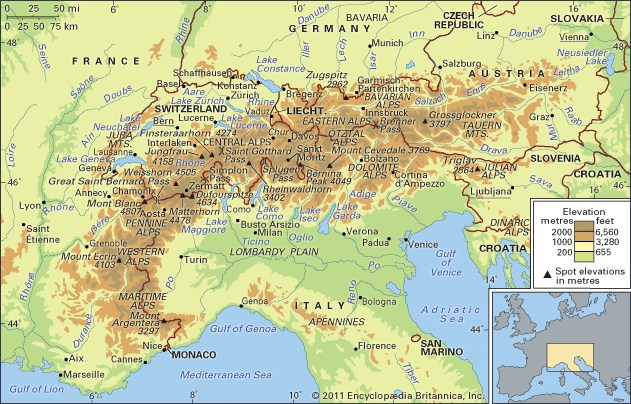
The Ain River is a 124-mile (200-km) river located in eastern France. It originates in the Jura Mountains and flows southward through the Jura and Ain…
What is Ain River?
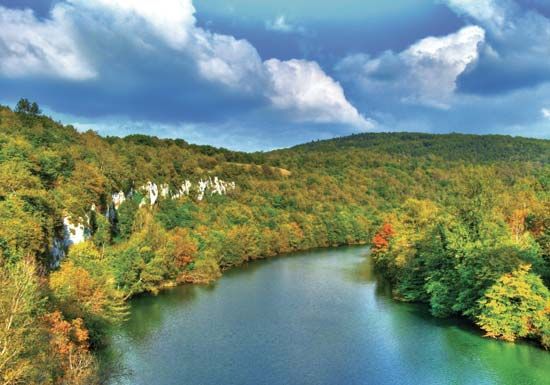
The Ain River is a 124-mile (200-km) river located in eastern France. It originates in the Jura Mountains and flows southward through the Jura and Ain départements.12
As it travels, the river emerges from a gorge near Pont-d’Ain, having provided power for several hydroelectric stations, most notably the Barrage de Vouglans. After passing through the Dombes lowlands, the river joins the Rhône River. Its primary tributaries include the Bienne and Albarine rivers.12
What are the Jura Mountains?
The Jura Mountains are a 225-mile (360-km) mountain system forming an arc along the France-Switzerland border, stretching from the Rhône River to the Rhine. While the majority of the range lies in Switzerland, a significant western portion is located in France. The highest peaks, such as Crêt de la Neige, are found in the south near Geneva.3
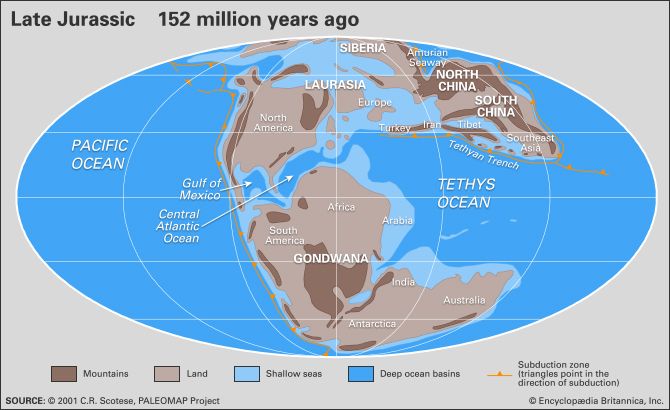
Geologically, the range is composed of fossil-bearing limestone, which provided the basis for the naming of the Jurassic Period. The mountains formed during the Cenozoic Era alongside the Alps through complex thrust phases. Due to the permeability of the limestone, surface water is often scarce, leading to a reliance on underground streams and modern water networks.3
The region is characterized by dense forests, high-altitude pastures, and a dairy-based economy. Beyond agriculture, the area is famous for its watchmaking industry and a thriving tourism sector focused on skiing and hiking.3
How do hydroelectric dams like the Barrage de Vouglans work?
Hydroelectric dams, such as the Barrage de Vouglans, generate electricity by converting the potential energy of stored water into mechanical energy and finally into electricity.5
The process functions through several key components:
- Impoundment: The dam creates a reservoir by raising the water level of a river, which stores water at a higher elevation.56
- Head and Penstocks: The difference in elevation between the reservoir and the powerhouse is known as the head. Water is directed from the reservoir through large pipes or tunnels called penstocks.5
- Turbines and Generators: As the water flows downward at high pressure, it strikes and rotates turbines. These turbines are connected to generators, which convert the mechanical rotation into electrical energy.5
- Transmission: Transformers then increase the voltage of the generated electricity for efficient long-distance transmission.5
Some facilities use pumped-storage systems, where water is pumped back to an elevated reservoir during off-peak hours to be reused during periods of high demand.5
What is the significance of the Rhône River in Europe?
The Rhône River is one of Europe’s most significant waterways, serving as the only major river that flows directly into the Mediterranean Sea. Originating in the Swiss Alps, it is characterized by its Alpine nature, carrying glacial sediments from its source to its delta.89
The river’s significance is rooted in several key areas:
- Economic Corridor: The Rhône-Saône valley acts as a vital transportation funnel between northern and southern France, facilitating commerce and industry.910
- Energy Production: The river is a major source of hydroelectricity, with numerous dams and canals regulating its flow and harnessing its power. Additionally, its waters are essential for cooling nuclear power stations.1110
- Agriculture and Irrigation: The river supports a diverse agricultural economy, providing water for irrigation in vineyards, orchards, and the rice fields of the Camargue region.10
- Ecological Diversity: The river’s delta is a critical habitat for rare species, including flamingos and [egrets], and is protected as a nature reserve.9
Sources
- Ain River — Encyclopædia Britannica
- Ain — Merriam-Webster
- Jura Mountains — Encyclopædia Britannica
- Jura — Encyclopædia Britannica
- Did you know? — Merriam-Webster
- hydroelectric power — Encyclopædia Britannica
- reservoir — Encyclopædia Britannica
- Rhône River — Encyclopædia Britannica
- Rhône River - Physiography — Encyclopædia Britannica
- Rhône River - Hydrology of the Rhône River — Encyclopædia Britannica
- Rhône River - The economy — Encyclopædia Britannica
Published on · 3 min read