Cenozoic Era
Scientists use an integrated approach to geochronology to date and study the Cenozoic Era, combining multiple methodologies to create a high-resolution time…
How do scientists use geochronology to date and study the Cenozoic Era?
Scientists use an integrated approach to geochronology to date and study the Cenozoic Era, combining multiple methodologies to create a high-resolution time scale.1
- Radioisotopic Dating: Techniques such as potassium-argon dating and laser-fusion dating allow researchers to determine the numerical age of volcanic minerals with high precision. These methods provide the absolute dates necessary to calibrate the geologic time scale.12
- Magnetostratigraphy: By measuring the magnetic orientation of rocks, scientists track Earth’s magnetic field reversals1. Because rocks record the polarity present at the time of their formation, researchers can correlate these patterns with magnetic lineations found on the ocean floor.1
- Biostratigraphy: This involves using the distribution of fossil taxa—such as calcareous plankton and siliceous microfossils—to correlate sedimentary strata across different regions.12
- Astronomical Tuning: Recent studies incorporate cyclical components, such as fluctuations in fossil percentages or lithological layers, to fine-tune the time scale to a resolution of approximately 5,000 years.1
What role did the Cenozoic Era play in human evolution?
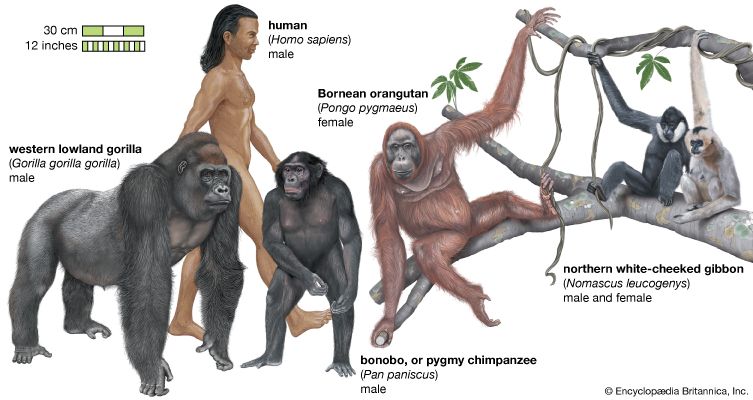
The Cenozoic Era, which began approximately 66 million years ago, served as the critical timeframe for the emergence and diversification of primates and the eventual rise of modern humans (Homo sapiens).56
During the Miocene Epoch, global climatic shifts reduced forested areas, creating more open terrestrial biomes in Africa. These environmental changes intensified during the Pliocene Epoch, forcing early hominins to adapt to a mosaic of woodlands, savannas, and grasslands. This period of environmental flux is believed to have stimulated new lifeways, including the development of energy-efficient bipedal locomotion.78
Human evolution throughout the Cenozoic was not a linear progression but a complex process of experimentation, characterized by the emergence and extinction of numerous hominin species. As the climate became drier and more seasonal, early hominins like Ardipithecus ramidus and Australopithecus thrived in these shifting habitats. By the end of the Neogene Period, these evolutionary pressures contributed to the development of larger brains, sophisticated tool use, and the eventual migration of the genus Homo out of Africa.8795
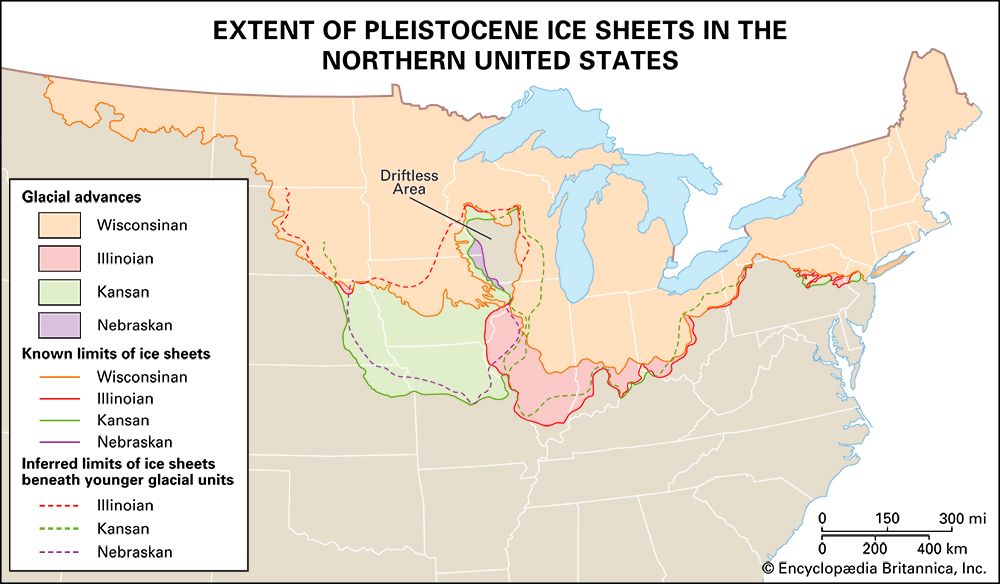
How did the formation and movement of continents influence the climate during the Cenozoic?
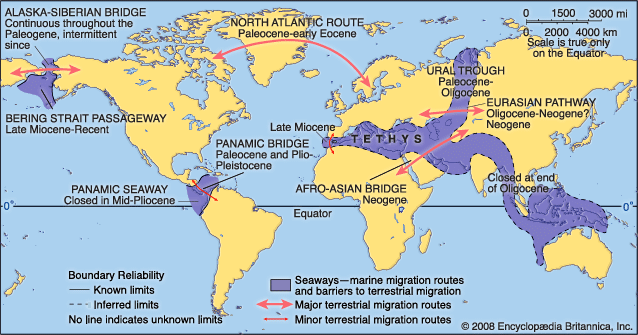
The formation and movement of continents during the Cenozoic Era were primary drivers of global climate change, shifting the Earth from a warm greenhouse state to a cooler icehouse phase. These tectonic forces altered ocean bathymetry, continental elevations, and the configuration of seaways, which in turn reorganized global atmospheric and oceanic circulation.121314
Tectonic Drivers of Cooling
- Isolation of Antarctica: The gradual separation of Australia and South America from Antarctica opened the Drake Passage, establishing a circum-Antarctic current. This isolated Antarctica from warmer northern waters, facilitating the growth of major ice sheets.12154
- Mountain Building and Weathering: The uplift of the Tibetan Plateau, the Andes, and western North America altered atmospheric circulation, such as the creation of the South Asian monsoon. Furthermore, the chemical weathering of these rising mountain ranges acted as a carbon sink, depleting atmospheric carbon dioxide and contributing to global cooling.1214
- Seaway Closures: The closing of the Isthmus of Panama and the Tethys seaway restricted equatorial currents, reducing heat transport to high latitudes and fostering Northern Hemisphere glaciation.1215
What is the Cenozoic Era, and when did it begin and end?
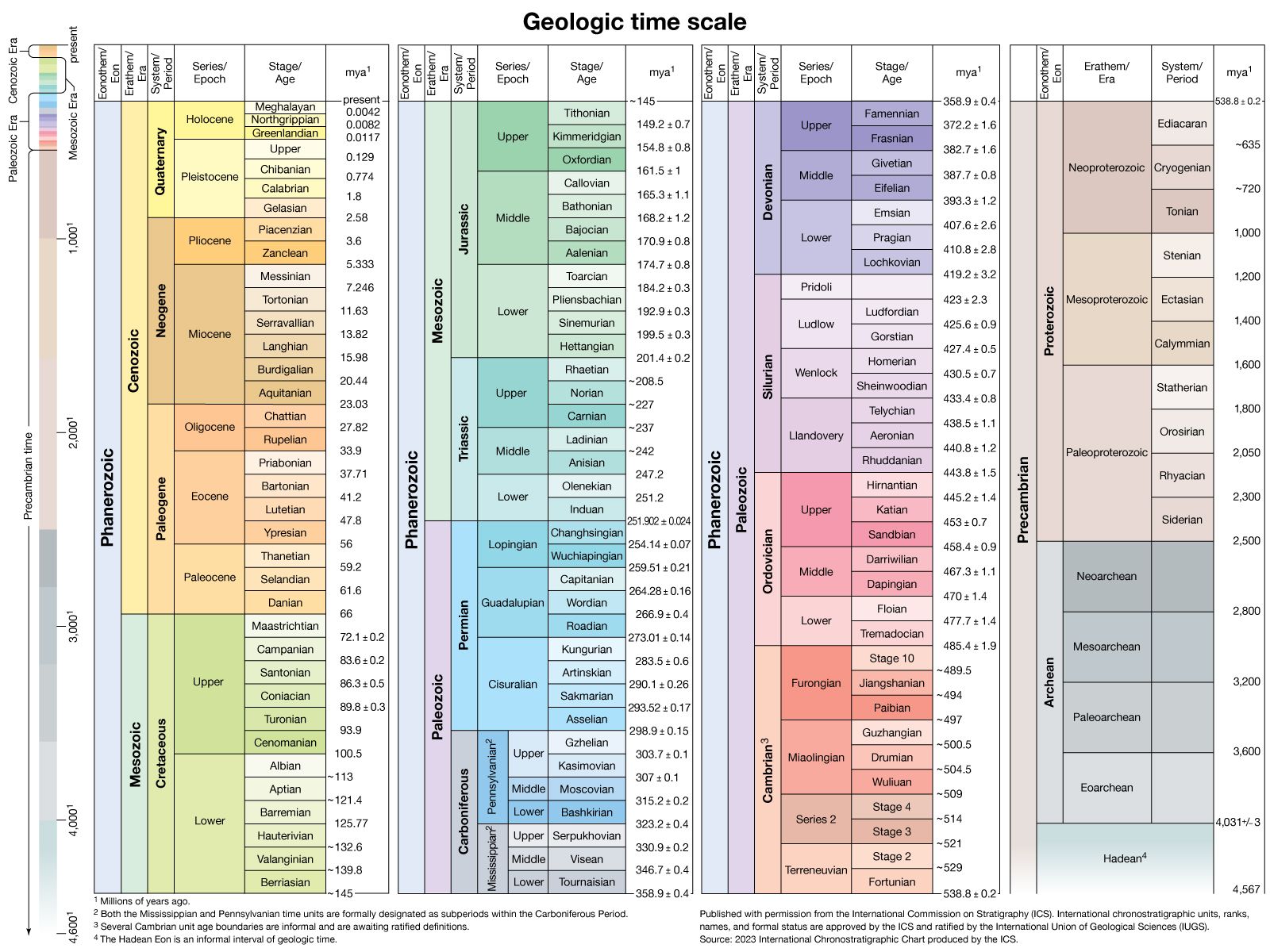
The Cenozoic Era is the third and current major era of Earth’s history. It began approximately 66 million years ago and continues to the present day.11
Often referred to as the “Age of Mammals,” this era is defined by the diversification of life following the K–T extinction and the movement of continents into their modern configurations. The era is traditionally divided into three periods:1117
- Paleogene Period: 66 million to 23 million years ago.11
- Neogene Period: 23 million to 2.6 million years ago.11
- Quaternary Period: 2.6 million years ago to the present.11
The term “Cenozoic” is derived from Greek words meaning “recent life,” reflecting the evolution of flora and fauna toward the forms observed today.11
Sources
- Tertiary Period - Correlation of Tertiary strata — Encyclopædia Britannica
- geochronology — Encyclopædia Britannica
- geology - Historical geology and stratigraphy — Encyclopædia Britannica
- Climate change - Phanerozoic climates — Encyclopædia Britannica
- human evolution - Hominin habitats — Encyclopædia Britannica
- Homo sapiens - Origin — Encyclopædia Britannica
- A Journey Through Time Since the Precambrian - Paleogene Period: 66 million to 23 million years ago, and Neogene Period: 23 million to 2.6 million years ago — Encyclopædia Britannica
- primate — Encyclopædia Britannica
- primate - Pliocene — Encyclopædia Britannica
- Africa - Continental formations — Encyclopædia Britannica
- Cenozoic Era — Encyclopædia Britannica
- Climate change - Cenozoic climates — Encyclopædia Britannica
- Climate change - Tectonic activity — Encyclopædia Britannica
- paleoceanography — Encyclopædia Britannica
- plate tectonics - Climate — Encyclopædia Britannica
- Himalayas - Geologic history — Encyclopædia Britannica
- Cenozoic Era - Cenozoic life — Encyclopædia Britannica
Published on · 3 min read