Akebia
Akebia is a genus of woody, twining vines belonging to the family Lardizabalaceae, native to eastern Asia. These plants are frequently cultivated as…
What is Akebia?
Akebia is a genus of woody, twining vines belonging to the family Lardizabalaceae, native to eastern Asia. These plants are frequently cultivated as ornamentals for their fast growth, which makes them useful for shading, screening on fences and arbors, or as ground cover on embankments.12
There are two primary species:
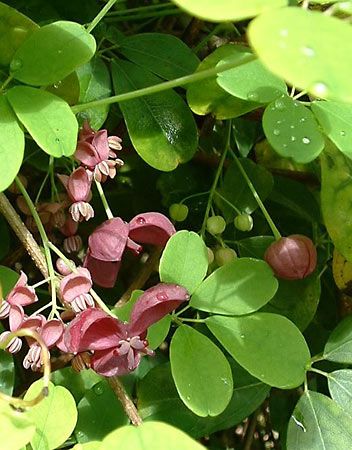
- Five-leaf akebia (A. quinata), also known as the chocolate vine, which features five leaflets per leaf and chocolate-scented, purplish flowers.13
- Three-leaf akebia (A. trifoliata), which is distinguished by having three leaflets per leaf.1
Both species produce unisexual flowers in clusters and bear oblong, purple, edible fruits that are often described as insipid. While valued for their foliage, the chocolate vine has escaped cultivation in some regions, such as the eastern United States, where it is considered an invasive plant.123
Why is the chocolate vine considered an invasive species in some areas?
The chocolate vine (Akebia quinata) is considered an invasive species in parts of the eastern United States because it has escaped cultivation and established itself outside of its native Asian range.34
While the provided search results confirm its status as an invasive plant, they do not detail the specific biological mechanisms—such as rapid growth rates or lack of natural predators—that drive its spread in these regions. Generally, non-native plants become invasive when they lack the environmental checks present in their home habitats, allowing them to outcompete native vegetation for resources like sunlight and space.341
What are the main differences between five-leaf and three-leaf akebia?
The primary difference between the two species of Akebia lies in the structure of their foliage:
- Five-leaf akebia (A. quinata), commonly known as the chocolate vine, is characterized by leaves that consist of five leaflets arranged in a hand-like pattern.1
- Three-leaf akebia (A. trifoliata) is distinguished by having only three leaflets per leaf.1
Beyond this structural distinction, both species share similar characteristics as fast-growing, woody, twining vines in the family Lardizabalaceae. They both produce clusters of unisexual, purplish flowers and bear edible, oblong, purple fruits that are noted for being insipid. Both are frequently utilized in landscaping for their dense foliage, serving as effective ground covers or screens for arbors and fences.1
How do plants like akebia use vines to climb structures?
Plants like Akebia climb structures primarily through a process called twining rather than by using specialized organs like tendrils. While many climbing plants rely on sensitive, threadlike tendrils that curl around objects upon contact, Akebia species are classified as twining vines.156
In twining plants, the main stem itself exhibits a growth behavior that allows it to spiral around supports such as arbors, fences, or other vegetation. This movement is often associated with thigmotropism, a biological response where a plant grows or moves in reaction to physical touch or contact with a solid surface. By sensing the presence of a support, the vine directs its growth to wrap its stem around the object, providing the necessary stability to reach higher levels for better access to sunlight.157
Sources
- Akebia — Encyclopædia Britannica
- Akebia — Merriam-Webster
- chocolate vine — Merriam-Webster
- kudzu — Encyclopædia Britannica
- tendril — Encyclopædia Britannica
- vine — Encyclopædia Britannica
- Did you know? — Merriam-Webster
Published on · 2 min read