Al-Dahnāʾ
Al-Dahnāʾ is a prominent arc of reddish sandy desert located in central Saudi Arabia. Extending approximately 800 miles (1,300 km), it serves as a vital link…
What is Al-Dahnāʾ?
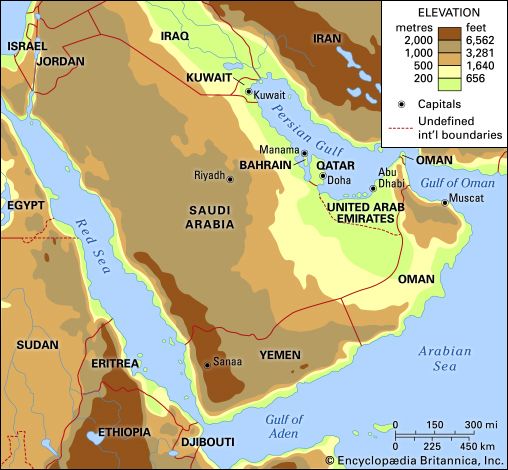
Al-Dahnāʾ is a prominent arc of reddish sandy desert located in central Saudi Arabia. Extending approximately 800 miles (1,300 km), it serves as a vital link between the northern Al-Nafūd desert and the vast Rubʿ al-Khali (the Empty Quarter) to the south.12
The region is characterized by a series of seven major sand ridges separated by plains, typically measuring between 30 and 50 miles in width. In its central stretches, these ridges can reach heights of roughly 150 feet, with some dunes rising even higher. Despite its arid nature, the area provides essential pasture for livestock during the winter and spring seasons. Additionally, the desert is economically significant; the Khurayṣ oil field was discovered beneath its sands in 1957. Today, the region is traversed by key roads connecting major cities such as Riyadh, Kuwait, and Hasa.12
What is the Rub’ al-Khali desert?
The Rubʿ al-Khali, often referred to as “The Empty Quarter” or simply Al-Ramlah (“The Sand”) by local Bedouins, is the largest uninterrupted sand desert in the world. Covering approximately 250,000 square miles (650,000 square km), it occupies more than one-fourth of the Arabian Peninsula, primarily within southeastern Saudi Arabia, with smaller portions extending into Yemen, Oman, and the United Arab Emirates.34
The desert features a diverse topography, ranging from fine, soft sand in the west to sand dunes, sabkhahs (salt flats), and gravel plains in the east. It is one of the most arid regions on Earth, yet it holds immense economic importance due to vast petroleum and natural gas reserves discovered beneath its surface, including the massive Al-Ghawār oil field. While largely uninhabited and harsh, the region has been the subject of intensive exploration by oil companies since the mid-20th century.354
How do sand dunes form in the desert?
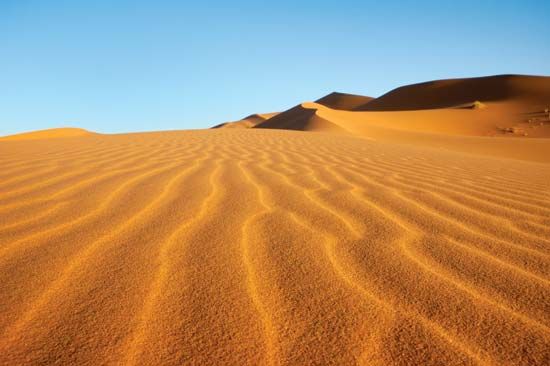
Sand dunes are mounds or ridges of sand shaped by the wind under the influence of gravity. Their formation is a complex process that typically begins on hard desert surfaces when wind velocity decreases, causing sand to deposit in slight hollows or patches.78
The Formation Process
- Sand Movement: Most sand travels as “saltating” grains—a process of jumping or leaping—while coarser particles move via creep along the surface.79
- Deposition: When wind encounters a sand patch, it adjusts its velocity, leading to further deposition. As the patch grows into a dune, the windward slope eventually stabilizes, preventing further growth.7
- The Slip Face: As a dune grows, the leeward slope steepens until the wind can no longer follow it, creating a “dead zone.” When this slope reaches the angle of repose (approximately 32°), sand slips down the face. This allows the dune to maintain equilibrium and migrate forward as sand is eroded from the windward side and deposited on the lee.7
Dune shapes and patterns are heavily influenced by wind direction, velocity, and turbulence, often resulting in distinct forms like barchan dunes or large compound dunes.1011
What is the climate like in Saudi Arabia?
The climate of Saudi Arabia is predominantly arid, characterized by extreme heat in the summer and cool, invigorating winters. The country is generally divided into three climatic zones: the vast desert interior, a steppe region along the western highlands, and a small area of humid, milder conditions in the southern highlands near Yemen.134
Temperature and Humidity
Summers (June to August) are intensely hot, with daytime temperatures frequently exceeding 100 °F (38 °C) across the country and reaching as high as 130 °F (55 °C) in the desert. While interior regions experience dry heat, coastal areas often face high, oppressive humidity. Winters (December to February) are cool, with temperatures in cities like Riyadh averaging in the low 50s °F (low 10s °C). Frost and snow are rare but can occur in the southern highlands.13414
Precipitation and Winds
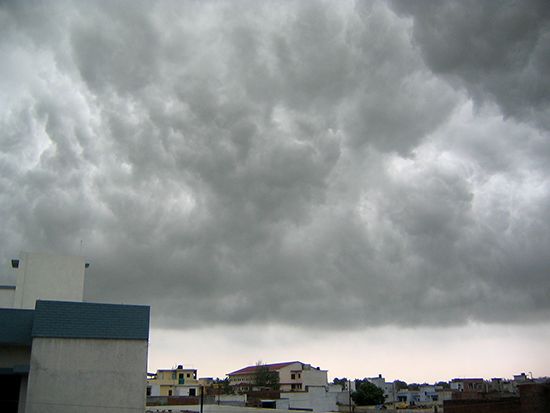
Precipitation is generally low and highly variable. While some areas receive winter rains from Mediterranean weather systems, the Rubʿ al-Khali is exceptionally arid, sometimes experiencing no rain for a decade. Conversely, the Asir highlands receive significant rainfall from summer monsoon winds. The region is also subject to shamals—strong, dry winds that transport massive amounts of sand and dust.134
Sources
- Al-Dahnāʾ — Encyclopædia Britannica
- Arabia - Al-Dahnāʾ — Encyclopædia Britannica
- Rubʿ al-Khali — Encyclopædia Britannica
- Arabian Desert - Climate of the Arabian Desert — Encyclopædia Britannica
- Arabian Desert - Physiography — Encyclopædia Britannica
- Arabia - The Rubʿ al-Khali — Encyclopædia Britannica
- sand dune - Dune and sheet patterns — Encyclopædia Britannica
- sand dune - Formation and growth of dunes — Encyclopædia Britannica
- sand dune - Winds — Encyclopædia Britannica
- sand dune — Encyclopædia Britannica
- sand dune - Fixed dunes in semiarid regions — Encyclopædia Britannica
- saltate — Merriam-Webster
- Saudi Arabia - Climate of Saudi Arabia — Encyclopædia Britannica
- Riyadh: Top Questions — Encyclopædia Britannica
Published on · 3 min read