Arabian Desert
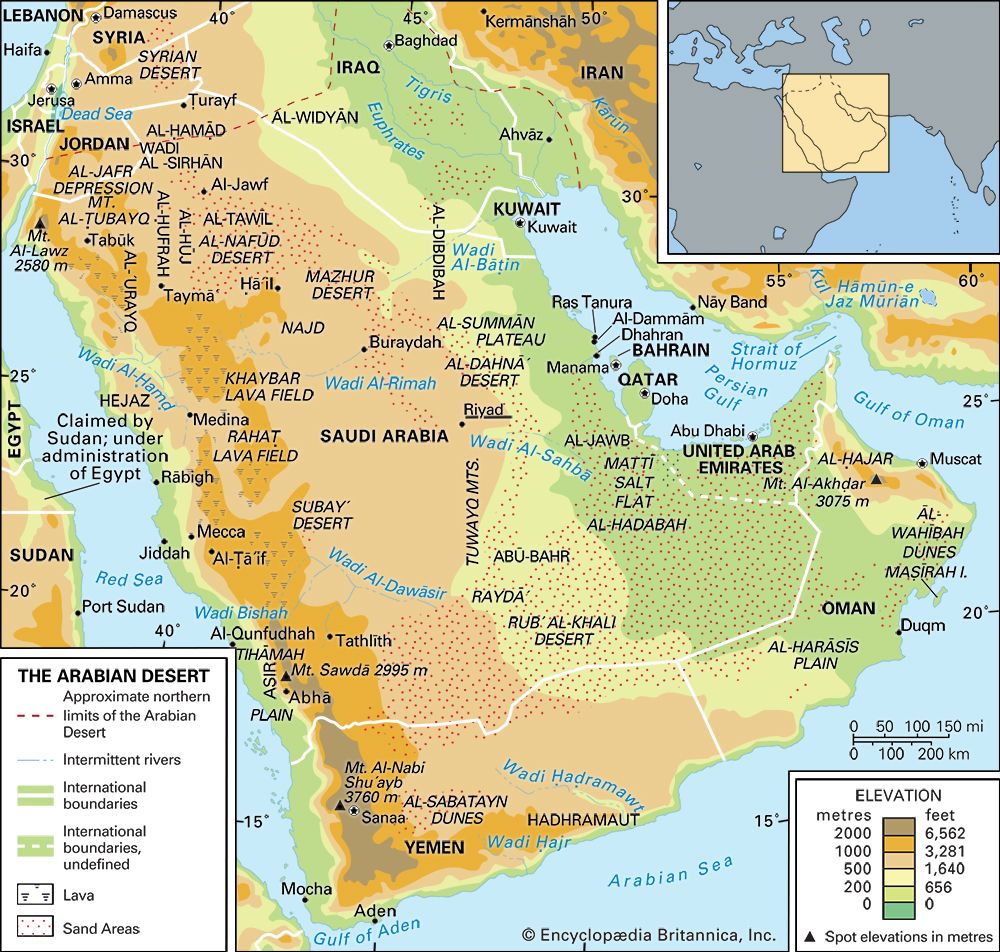
The Arabian Desert is a vast, topographically diverse region characterized by several distinct landforms and geographical features:
What are the major landforms and geographical features within the Arabian Desert?
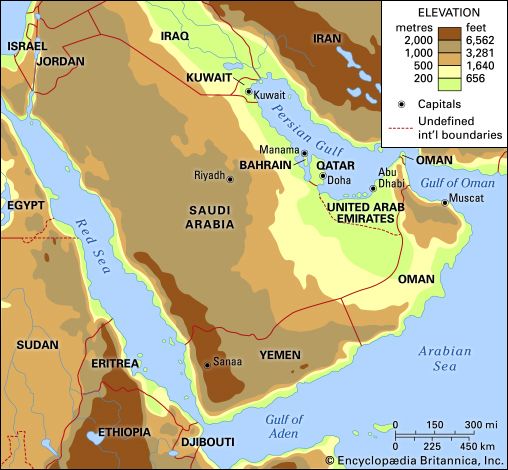
The Arabian Desert is a vast, topographically diverse region characterized by several distinct landforms and geographical features:
- Highlands and Mountains: Significant mountainous regions rise in the northwest (Hejaz), the southwest (Asir), Yemen, and Oman. Notable peaks include Mount Al-Nabī Shuʿayb and the Oman Mountains.12
- Plateaus and Escarpments: The landscape features extensive plateaus, such as those in Jordan and the southern Al-Jawl region. A prominent western escarpment stretches over 600 miles, while central Najd is defined by west-facing limestone cuestas, most notably the Ṭuwayq Mountains.12
- Sand Deserts: Approximately one-third of the region is covered by sand. The two largest bodies are Al-Nafūd in the north and the Rubʿ al-Khali (the “Empty Quarter”) in the southeast, which is the world’s largest continuous sand desert.213
- Plains and Sabkhahs: Broad gravel and chert-covered plains are common. Additionally, the region features sabkhahs—treacherous, saline salt flats often found along coastal areas and in enclosed basins.1
- Drainage Systems: Most wadis (ephemeral watercourses) are dry, though they have historically shaped the landscape through flooding and sediment deposition.1
How has human civilization historically interacted with and survived in the Arabian Desert?
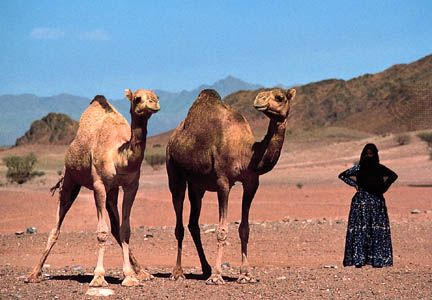
Human civilization has inhabited the Arabian Desert since the Pleistocene epoch, developing sophisticated strategies to survive in an arid environment. Historically, the Bedouin adapted to nomadic life by herding camels, horses, and sheep, while also cultivating date palms and other crops in oases through hired labor.5
Survival and economic stability were historically tied to the management of scarce resources. Nomads relied on tribal territories known as dirah to secure grazing and water, while also engaging in long-distance commerce and trade. The domestication of the camel around the 12th century BCE was a pivotal technological advancement that facilitated easier desert travel and enabled the rise of flourishing societies, such as the state of Saba (Sheba) and the trade hub of Dilmun.56
Interaction between nomadic and settled populations was characterized by both conflict and cooperation, including religious pilgrimages like the hajj and the exchange of cultural traditions. In the modern era, the discovery of petroleum in 1936 and the introduction of motorized transport have transformed traditional lifestyles, leading many Bedouin to settle in urban areas.5
What is the geographical location and extent of the Arabian Desert?
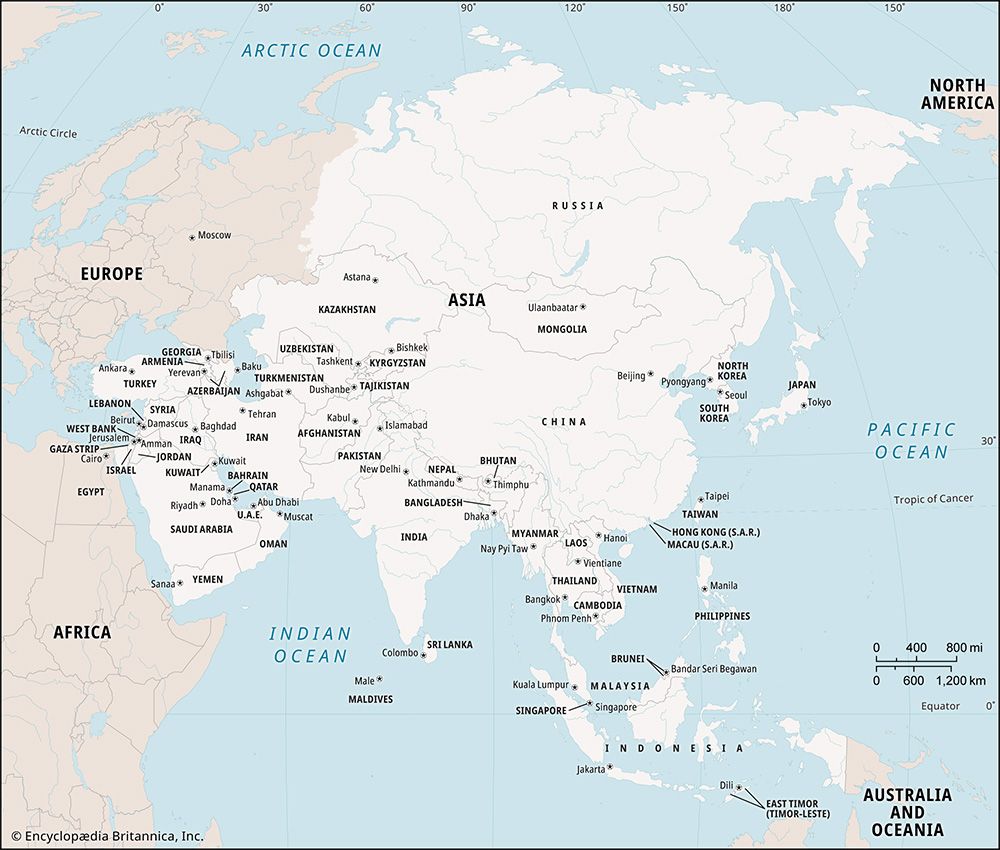
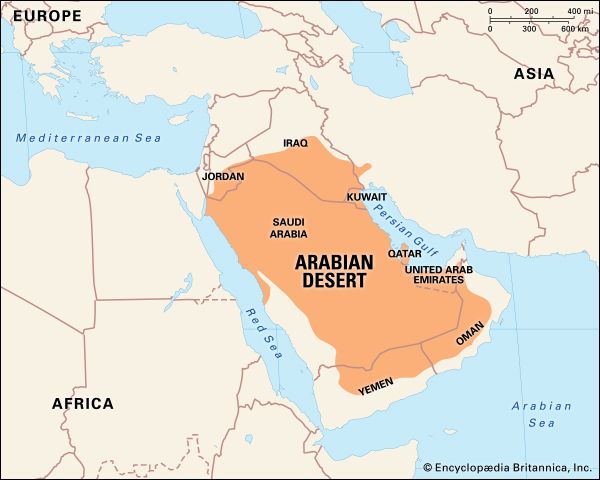
The Arabian Desert is a vast desert region located in extreme southwestern Asia, occupying nearly the entire Arabian Peninsula. Covering approximately 900,000 square miles (2,300,000 square km), it is the largest desert on the continent and the second-largest on Earth, surpassed only by the Sahara.9
The desert’s boundaries are defined by several major bodies of water and land regions:
- North: Syrian Desert
- Northeast and East: Persian Gulf and the Gulf of Oman
- Southeast and South: Arabian Sea and the Gulf of Aden
- West: Red Sea9
The region encompasses territory within Saudi Arabia, Yemen, Oman, the United Arab Emirates, Qatar, Kuwait, Iraq, and Jordan.9
How have modern technologies and infrastructure projects changed life in the Arabian Desert?
Modern technologies and infrastructure have fundamentally transformed life in the Arabian Desert, shifting the region from a landscape defined by nomadic isolation to one integrated into the global economy.
Economic and Industrial Transformation
The discovery of petroleum in 1936 served as the primary catalyst for modernization. The subsequent development of vast oil fields and refineries has driven industrialization and economic diversification across the peninsula. To support these industries and growing populations, governments have invested heavily in desalinization plants, which now provide essential fresh water by processing seawater, a critical advancement in a region with minimal rainfall.51011
Infrastructure and Connectivity
Transportation has evolved from slow, arduous camel caravans to rapid, modern systems. Key developments include:712
- Road Networks: Paved, multilane highways now link major cities, while smaller roads connect remote towns to the national grid.12
- Air and Rail: International and domestic air services provide rapid transit, and railways, such as the line between Al-Dammām and Riyadh, have drastically reduced travel times.12
- Communication: The introduction of telephones and televisions has integrated desert communities into broader cultural and political spheres.5
Social Impact
These changes have significantly altered the traditional Bedouin lifestyle. Many nomads have settled in urban areas or villages, leading to a decline in purely nomadic populations. While tribal loyalties remain relevant in social contexts like marriage, political mobility is now constrained by international boundaries and government policies. Increased access to education and public services has further reshaped the daily lives of those who remain in the desert.5
Sources
- Arabian Desert - Physiography — Encyclopædia Britannica
- Arabian Desert - Geology of the Arabian Desert — Encyclopædia Britannica
- Rubʿ al-Khali — Encyclopædia Britannica
- Arabian Desert - Physical features — Encyclopædia Britannica
- Arabian Desert - People of the Arabian Desert — Encyclopædia Britannica
- ancient Middle East - Pre-Islamic Arabia. — Encyclopædia Britannica
- Sahara - Transportation — Encyclopædia Britannica
- Sahara - People of the Sahara — Encyclopædia Britannica
- Arabian Desert — Encyclopædia Britannica
- Arabia - Economy of Arabia — Encyclopædia Britannica
- Arabian Desert - Resources — Encyclopædia Britannica
- Arabian Desert - Transportation of the Arabian Desert — Encyclopædia Britannica
- Asia - Rural settlement — Encyclopædia Britannica
Published on · 4 min read