Alaskan Mountains
The Alaskan mountains offer a wide array of outdoor activities and tourism opportunities, largely centered around the state's vast network of national parks…
What are some popular outdoor activities and tourism opportunities in the Alaskan mountains?
The Alaskan mountains offer a wide array of outdoor activities and tourism opportunities, largely centered around the state’s vast network of national parks, preserves, and forests.
Popular Outdoor Activities
- Mountaineering and Hiking: The rugged Alaska Range is a premier destination for climbers, particularly Denali, which attracts hundreds of mountaineers annually. In the Chugach Mountains, hiking and biking are popular, with the Glen Alps trailhead serving as a common access point near Anchorage.12
- Winter Sports: During the winter months, visitors engage in cross-country skiing, snowshoeing, and dogsledding. Dogsled racing is the official state sport, with the Iditarod Trail Sled Dog Race being the most iconic event.13
- Wildlife Viewing: The mountains provide habitats for diverse species, including brown and black bears, wolves, Dall sheep, and caribou, making wildlife observation a major draw for tourists.41
Tourism Opportunities
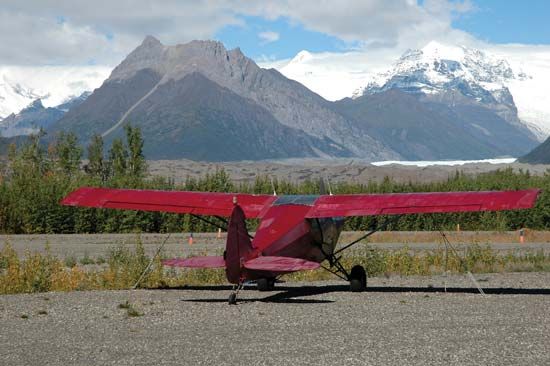
Tourism is a significant economic driver in coastal areas and near major parks. Visitors often utilize air tours to experience the vast, pristine landscapes of the interior. Additionally, the Wrangell–St. Elias National Park and Preserve offers access to some of the most expansive wilderness areas in the U.S. national park system.512
What natural resources are found in the Alaskan mountain regions?
The Alaskan mountain regions are rich in diverse natural resources, which have historically shaped the state’s economy and continue to be a subject of significant development and environmental debate.
Mineral Resources
The mountains are a major source of various metals and minerals. Key resources include:
- Precious and Base Metals: Significant mining operations extract gold, silver, zinc, copper, and lead from various locations, including the panhandle and the interior.26
- Coal: Large reserves exist, such as the Beluga Coal Field and deposits in the National Petroleum Reserve–Alaska. The Usibelli mine near Healy is currently the only operating coal mine in the state.6
Energy Resources
Energy production is a cornerstone of the Alaskan economy, particularly regarding fossil fuels:
- Petroleum and Natural Gas: The North Slope, specifically Prudhoe Bay, contains vast oil and natural gas reserves. The Trans-Alaska Pipeline serves as the critical infrastructure for transporting this oil to southern ports.267
- Hydropower: Alaska possesses immense, largely untapped hydropower potential, with existing dams currently supplying electricity to major urban centers.6
Biological and Forest Resources
- Forestry: While historically significant, the commercial timber industry—centered in the Tongass and Chugach national forests—has seen reduced activity due to logging regulations.28
- Subsistence Resources: For many Indigenous communities, the land provides essential resources through hunting, fishing, and trapping.28
What is the highest peak in Alaska, and how does it compare to other mountains in North America?
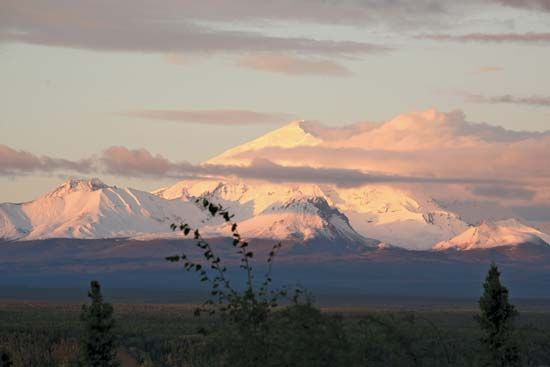
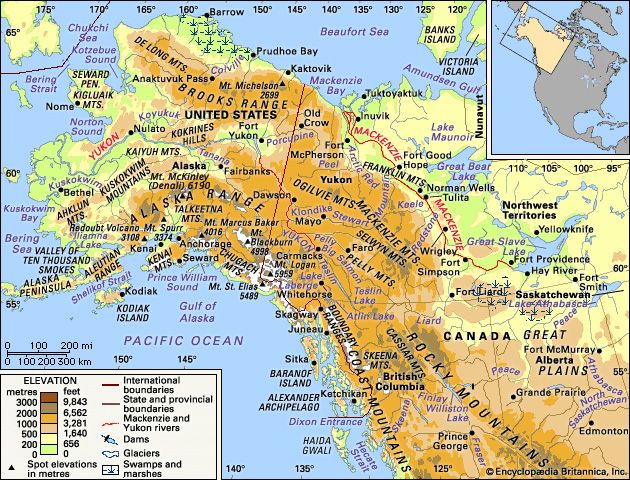
The highest peak in Alaska—and the entire continent of North America—is Denali, formerly known as Mount McKinley. Located in the Alaska Range, it reaches an official elevation of 20,310 feet (6,190 meters).121314
When compared to other major peaks in North America, Denali stands as the clear leader in height. The continent’s highest points are ranked as follows:1215
- Denali (Alaska, U.S.): 20,310 feet (6,190 meters)1214
- Mount Logan (Yukon, Canada): 19,551 feet (5,959 meters)1215
- Pico de Orizaba (Mexico): 18,406 feet (5,610 meters)1215
- Mount Saint Elias (U.S.–Canada border): 18,008 feet (5,489 meters)12
Denali dominates its surrounding landscape, rising abruptly from the Denali Fault at its base. While it is the highest point in North America, it remains significantly shorter than the world’s tallest peak, Mount Everest, which stands at 29,032 feet (8,849 meters).14
How do the Alaskan mountains affect the state’s climate and ecosystems?
The Alaskan mountains play a fundamental role in shaping the state’s diverse climate and ecosystems by acting as massive physical barriers that influence air movement, precipitation, and temperature distribution.1617
Climatic Influence
The mountains function as climatic dividers, separating distinct zones across the state. By forcing air masses to rise—a process known as orographic precipitation—these ranges create significant differences in moisture between their windward and leeward sides.161
- Maritime vs. Continental: Coastal ranges, such as the Chugach Mountains, intercept moisture-laden air from the Pacific, resulting in some of the wettest environments in the state, with annual precipitation reaching 200 to 300 inches. Conversely, the leeward side of these barriers often experiences a rain shadow, leading to much drier, continental conditions in the interior.1618171
- Temperature Regulation: The ranges help isolate the interior from the moderating effects of the ocean, contributing to the extreme temperature fluctuations characteristic of the continental zone, where winter temperatures can drop below −50 °F (−46 °C).16
Ecosystem Impact
The mountains dictate the distribution of flora and fauna by creating varied environmental niches:
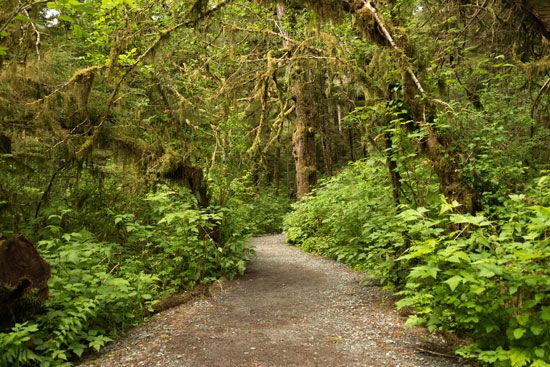
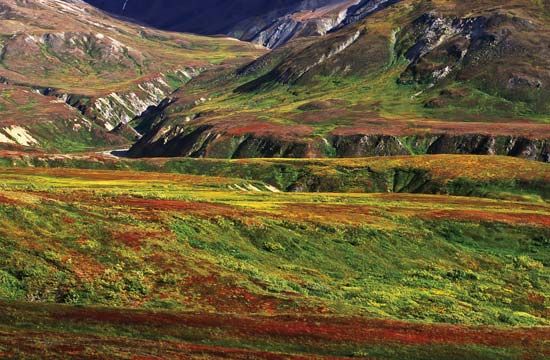
- Vegetation Zones: Elevation determines the timberline, above which only tundra vegetation—such as lichens, grasses, and dwarf shrubs—can survive. The coastal flanks support dense rain forests, while the continental slopes are dominated by white spruce and birch.218
- Glacial Hydrology: The mountains host extensive glacier systems that act as natural reservoirs. These glaciers regulate streamflow by storing precipitation and releasing it as meltwater, which provides a stable water supply for downstream ecosystems.181920
- Habitat Diversity: The rugged terrain provides critical habitats for native species, including Dall sheep, mountain goats, and various bear populations, which utilize the different elevations and slopes for foraging and shelter.2
Sources
- Alaskan mountains - Plant and animal life — Encyclopædia Britannica
- Alaskan mountains - People and economy — Encyclopædia Britannica
- Denali National Park and Preserve — Encyclopædia Britannica
- Alaska - Sports and recreation — Encyclopædia Britannica
- Chugach Mountains — Encyclopædia Britannica
- Alaska - Resources and power — Encyclopædia Britannica
- Alaska - Agriculture, forestry, and fishing — Encyclopædia Britannica
- Brooks Range — Encyclopædia Britannica
- Alaska - Economy of Alaska — Encyclopædia Britannica
- Alaska - Services, labor, and taxation — Encyclopædia Britannica
- Alaska - Alaska since statehood — Encyclopædia Britannica
- North America: Top Questions — Encyclopædia Britannica
- Alaska Range — Encyclopædia Britannica
- The World’s Highest Mountains by Continent — Encyclopædia Britannica
- Volcano Pico de Orizaba — Encyclopædia Britannica
- Alaskan mountains - Climate of the Alaskan mountains — Encyclopædia Britannica
- Alaska - Relief — Encyclopædia Britannica
- Alaska - Climate of Alaska — Encyclopædia Britannica
- glacier - Glacier hydrology — Encyclopædia Britannica
- glacier - Mass balance of mountain glaciers — Encyclopædia Britannica
- Alaska Range: Top Questions — Encyclopædia Britannica
- Rain shadow — Encyclopædia Britannica
Published on · 4 min read