Tundra
Permafrost is a defining feature of the Arctic tundra that fundamentally shapes its physical and biological environment. By acting as an impermeable barrier…
What role does permafrost play in the tundra ecosystem?
Permafrost is a defining feature of the Arctic tundra that fundamentally shapes its physical and biological environment. By acting as an impermeable barrier to water, it prevents downward drainage, causing the soil to become saturated and boggy during the summer thaw. This waterlogged surface supports unique landforms, such as pingos and patterned ground, which are created by the freeze-thaw cycle and the movement of soil known as solifluction.1
Biologically, permafrost limits the depth of the “active layer” where most root growth, animal burrowing, and decomposition occur. Furthermore, permafrost serves as a massive global carbon reservoir, storing vast amounts of dead organic matter. Scientists are concerned that as the climate warms, the thawing of this layer will expose that organic material to microbial decomposition, potentially releasing significant quantities of methane and carbon dioxide into the atmosphere, which could accelerate global warming2.12
How does the tundra’s soil composition differ from other ecosystems?
Tundra soil composition is distinct from other ecosystems primarily due to the presence of permafrost, a layer of permanently frozen ground that acts as an impermeable barrier to water. This unique feature creates several key differences:12
- Drainage and Saturation: Unlike well-drained soils in many other biomes, tundra lowlands become saturated and boggy during the summer thaw because water cannot drain downward. This creates an oxygen-free environment that leads to the formation of gley, a bluish, waterlogged soil substance.12
- Organic Matter Accumulation: Due to cold temperatures and poor drainage, the decomposition of organic matter is significantly slower than in temperate or tropical ecosystems. This results in the accumulation of undecomposed organic residues, often in the form of peat.24
- Active Layer Dynamics: Biological activity is restricted to a thin “active layer” above the permafrost, which typically thaws only 15 to 30 cm deep in the High Arctic. This layer is subject to constant freeze-thaw cycles, causing soil movement such as solifluction and the formation of unique features like patterned ground, stone rings, and pingos.12
- Soil Classification: Tundra soils are typically classified as Gelisols or Cryosols, which are characterized by their frost-influenced, cryogenic nature.15
What are some unique geological features found in tundra regions?
Tundra regions feature several unique geological formations driven primarily by the presence of permafrost and intense freeze-thaw cycles. These processes create distinct landscapes:
- Pingos: These are dome-shaped hills, sometimes reaching 90 meters in height, formed when the pressure of freezing groundwater pushes up a layer of frozen ground. They often contain a core of clear ice and can develop craters if the top ruptures.789
- Thermokarst Formations: As ground ice melts, it creates an uneven, “hummocky” surface characterized by sinkholes, tunnels, caverns, and thaw lakes. These features can pose significant challenges for construction and agriculture due to the risk of sudden ground collapse.710
- Patterned Ground: Repeated freezing and thawing sorts granular sediments into geometric shapes, including circles, stone nets, and polygons. On slopes, these can be distorted into stone stripes or garlands.719
- Solifluction Features: Because permafrost prevents water drainage, the saturated active layer of soil can slide downslope, creating terraces and lobes. This process is also responsible for unique phenomena like rock slabs standing on end.79
What are the defining characteristics of a tundra ecosystem?
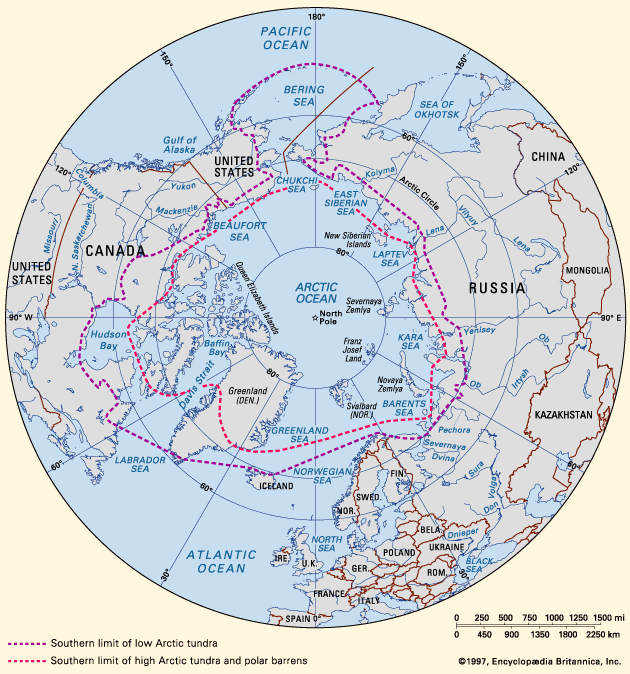
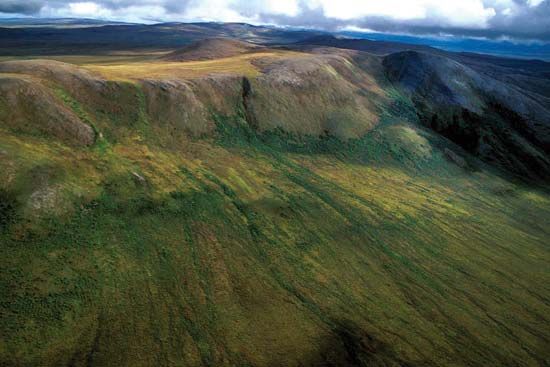
A tundra is a vast, treeless ecosystem characterized by its cold climate, low-growing vegetation, and unique soil dynamics. It is primarily found in high-latitude regions north of the Arctic Circle (Arctic tundra) or at high elevations above the timberline on mountains (alpine tundra).3
Defining Characteristics
- Climate: Tundra regions experience long, severe winters and short, mild summers. The climate is defined by sub-freezing mean annual temperatures and relatively low precipitation, often falling as snow.111
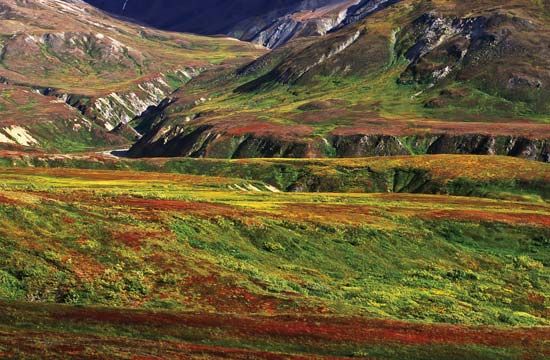
- Vegetation: The landscape is dominated by low-lying plants such as mosses, lichens, herbs, and dwarf shrubs. Because the growing season is extremely short, most plants are perennials that reproduce asexually.312
- Soil and Permafrost: A defining feature of the Arctic tundra is permafrost, a layer of permanently frozen ground that prevents deep water drainage. In contrast, alpine tundra generally lacks continuous permafrost and is often better drained.31311
- Freeze-Thaw Cycles: Constant alternating freezing and thawing of the ground shapes the landscape, creating features like patterned ground and solifluction terraces.313
Sources
- Tundra - Soils — Encyclopædia Britannica
- Tundra - Effects of human activities and climate change — Encyclopædia Britannica
- Tundra — Encyclopædia Britannica
- Asia - The Arctic zone — Encyclopædia Britannica
- Asia - The forest tundra — Encyclopædia Britannica
- Polar ecosystem - Development and structure of populations and communities — Encyclopædia Britannica
- permafrost - Surface manifestations of permafrost and seasonally frozen ground — Encyclopædia Britannica
- pingo — Encyclopædia Britannica
- permafrost - Patterned ground — Encyclopædia Britannica
- permafrost - Thermokarst formations — Encyclopædia Britannica
- Tundra climate — Encyclopædia Britannica
- Tundra - Arctic mammals — Encyclopædia Britannica
- Tundra - Climate — Encyclopædia Britannica
- Arctic - Vegetation — Encyclopædia Britannica
Published on · 3 min read