Albertosaurus
Albertosaurus was a large, carnivorous tyrannosaur that lived during the late Cretaceous Period. While it shared many structural similarities with…
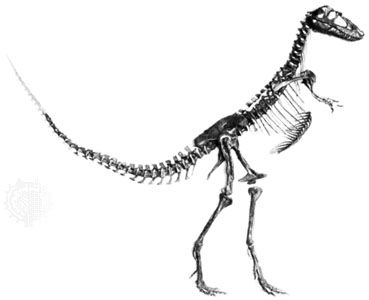
What are the key physical characteristics of Albertosaurus?
Albertosaurus was a large, carnivorous tyrannosaur that lived during the late Cretaceous Period. While it shared many structural similarities with Tyrannosaurus, it was generally smaller, reaching lengths of approximately 9 meters (30 feet) with its head held 3.5 meters off the ground.1
Key physical features include:
- Skull and Jaws: It possessed a large skull and powerful jaws equipped with numerous large, sharp teeth. These teeth were serrated, recurved, and nearly round in cross-section, an adaptation designed for puncturing flesh and bone.1
- Forelimbs: Like other tyrannosaurs, Albertosaurus had significantly reduced forelimbs. Its hands featured only two functional fingers and a small, rudimentary third digit.12
These dinosaurs were dominant predators of their time, likely functioning as both hunters and scavengers.1
How has our understanding of Albertosaurus changed over time with new fossil discoveries?
Our understanding of Albertosaurus has evolved significantly through ongoing paleontological research and fossil discoveries in regions like Dinosaur Provincial Park. While early studies established the basic morphology of this tyrannosaur, modern excavations have provided more complete skeletal data that refine our knowledge of its anatomy and evolutionary history.13
Key developments include:
- Anatomical Precision: Excavations in the 1990s, such as the recovery of a nearly complete skeleton of Albertosaurus libratus, have allowed scientists to move beyond fragmentary remains to create more accurate reconstructions of the animal’s physical structure.3
- Evolutionary Context: Fossil evidence now suggests that albertosaurs and other tyrannosaurs likely evolved in eastern Asia before migrating to North America, where they became dominant predators during the Late Cretaceous Period predators during the Late Cretaceous Period.1
- Ecological Insight: The discovery of diverse bonebeds—containing not just Albertosaurus but also a wide array of contemporary species—has helped researchers better understand the riverine ecosystems these dinosaurs inhabited and their roles as both hunters and scavengers.13
How was Albertosaurus first discovered and named?
The genus Albertosaurus was formally named in 1905 by the American paleontologist Henry Fairfield Osborn.12
The name is derived from New Latin, combining Alberta—the Canadian province where the fossils were discovered—with the suffix -saurus, meaning “lizard.” Osborn, who served as a curator at the American Museum of Natural History, was responsible for naming several iconic dinosaur genera during this period, including Tyrannosaurus rex in the same year.12
How does Albertosaurus compare to its famous relative, Tyrannosaurus rex?
Albertosaurus and Tyrannosaurus rex are both prominent members of the tyrannosaur group, sharing several key anatomical features, including reduced forelimbs, large skulls, and powerful jaws equipped with large, serrated, and rounded teeth designed for puncturing bone and flesh.15
Despite these similarities, they differ in several notable ways:
- Size and Build: Albertosaurus was a more lightly built, smaller dinosaur, reaching approximately 9 meters (30 feet) in length. In contrast, T. rex was significantly larger and more robust, with some estimates placing its weight at around 16,000 pounds.125
- Temporal Range: Albertosaurus fossils are found in rock layers that are slightly older than those containing T. rex, indicating that albertosaurines generally preceded the later, larger tyrannosaurines.12
- Evolutionary History: Both groups are thought to have originated in eastern Asia before migrating to North America, where they became dominant predators during the Late Cretaceous Period.1
While both were likely apex predators that may have engaged in scavenging, T. rex represents the culmination of the tyrannosaur lineage in North America, standing as the only formal member of its genus during the late Maastrichtian Age.12
Sources
- Albertosaurus — Encyclopædia Britannica
- Albertosaurus — Merriam-Webster
- Dinosaur Provincial Park — Encyclopædia Britannica
- Henry Fairfield Osborn — Encyclopædia Britannica
- tyrannosaur - Classification — Encyclopædia Britannica
Published on · 3 min read