Albula Alps
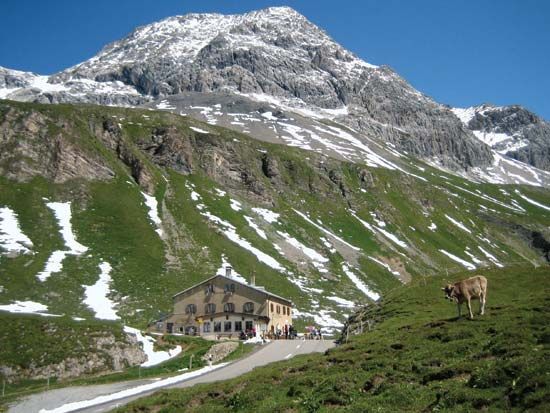
The Albula Alps are a mountain range located in eastern Switzerland within the canton of Graubünden. As part of the Rhaetian Alps, they extend northeast from…
What is Albula Alps?
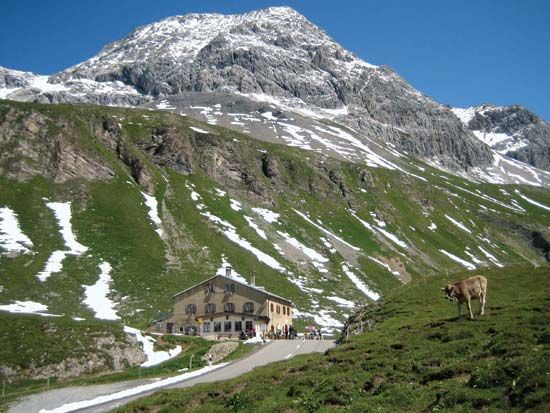
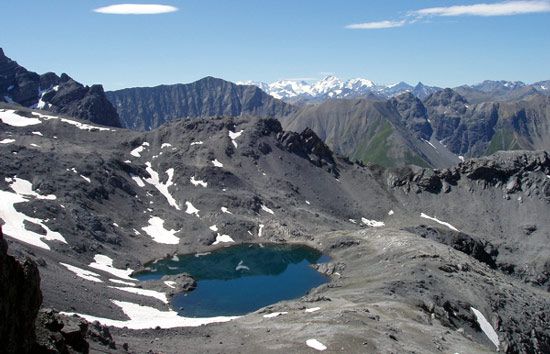
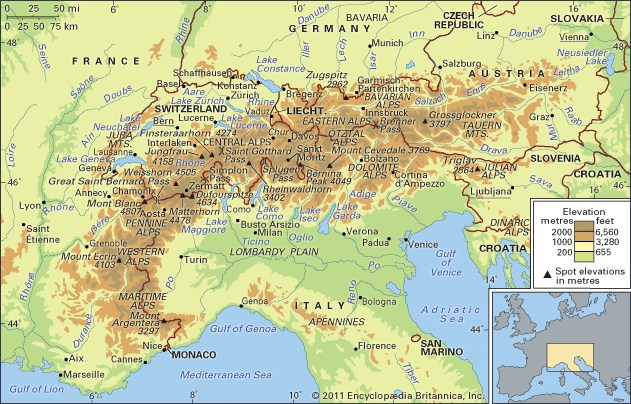
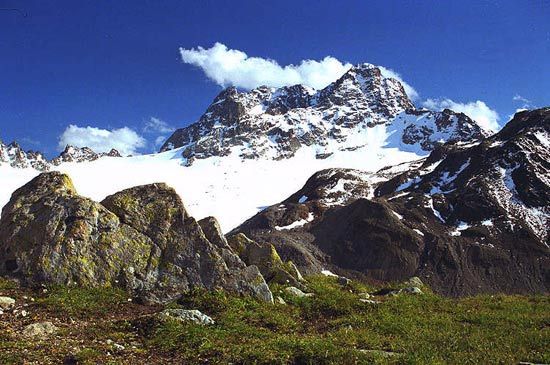
The Albula Alps are a mountain range located in eastern Switzerland within the canton of Graubünden. As part of the Rhaetian Alps, they extend northeast from the Splügen Pass to the Flüela Pass, situated north of the resort town of Saint Moritz.1
The region is characterized by high-altitude terrain, with many peaks exceeding 10,000 feet (3,050 meters). The highest point is the glacier-covered Piz Kesch, which reaches an elevation of 11,214 feet (3,418 meters). The range is also home to the Albula Pass, a historic mountain pass that serves as a vital route between northeast Graubünden and the Engadin valley. Due to the mountainous landscape, the area is a popular destination for winter sports.12
What are the Rhaetian Alps?
The Rhaetian Alps are a major segment of the Central Alps, primarily located in the canton of Graubünden in eastern Switzerland, while also extending along the borders of Italy and Austria.31
The range is defined by several significant geographical features:
- Boundaries: It is bordered by the Lepontine Alps and Splügen Pass to the west-southwest, the Hinterrhein River to the west, the Lechtaler Alps to the northeast, the Ötztal Alps and Resia Pass to the east-northeast, and the Valtellina valley to the south.3
- Highest Point: The Bernina Peak, situated on the Italian border, reaches an elevation of 13,284 feet (4,049 meters).3
- Subranges: The region encompasses several distinct subranges, including the Silvretta, Rhätikon, Albula Alps, and Bernina Alps.3
- Landscape: The Engadin valley cuts through these subranges, and the area is home to the Swiss National Park, which is renowned for its rugged scenery and diverse wildlife.3
The region is well-known for its numerous health resorts and winter sports centers.3
How do mountain passes like the Albula Pass influence travel?
Mountain passes, such as the Albula Pass, have historically served as vital communication and transportation links between otherwise isolated valleys in rugged terrain like the Alps. By evolving from simple paths into paved roads, these passes enabled travel across formidable massifs that would otherwise act as barriers to movement.25
However, the influence of these passes on travel is heavily dictated by seasonal conditions; for instance, the Albula Pass is typically closed by snow from November to June. To overcome these limitations and facilitate year-round transit, engineers have constructed tunnels beneath the mountain crests. The opening of the Albula railway tunnel in 1903 significantly increased the importance of that route by allowing travelers to bypass the high-altitude pass entirely, even permitting cars to be transported by train.2
Ultimately, the development of such tunnels has been a transformative factor in modern travel, enabling the steady flow of people and vehicles regardless of weather, which has been a primary driver of 20th-century tourism growth.5
What is the significance of the Engadin valley?
The Engadin valley, the Swiss portion of the upper Inn River valley in Graubünden canton, holds significant historical, cultural, and economic importance in the Alpine region.8
Historical and Cultural Significance
- Strategic History: Settled since the Bronze Age, the valley was Romanized as part of the province of Raetia. It later became a focal point of political struggle between the bishops of Chur and the Habsburgs, eventually securing independence after the battle at Calven Gorge in 1499.8
- Linguistic Heritage: The valley is a stronghold of the Romansh language, specifically the Engadine dialect. This language remains a vital part of the region’s cultural identity, with a flourishing local literature dating back to the 16th century.93
Economic and Environmental Significance
- Tourism and Health: Since the 19th century, the Upper Engadin has been a fashionable destination for its “air cure” and winter sports, centered in towns like Sankt Moritz. The Lower Engadin is similarly noted for the mineral springs of Scuol.8
- Conservation: The valley hosts the Swiss National Park, a critical wildlife sanctuary established in 1914 that preserves rugged Alpine scenery and biodiversity.810
Sources
- Albula Alps — Encyclopædia Britannica
- Albula Pass — Encyclopædia Britannica
- Rhaetian Alps — Encyclopædia Britannica
- Rhaetian Alps — Merriam-Webster
- Alps - Transportation — Encyclopædia Britannica
- tunnels and underground excavations - Canal and railroad tunnels — Encyclopædia Britannica
- tunnels and underground excavations - Heavy ground — Encyclopædia Britannica
- Engadin — Encyclopædia Britannica
- Romansh language — Encyclopædia Britannica
- Rhaetian dialects — Encyclopædia Britannica
- Switzerland - Rural communities — Encyclopædia Britannica
Published on · 3 min read