Alder
Alder trees (genus Alnus) serve a variety of practical and ecological purposes across several industries. Their applications include:
How are alder trees used in various industries and applications?
Alder trees (genus Alnus) serve a variety of practical and ecological purposes across several industries. Their applications include:
- Timber and Manufacturing: Alder wood is valued for being fine-textured and durable, even when submerged in water. It is commonly used in the production of furniture, cabinetry, millwork, and turnery.1
- Culinary Uses: Alderwood is frequently utilized in food preparation, particularly for smoking meats and fish. It is often used in the form of chips or branches to impart flavor during the cooking process.2
- Environmental Management: Due to their spreading root systems and tolerance for moist environments, alders are planted along stream banks to assist with flood control and the prevention of erosion.1
- Soil Restoration: Alders are often among the first plants to colonize denuded areas. They improve soil quality by increasing its organic matter and nitrogen content, effectively preparing the ground for more-enduring tree species.1
- Ornamental Horticulture: Many species are cultivated as ornamental plants for landscaping.1
- Fuel: The wood is also utilized in the manufacture of charcoal.1
Are there any medicinal or traditional uses of alder trees?
Sorry, the Britannica knowledge base does not contain information regarding the medicinal or traditional uses of alder trees.
What are some common species of alder trees found around the world?
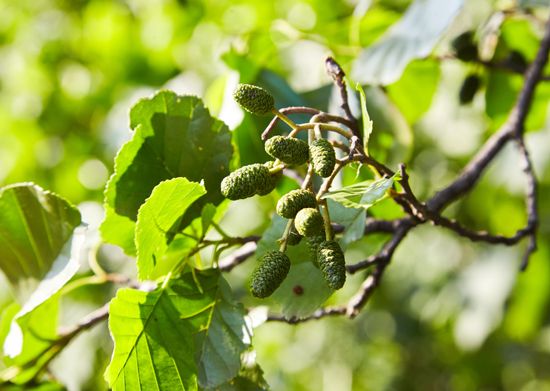
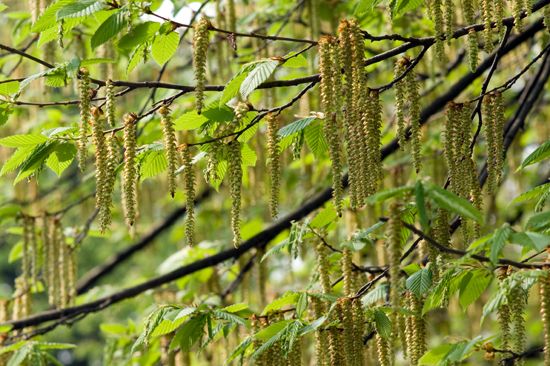
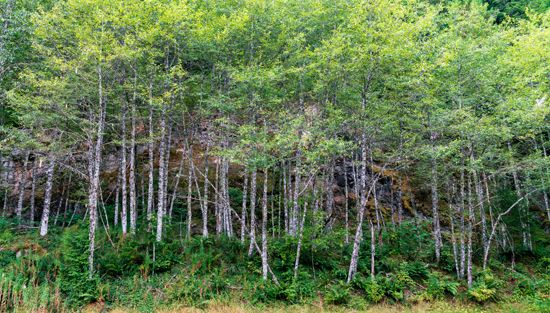
The genus Alnus comprises approximately 30 species of trees and shrubs within the birch family. These plants are primarily distributed across the Northern Hemisphere and parts of western South America, typically thriving in cool, moist environments.1
Common species of alder include:
- Red alder (Alnus rubra): A tall North American species characterized by leaves with rusty hairs on their undersides.1
- European alder (Alnus glutinosa): Also known as black alder due to its dark bark and cones, this species is widespread throughout Eurasia and is also cultivated in North America.1
- White, or Sierra, alder (A. rhombifolia): An early-flowering North American tree featuring orange-red twigs and buds.1
- Gray, or speckled, alder (A. incana): A small, shrubby tree often identified by its conspicuous, wartlike, porous markings known as lenticels.1
- American green alder (A. viridis): A species noted for its aromatic leaves.1
- Other notable species: The Italian alder (A. cordata), Japanese alder (A. japonica), Manchurian alder (A. hirsuta), and seaside alder (A. maritima) are frequently cultivated as ornamental plants.1
How have alder trees been used historically in different cultures?
Historically, alder trees have been valued primarily for their versatile wood, which is fine-textured and durable—notably remaining resilient even when submerged underwater. Because of these properties, the timber has been traditionally utilized for furniture, cabinetry, and turnery, as well as in millwork and the manufacture of charcoal.14
Beyond their use as a material resource, alders have played a significant role in land management. Due to their spreading root systems and their ability to thrive in moist environments, they have been historically planted along stream banks to assist with flood control and the prevention of erosion. Furthermore, alders are recognized as pioneer species that help restore denuded landscapes; they improve soil quality by increasing its organic matter and nitrogen content, effectively preparing the ground for more-enduring tree species to take root.1
Sources
- alder — Encyclopædia Britannica
- alderwood — Merriam-Webster
- smoking — Encyclopædia Britannica
- alder — Merriam-Webster
Published on · 3 min read