Fagales
Members of the Fagales order play vital roles in diverse ecosystems across both hemispheres. As a lineage of nitrogen-fixing Rosids, many species—such as…
What role do Fagales plants play in various ecosystems?
Members of the Fagales order play vital roles in diverse ecosystems across both hemispheres. As a lineage of nitrogen-fixing Rosids, many species—such as alders (Alnus) and she-oaks (Casuarina)—form symbiotic relationships with the actinomycete Frankia. This capability allows them to thrive in extreme, nutrient-deficient habitats where other plants might struggle.
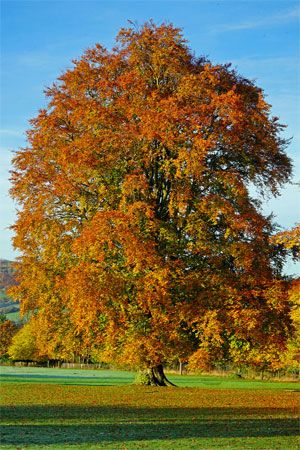
These trees are foundational to many of the world’s broad-leaved forests. In the Northern Hemisphere, they dominate mixed deciduous forests, while in the Southern Hemisphere, temperate forests are defined by the presence of Nothofagus. Beyond their structural dominance, these plants support local wildlife by providing essential food sources, such as acorns and other nuts. Furthermore, their nuts are often cached by animals like squirrels; those not retrieved by spring contribute to forest regeneration through seedling growth. Some species also host specific fungi, such as the shiitake mushroom, which further integrates them into the complex web of forest life.
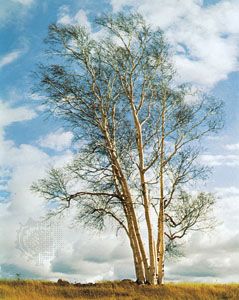
Which important plant families are included in the Fagales order?
The order Fagales comprises a diverse group of woody flowering plants, including several significant families that are essential to temperate and evergreen forests worldwide. Key families within this order include:1
- Fagaceae: This family includes iconic trees such as oaks, beeches, and the southern beech (Nothofagus). They are characterized by their nut-bearing fruits, which are often subtended by a protective hull known as a cupule.13
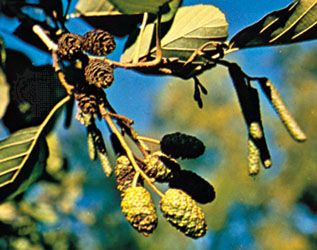
- Betulaceae: Comprising six genera, this family includes birches, alders, hazelnuts, and hornbeams5. These plants are typically found in temperate and subarctic regions of the Northern Hemisphere.5
- Juglandaceae: This family is noted for its pinnately compound leaves and includes economically important trees such as walnuts and hickories.136
- Casuarinaceae: These are distinctive trees or shrubs adapted to arid environments, often featuring jointed branches and reduced, scalelike leaves that can lead them to be mistaken for gymnosperms.3
- Rhoipteleaceae: A family also included within the order, which, like the Juglandaceae, is characterized by compound leaves.3
What economic importance do Fagales plants have for humans?
Plants in the order Fagales provide significant economic value to humans through timber, food, industrial materials, and medicinal applications.2
Timber and Construction
Many species are prized for their durable, high-quality wood. Oaks (Quercus), beeches (Fagus), birches (Betula), walnuts (Juglans), and hickories (Carya) are essential for flooring, cabinetry, veneer, millwork, and construction. In tropical regions, the southern beech (Nothofagus) serves as an all-purpose timber, while various species are used for ship and boat building.27
Food and Agriculture
Several members are major food sources. Chestnuts (Castanea) and hazelnuts (Corylus) are economically important crops cultivated for centuries. Acorns from various oak species have historically served as human food and livestock feed, and they are sometimes used as a coffee substitute. Additionally, some species support the cultivation of edible fungi, such as shiitake mushrooms, or are used in silkworm culture.27
Industrial and Medicinal Uses
- Cork and Tannins: The bark of the cork oak is the primary source of commercial cork. Many species, including various oaks and the tanbark oak, are rich in tannins, which are used to process leather and in traditional dyes.2
- Medicine: Historically, parts of these plants have been used to treat ailments ranging from indigestion and toothaches to dysentery, often leveraging the astringent properties of their tannins.2
- Ornamentals: Many species are widely cultivated for their aesthetic value in landscaping.27
What are the typical leaf arrangements and shapes found in Fagales plants?
Plants in the order Fagales are characterized by specific leaf arrangements and shapes that vary across their families.3
Leaf Arrangement
The leaves of Fagales are typically arranged alternately along the stem. While this is the standard pattern, there are rare instances where the leaves may be arranged in an opposite or whorled fashion. A notable exception is the family Casuarinaceae, which features reduced, scalelike leaves arranged in a whorl at each node of their jointed branches.3
Leaf Shape and Texture
- Simple Leaves: Most members of the order possess simple leaves. In many deciduous species found in temperate regions, these leaves are frequently deeply lobed or have coarsely toothed margins.3
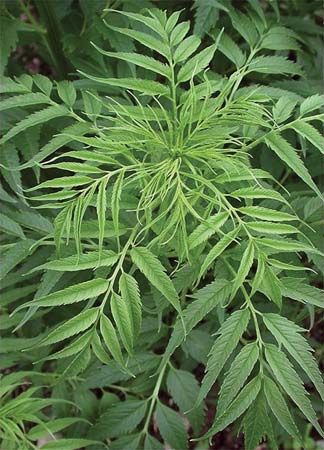
- Compound Leaves: The families Juglandaceae and Rhoipteleaceae are distinct within the order for having pinnately compound leaves, which may sometimes be trifoliolate.3
- Specialized Forms: In certain evergreen species, such as those in the genera Lithocarpus, Chrysolepis, and some Quercus (oaks), the leaves are thick, leathery, and typically have smooth margins. In arid-adapted species, such as those in the Mediterranean or parts of North America, leaves may be small, leathery, and spiny or hairy to help conserve moisture.3
Sources
- Fagales — Encyclopædia Britannica
- Fagales - Economic and ecological importance — Encyclopædia Britannica
- Fagales - Characteristic morphological features — Encyclopædia Britannica
- Fagales - Fagaceae — Encyclopædia Britannica
- Betulaceae — Encyclopædia Britannica
- Juglandaceae — Merriam-Webster
- Fagales - Juglandaceae — Encyclopædia Britannica
- Fabales - Characteristic morphological features — Encyclopædia Britannica
- Fagales - Evolution — Encyclopædia Britannica
Published on · 4 min read