Alismataceae
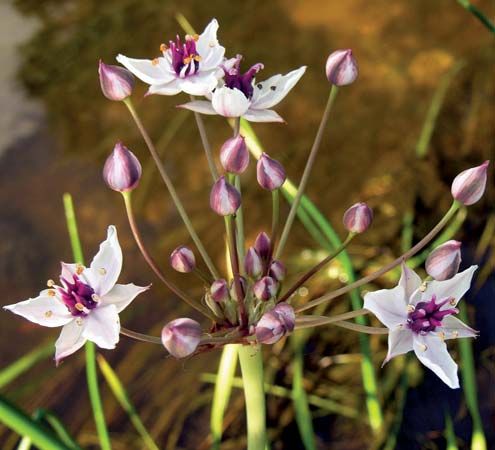
The Alismataceae family, commonly known as the water plantain family, holds both economic and ecological significance.
What economic or ecological importance do Alismataceae plants have?
The Alismataceae family, commonly known as the water plantain family, holds both economic and ecological significance.
Economic Importance
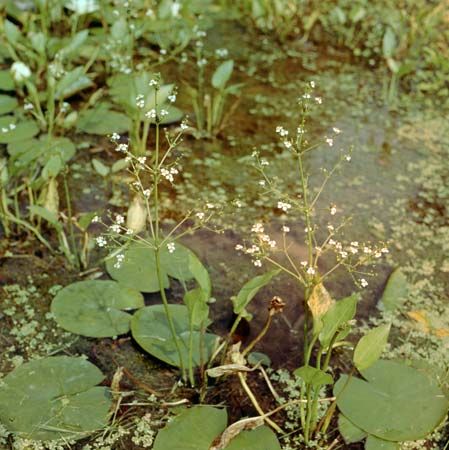
While their modern nutritional impact is generally limited, these plants have historically served as vital food sources. Many species, particularly those in the arrowhead genus, possess rhizomes and tubers rich in carbohydrates, which are consumed fresh or cooked. In some regions, certain species are utilized as fodder for livestock or as fertilizer. Additionally, many Alismataceae are valued as ornamental plants in water gardens and aquariums due to their aesthetic appeal.123
Ecological Importance
Ecologically, these plants are essential for maintaining healthy freshwater habitats. They provide critical shelter and environments for fish and help stabilize shorelines. By forming complex communities, they contribute to vegetational succession, where the accumulation of plant matter and silt gradually transforms aquatic environments into land-based ecosystems. However, some species can become problematic weeds that obstruct irrigation and navigation.3
How are Alismataceae plants classified within the larger group of flowering plants?
Within the modern botanical classification system known as the APG IV system, the family Alismataceae is classified as follows:
- Group: Monocotyledons (monocots), a major lineage of flowering plants characterized by having a single seed leaf (cotyledon) in their seedlings.14
- Order: Alismatales, an order of nearly 4,800 species of primarily aquatic or wetland-dwelling herbaceous plants.14
- Family: Alismataceae, which now includes the former family Limnocharitaceae.34
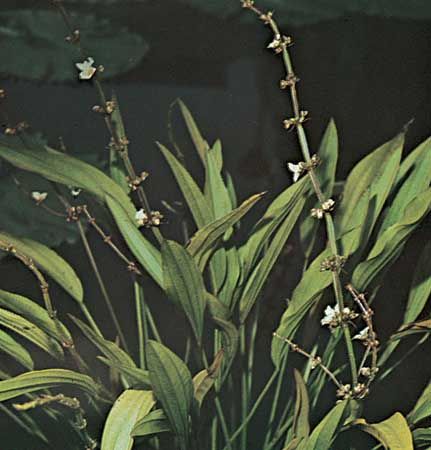
As members of the monocot group, Alismataceae share typical features such as leaves with parallel venation and flowers that generally have parts in multiples of three. They are widely distributed across temperate and tropical regions, thriving in habitats like shallow water, swamps, and muddy banks.345
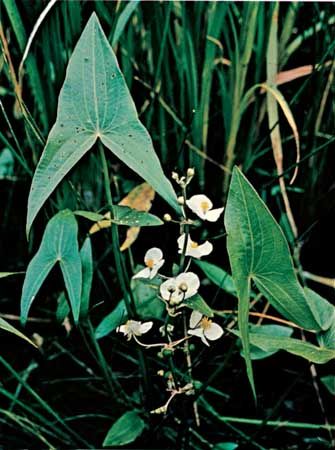
How have Alismataceae plants adapted to their aquatic or semi-aquatic habitats?
Alismataceae plants have evolved several specialized adaptations to thrive in aquatic and semi-aquatic environments like marshes, swamps, and muddy banks:
- Growth Habit and Morphology: These plants typically feature basally clustered, long, thin leafstalks that allow them to grow submerged, floating, or emergent (above water). This flexibility enables them to occupy various depths within a freshwater habitat.1
- Vegetative Reproduction: Many species are capable of reproducing vegetatively through stolons or rhizomes. This allows them to spread efficiently across waterbeds and stabilize shorelines, contributing to the formation of complex plant communities.16
- Physiological Traits: Many members of the family are laticiferous, meaning they produce latex, which may serve as a defense mechanism or aid in sealing wounds in an aquatic environment.1
- Reproductive Strategies: While they produce flowers that are often pollinated by insects such as flies, beetles, and butterflies, their structural placement—often on erect or floating axes—ensures that reproductive parts remain accessible for pollination even in wet conditions.7
How do Alismataceae plants reproduce and disperse their seeds?
Alismataceae plants employ both sexual and asexual strategies to reproduce and disperse.
Sexual Reproduction
Alismataceae typically produce bisexual flowers, though some species are monoecious, bearing separate male and female flowers on the same plant. These flowers are generally aerial, arranged in whorls or umbels on erect or floating axes, and are primarily pollinated by insects such as flies, beetles, and butterflies. Following fertilization, the plants produce dry fruits, which are categorized as either follicles (splitting along one side) or achenes (single-seeded fruits).16
Asexual Reproduction
Many members of the family are highly effective at vegetative reproduction, which allows them to colonize and spread across their aquatic habitats. This is primarily achieved through:6
- Stolons: Specialized runners that grow along the substrate to produce new plantlets.68
- Rhizomes: Underground stems that sprout new individuals, which also serve as storage organs for the plant.68
These vegetative methods allow Alismataceae to form dense, stable colonies in wetlands, swamps, and along muddy banks, complementing their sexual reproductive cycle.6
Sources
- Alismataceae — Encyclopædia Britannica
- Alismatales - Economic value — Encyclopædia Britannica
- Alismatales — Encyclopædia Britannica
- Alismatales - Alismataceae — Encyclopædia Britannica
- angiosperm - Annotated classification — Encyclopædia Britannica
- Alismatales - Order characteristics — Encyclopædia Britannica
- Alismataceae — Merriam-Webster
- Reproduction - Reproduction of organisms — Encyclopædia Britannica
Published on · 3 min read