Arum
Arum plants are classified within the kingdom Plantae as flowering plants (angiosperms) belonging to the family Araceae. Within this family, they are further…
How are arum plants classified within the plant kingdom?
Arum plants are classified within the kingdom Plantae as flowering plants (angiosperms) belonging to the family Araceae. Within this family, they are further categorized into the genus Arum, which comprises approximately 32 species of tuberous perennial plants.12
Taxonomically, the family Araceae is placed within the order Alismatales. As members of the Araceae family, arum plants are monocotyledons, characterized by seeds with a single cotyledon and a distinctive inflorescence consisting of a spadix surrounded by a spathe. The genus Arum is part of the largest subfamily within Araceae, known as Aroideae.21
What are the defining characteristics of arum plants?
Arum plants, belonging to the genus Arum within the family Araceae, are defined by several distinct physical and biological characteristics:
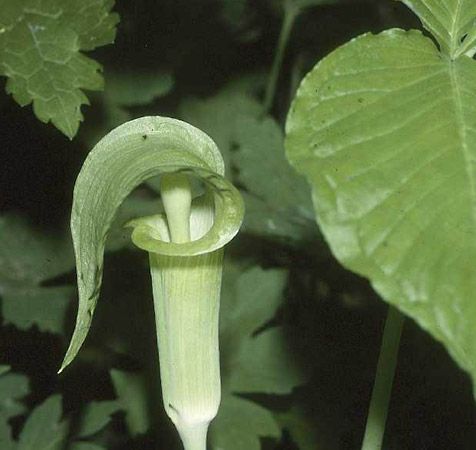
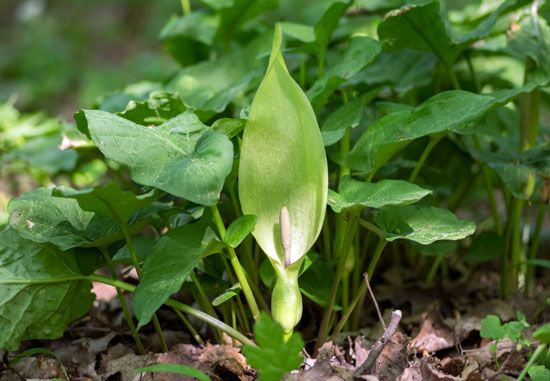
- Inflorescence Structure: The most recognizable feature is the inflorescence, which consists of a rodlike spadix that bears tiny, typically unisexual flowers. This is surrounded by a spathe, a funnel-shaped or hooded bract that often curves to expose the inner surface.13
- Foliage: These plants generally feature glossy, often arrow-shaped leaves borne on petioles.13
- Toxicity: All parts of the plant are considered poisonous. They contain calcium oxalate, which can form needle-shaped crystals known as raphides that cause a bitter, burning sensation.13
- Growth Habit: They are low-growing, tuberous perennial plants that are not hardy in freezing temperatures.1
- Thermogenesis and Odor: Some species are thermogenic, meaning they can generate heat within their inflorescences. This heat, often combined with a fetid odor, mimics rotting flesh to attract pollinators like carrion beetles and flesh flies.3

What are some common species of arum plants?
The genus Arum contains approximately 32 species of tuberous perennial plants. Several of these are commonly cultivated as ornamentals in mild climates due to their unique appearance. Notable species include:1
- Cuckoopint (Arum maculatum): Also known as lords-and-ladies, this is the best-known species of the genus. It is native to northern Africa and southern Europe.1
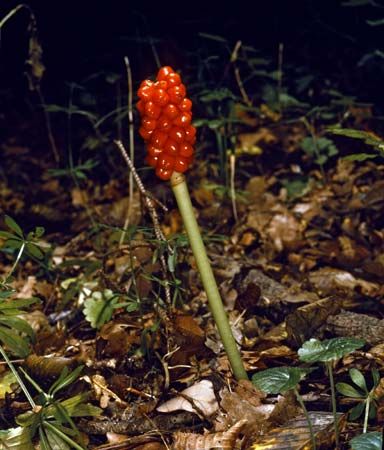
- Italian Arum (A. italicum): Often called Italian lords-and-ladies, this species is native to the Mediterranean region. It is recognized for its attractive white spathe and showy red fruits.1
- Solomon’s Lily (A. palaestinum): Native to the Middle East, this plant is also known as black calla due to the striking dark purple or blackish red color of its spadix and the inside of its spathe.1
It is important to note that the term “arum lily” is often applied broadly to other plants within the Araceae family, such as the titan arum (Amorphophallus titanum) and various species of Zantedeschia, which are not members of the genus Arum.12
Where are arum plants typically found in nature?
Arum plants of the genus Arum are native to the Eurasian region, with specific species found across southern Europe, northern Africa, and the Middle East.17
These plants are typically found in shaded environments, which is why they are frequently cultivated in shaded wild gardens. While they are native to these specific regions, some species, such as the Italian arum (A. italicum) and Solomon’s lily (A. palaestinum), have successfully naturalized in other parts of the world.1
It is important to distinguish the genus Arum from the broader arum family (Araceae), which includes a much wider variety of plants—such as the jack-in-the-pulpit (Arisaema triphyllum)—that are native to diverse habitats, including parts of North America and the Malay Peninsula.75
Sources
Published on · 3 min read