Allegheny Mountains
The Allegheny Mountains, a prominent range within the Appalachian Mountains, served as a formidable geographic barrier that significantly influenced early…
What role did the Allegheny Mountains play in early American history and westward expansion?
The Allegheny Mountains, a prominent range within the Appalachian Mountains, served as a formidable geographic barrier that significantly influenced early American history and the pace of westward expansion.12
A Barrier to Expansion
For early colonial settlers, the Alleghenies acted as a “long blue wall,” discouraging movement into the interior due to their complex, rugged ridges and dense forests. This physical obstruction confined much of the early colonial experience to the Eastern Seaboard. While the central Appalachians offered water gaps that facilitated some passage, the massive, rugged nature of the southern ranges and the narrow, blocked notches of the New England Appalachians kept those regions as wilderness for much longer.2
Strategic Conflict and Trade
The mountains were central to the geopolitical struggles of the 18th century. As traders and settlers pushed toward the Ohio Valley, the region became a focal point of the French and Indian War. The area surrounding the headwaters of the Allegheny River and the Monongahela River became a critical battleground where colonial powers vied for control of western lands.32
Opening the Frontier
Over time, the mountains were transformed from a barrier into a gateway. Pioneers utilized Native American trails, which were gradually improved into wagon roads, such as the Forbes Road and Braddock’s Road, to connect the eastern seaboard to the Ohio Valley. Later, the construction of the National Road and the eventual development of railroads helped overcome the isolation of the region, facilitating the flow of people and goods that defined the American westward movement.415
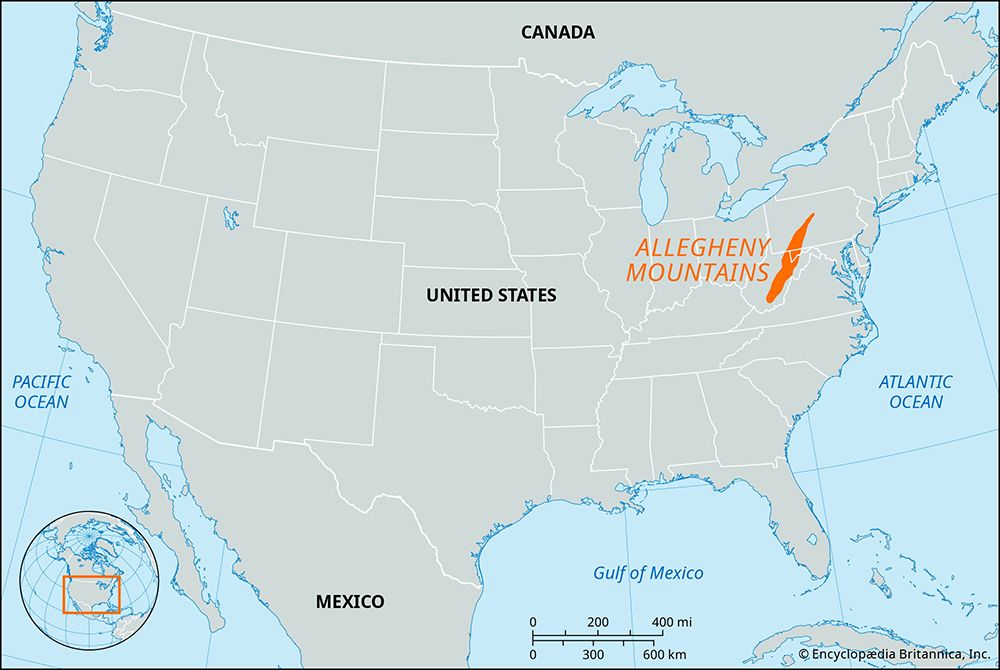
What are some popular recreational activities in the Allegheny Mountains?
The Allegheny Mountains are celebrated for their scenic beauty, offering a variety of outdoor recreational opportunities primarily centered within the region’s protected public lands.
- Hiking and Exploration: With the mountains encompassing parts of the Monongahela, George Washington, and Jefferson national forests, visitors have access to extensive trail systems that traverse the rugged, parallel ridges of the range.1
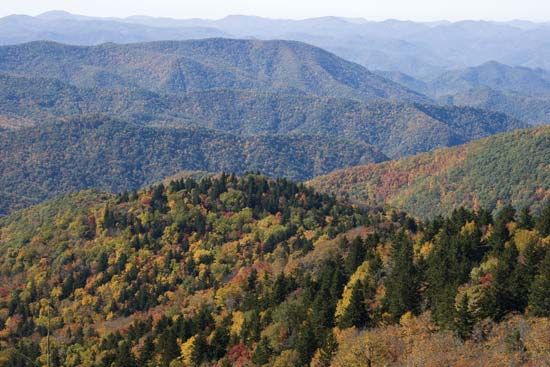
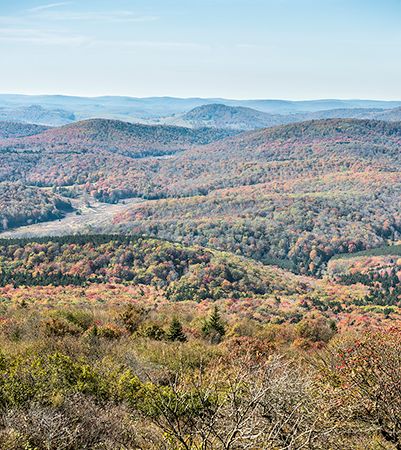
- Scenic Sightseeing: The region is noted for its dramatic landscapes, including notable peaks such as Mount Davis and Spruce Knob, which provide significant vantage points for photography and nature observation.1
- Water-Based Recreation: The mountains are drained by rivers such as the North Branch of the Potomac and the New River, which have carved deep gorges, creating environments suitable for activities like fishing and paddling.1
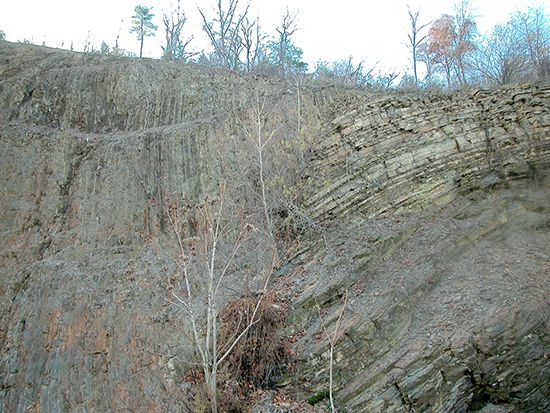
How were the Allegheny Mountains formed, and over what time period?
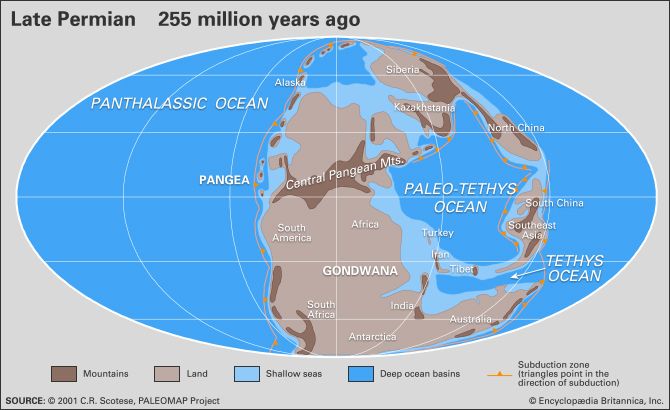
The Allegheny Mountains were formed primarily during the Alleghenian orogeny, a major mountain-building event that occurred during the Permian Period, approximately 299 million to 251 million years ago.9
This geological transformation resulted from the collision of the North American continental margin with that of North Africa. This massive tectonic event, often referred to as the Appalachian Revolution, caused intense stress on subterranean rock, leading to widespread folding, faulting, and the uplift of the parallel ridges that characterize the region today.910
While this orogeny was the primary force behind the mountain building, the landscape has been continuously shaped over geologic time by other processes, including the action of water and, in northern areas, glacial forces during the Pleistocene Epoch. The sedimentary rocks that make up the Alleghenies—including shales, sandstones, and limestones—were deposited and solidified over an even longer period, spanning the Paleozoic Era (roughly 541 to 252 million years ago).10
What are some of the major rivers that originate in the Allegheny Mountains?
The Allegheny Mountains and the broader Allegheny Plateau serve as a significant drainage divide, giving rise to several major river systems in the eastern United States. Key rivers associated with this region include:
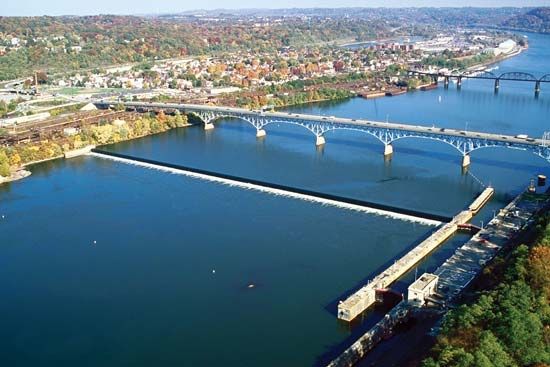
- Allegheny River: Rising in the hilly plateau of Potter County, Pennsylvania, this river flows northward into New York before turning southwest to eventually join the Monongahela River at Pittsburgh, forming the Ohio River.45
- Potomac River: Specifically, the North Branch of the Potomac cuts through the ridges of the Allegheny Mountains, serving as a primary drainage channel for the region.15
- Susquehanna River: This major river system drains the northern portion of the Allegheny Plateau, eventually flowing south into the Chesapeake Bay. flowing south into the Chesapeake Bay.5
- Delaware River: Along with the Susquehanna, the Delaware River is a primary drainage artery for the northern sections of the plateau.12
- New River: This river is noted for cutting deep gorges through the mountainous terrain, facilitating the drainage of the Allegheny range.1
Sources
- Allegheny Mountains — Encyclopædia Britannica
- French and Indian War - Initial hostilities — Encyclopædia Britannica
- American frontier - Early roads — Encyclopædia Britannica
- Allegheny River — Encyclopædia Britannica
- Allegheny Plateau — Encyclopædia Britannica
- United States - Settlement patterns — Encyclopædia Britannica
- Appalachian Mountains - Settlement and expansion — Encyclopædia Britannica
- United States - Early models of land allocation — Encyclopædia Britannica
- Alleghenian orogeny — Encyclopædia Britannica
- Appalachian Mountains - Geology of the Appalachian Mountains — Encyclopædia Britannica
- plate tectonics - Mountain building — Encyclopædia Britannica
- Pennsylvania - Drainage — Encyclopædia Britannica
Published on · 4 min read