Allium
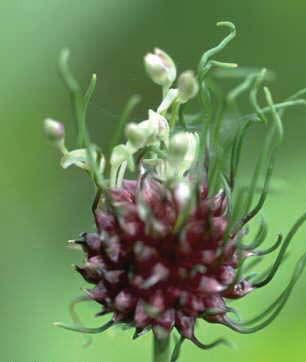
Allium is a large genus of bulbous herbs belonging to the Amaryllidaceae family, characterized by their distinct onion- or garlic-like scent. These perennial…
What is Allium?
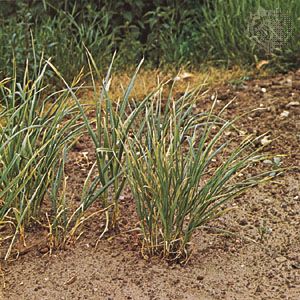
Allium is a large genus of bulbous herbs belonging to the Amaryllidaceae family, characterized by their distinct onion- or garlic-like scent. These perennial plants are found throughout most of the world, excluding the tropics, Australia, and New Zealand.1
Key features of the genus include:
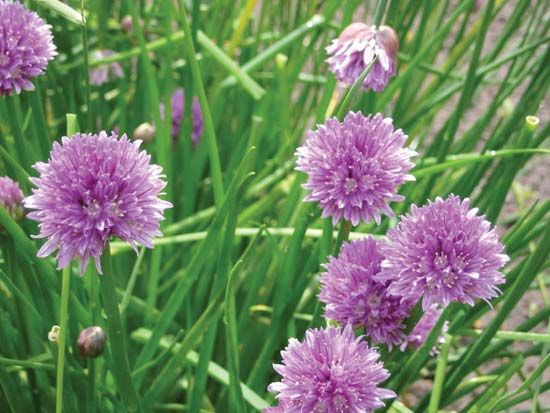
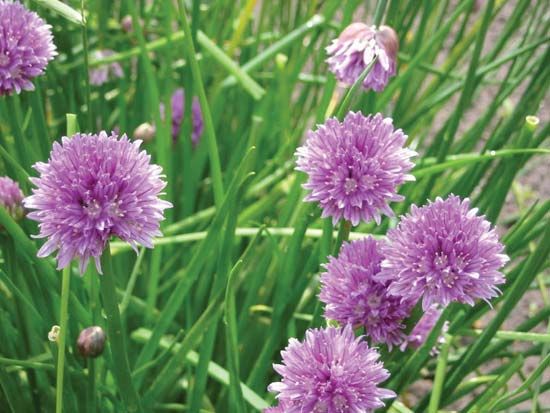
- Physical Structure: They typically possess pungent, linear leaves and flowers with six petals, often arranged in spherical clusters. Most grow from bulbs or rhizomes.1
- Common Varieties: The genus includes several essential food crops, such as the onion, garlic, chive, and leek.1
- Ornamental Use: Beyond their culinary value, many species are cultivated as ornamental border plants.1
While some species reproduce via seeds produced in dry capsule fruits, others propagate asexually through bulbils that form in the flower head.1
What is the difference between a bulb and a rhizome?
Both bulbs and rhizomes are specialized underground plant structures that serve as food storage organs and means of vegetative reproduction, but they differ significantly in their anatomy and growth patterns.
Bulbs
A bulb is a modified, globe-shaped underground bud. Its structure consists of a short, basal stem plate surrounded by fleshy, overlapping leaves or leaf bases that store food, allowing the plant to survive dormancy during drought or winter.345
- Key characteristic: The bulk of the structure is composed of fleshy leaf tissue rather than stem tissue.5
- Examples: Onion, tulip, and daffodil3.6
Rhizomes
A rhizome is an elongated, horizontal, subterranean stem. Unlike bulbs, rhizomes grow horizontally through or upon the soil, producing roots from their lower surface and shoots from their apex or nodes.7546
- Key characteristic: They are primarily stem tissue, distinguished by the presence of nodes, buds, and often scalelike leaves.7
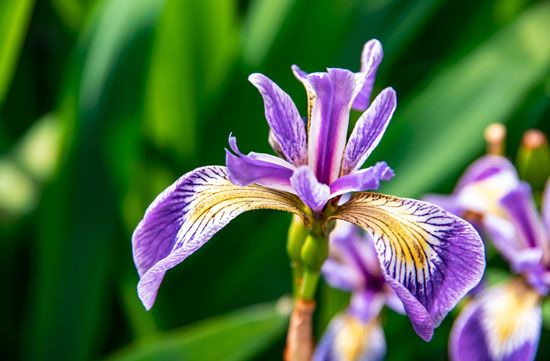
- Examples: Iris and ginger6.6
While both structures enable plants to spread and survive adverse conditions, bulbs are generally compact and vertical, whereas rhizomes are typically elongated and spreading.356
How do plants in the Amaryllidaceae family differ from other plant families?
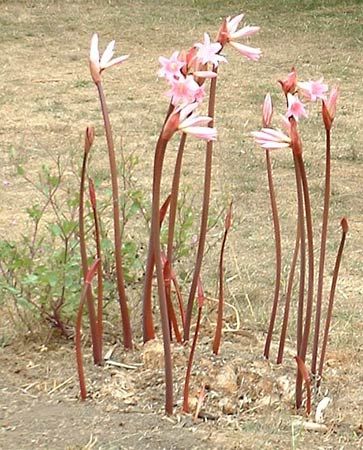
The Amaryllidaceae family, often called the daffodil family, is a group of perennial herbs within the order Asparagales. Distinguishing this family from others can be challenging because many families in the Asparagales order are defined primarily by molecular and DNA characteristics rather than obvious, unique morphological traits.89
However, members of the Amaryllidaceae generally share several consistent features:
- Storage Organs: They characteristically possess bulbs or underground stems.108
- Foliage: They typically feature strap- or lance-shaped leaves that are grouped at the base of the stem or arranged alternately along it.8
- Floral Structure: The flowers usually have three or six petals and three or six sepals. In some classifications, they are noted for having a perianth tube that is adnate (fused) to the ovary.811
- Fruit: The fruits are typically dry capsules or fleshy berries.108
While these traits are common, laboratory analysis is often required to definitively classify a genus within the family due to the ongoing taxonomic shifts in the order.9
Why do some Allium plants produce bulbils instead of seeds?
Some Allium species produce bulbils instead of, or in addition to, seeds as a form of asexual reproduction. In these plants, the bulbils develop in the flower head, sometimes entirely replacing the flowers that would otherwise produce seeds.51
This strategy allows the plant to propagate effectively without the need for pollination or the development of a seed. For example, the tree onion (Allium cepa hybrid) produces these structures atop its flowering stalk, while the European wild garlic (A. vineale) is known as a prolific producer of bulbils, which contributes to its ability to spread rapidly and become a weed.5
While most members of the order Asparagales are capable of producing seeds in the conventional manner, the formation of bulbils provides a reliable, vegetative alternative for creating new, genetically identical individuals. These tiny secondary bulbs eventually fall or are removed and planted to grow into new plants.5112
Sources
- allium — Encyclopædia Britannica
- Garlic — Encyclopædia Britannica
- Bulb — Encyclopædia Britannica
- rhizome — Merriam-Webster
- Asparagales - Storage organs — Encyclopædia Britannica
- Vegetative reproduction — Encyclopædia Britannica
- horticulture - Vegetative structures — Encyclopædia Britannica
- list of plants in the family Amaryllidaceae — Encyclopædia Britannica
- Amaryllidaceae — Encyclopædia Britannica
- Asparagales - Organization and taxonomy — Encyclopædia Britannica
- Amaryllidaceae — Merriam-Webster
- Bulbil — Encyclopædia Britannica
Published on · 3 min read