Chive
The chive (Allium schoenoprasum) is a small perennial plant belonging to the amaryllis family (Amaryllidaceae). It is closely related to the onion and is…
What is Chive?
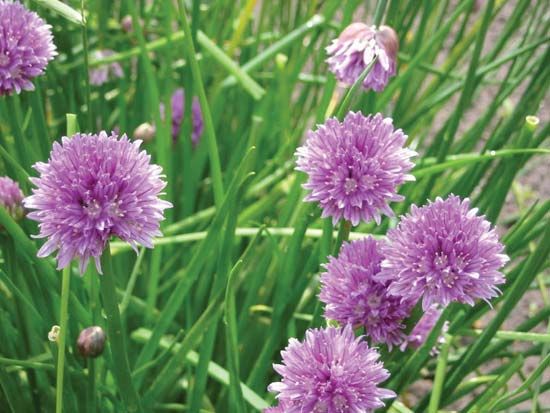
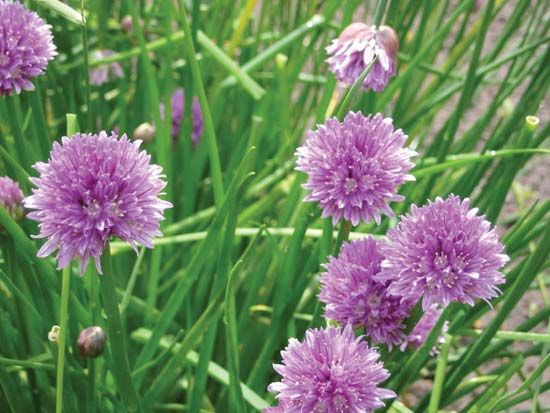
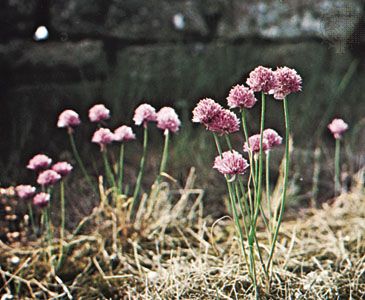
The chive (Allium schoenoprasum) is a small perennial plant belonging to the amaryllis family (Amaryllidaceae). It is closely related to the onion and is cultivated both as an ornamental for its attractive lilac or bluish flowers and as a potherb for its flavorful, thin, tubular leaves.123
These plants grow in clumps and feature small, elongated bulbs. While they can be grown from seeds, they are most commonly propagated by dividing these clumps. In culinary applications, the leaves are used fresh or dried as a seasoning for various dishes, including eggs, soups, salads, and vegetables. Although they share a mild flavor profile with green onions, they are distinct species](https://www.britannica.com/plant/green-onion/Introduction), they are distinct species.13
How do chives differ from green onions?
While chives and green onions are both members of the Amaryllidaceae family, they are distinct plants with different growth habits and culinary uses.
- Botanical Identity: The chive (Allium schoenoprasum) is a small perennial plant that grows in clumps and produces thin, tubular leaves and small, elongated bulbs. In contrast, green onions are typically immature plants of the common onion (Allium cepa), or specific species like the Welsh onion (A. fistulosum), harvested when their bulbs are underdeveloped.21
- Usage: Chives are primarily grown for their flavorful leaves, which are used as a seasoning, and as ornamentals for their lilac or bluish flowers. Green onions are harvested for their entire structure—including the stem, hollow tubular tops, and the small bulb—and are frequently used raw in salads, sauces, or as a garnish.21
- Propagation: Chives are most commonly propagated by dividing their clumps, whereas green onions are typically grown from seeds as young, immature plants.21
What are some other plants in the amaryllis family?
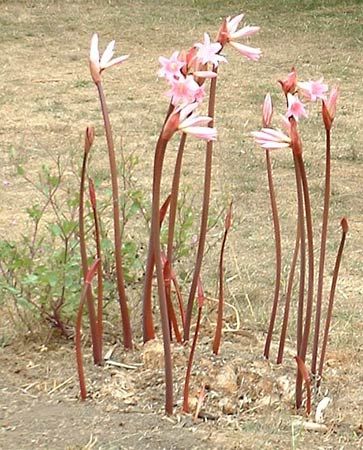
The Amaryllidaceae family is a diverse group of perennial herbs comprising 73 genera and at least 1,600 species. These plants are typically characterized by bulbs or underground stems and straplike leaves.45
The family is divided into three subfamilies, each containing various notable plants:
Subfamily Allioideae
This group is well-known for its important food crops, primarily within the genus Allium:
- Onion (A. cepa)
- Green onion
- Shallot
- Leek
- Garlic
- Chive
Subfamily Amaryllidoideae
This is the largest subfamily and includes many popular garden ornamentals and showy flowers:
- Daffodil and jonquil (Narcissus)
- Snowdrop (Galanthus)
- Snowflake (Leucojum)
- Amaryllis and Hippeastrum
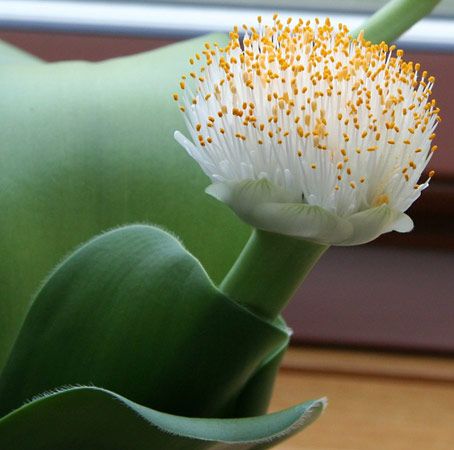
- Cape tulip (Haemanthus)
Subfamily Agapanthoideae
This subfamily consists of a single genus, Agapanthus, which includes the African lily (Agapanthus africanus), a common ornamental in warm climates.45
How can you grow chives in a home garden?
To grow chives in a home garden, you can use either sexual or asexual propagation methods. While you can plant seeds, chives are more commonly cultivated through asexual propagation, specifically by dividing established clumps.61
Methods of Cultivation
- Division: This is the most common and efficient method for home gardeners. You can take a mature clump of chives and divide it into smaller sections, each containing some of the tiny bulbs. These sections are then replanted directly into the garden soil.61
- Seed: You may also grow chives from seed. Because chives produce only a few seeds, this method is less common than division. When sowing seeds, ensure the soil is well-draining and monitor moisture levels carefully, as seeds require consistent conditions to germinate successfully.61
Regardless of the method, chives thrive as perennial plants that grow in clumps, making them an excellent choice for both their flavorful leaves and their attractive lilac or bluish flowers.6
Sources
- Chive — Encyclopædia Britannica
- Green onion — Encyclopædia Britannica
- chive — Merriam-Webster
- list of plants in the family Amaryllidaceae — Encyclopædia Britannica
- Amaryllidaceae — Encyclopædia Britannica
- turnip-rooted chervil — Merriam-Webster
- Propagation — Encyclopædia Britannica
Published on · 3 min read