Alpaca
The alpaca (Vicugna pacos) is a domesticated South American member of the camel family, Camelidae. While often confused with their cousin the llama, alpacas…
What is an alpaca and how does it differ from other camelids like llamas?
The alpaca (Vicugna pacos) is a domesticated South American member of the camel family, Camelidae. While often confused with their cousin the llama, alpacas are a distinct species descended from the vicuña, whereas llamas are descended from the guanaco.123
Key Differences
Alpacas and llamas differ primarily in size, physical features, and utility:4
- Size: Alpacas are significantly smaller, standing about 90 cm (35 inches) at the shoulder and weighing 55–65 kg (121–143 pounds). Llamas are the largest lamoids, reaching 120 cm (47 inches) and weighing approximately 113 kg (250 pounds).14
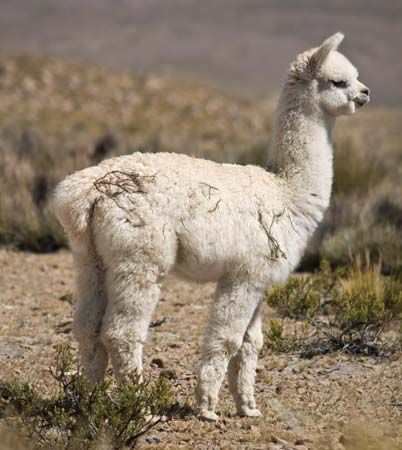
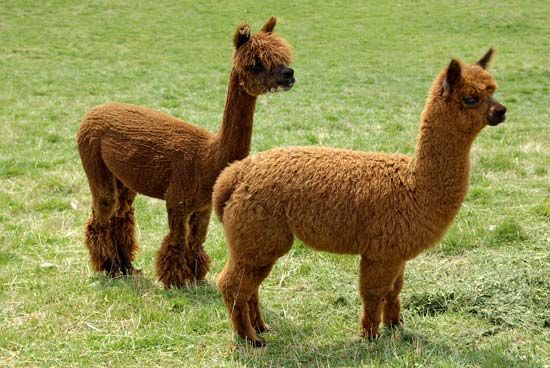
- Appearance: Alpacas have small, blunt faces with short ears and rounded bodies. Llamas have elongated faces with distinct “banana-shaped” ears and squarish bodies.14
- Fleece: Alpacas are prized for their fine, shaggy, high-quality fleece, which is used for luxury textiles. Llama hair is generally coarser and considered inferior for fine wool production.143
- Disposition and Use: Llamas are traditionally used as pack animals due to their strength. Alpacas are more timid, herd-oriented animals raised primarily for their fiber.43
Where are alpacas originally from and in what regions are they primarily raised today?
Alpacas are native to the Andes Mountains, where they were domesticated from vicuñas approximately 6,000 to 7,000 years ago.1
Today, they are primarily raised in the high-altitude, marshy regions of South America, spanning from southern Colombia and Ecuador through Peru and into northern Chile and northern Argentina. They are specifically adapted to thrive in the harsh, high-altitude environment of the puna (high plateau), typically at elevations between 4,000 and 4,800 meters (13,000 to 15,700 feet).15
Peru remains the leading producer of alpaca fleece, with much of the industry centered around the city of Arequipa. Because alpacas require specialized care and specific swampy grazing conditions, their herding is often a full-time, specialized occupation distinct from traditional agriculture.15
What are the main uses of alpacas in terms of their wool and other products?
Alpacas are primarily valued for their high-quality fleece, which is considered the most important product derived from the species. Unlike llamas, which are traditionally utilized as pack animals, alpacas are specialized for fiber production.15
Uses of Alpaca Fiber
Alpaca fleece is highly regarded for being lightweight, strong, lustrous, and exceptionally insulating, while also remaining resistant to rain and snow. Its primary applications include:1
- Apparel and Textiles: The fiber is used to create parkas, sleeping bags, and fine coat linings. It is also frequently blended with other fibers to produce lightweight suit fabrics and dress materials.1
- Outerwear: It is often woven into pile fabrics used for both coating and as a lining for garments.1
- Historical Significance: During the Incan civilization, the use of robes crafted from alpaca and vicuña fleeces was a status symbol reserved exclusively for royalty and nobility.1
The quality of the fleece depends on the breed: the suri produces a fine, silky fiber, while the huacaya yields a slightly coarser, shorter fleece. Because of these desirable characteristics, the Peruvian government has actively invested in breeding programs to enhance the quality and output of this specialty hair fiber.1
What are the physical characteristics of alpacas, including their size, weight, and coat colors?
Alpacas (Vicugna pacos) are slender-bodied members of the camel family characterized by their long necks, long legs, small heads, and large, pointed ears. They are physically distinguished from their larger relatives, the llamas, by their smaller, more rounded bodies and their habit of keeping their tails pressed close to their bodies.12
Physical Specifications
- Height: They stand approximately 90 cm (35 inches) high at the shoulder.12
- Weight: Adult alpacas typically weigh between 55 and 65 kg (121 to 143 pounds).12
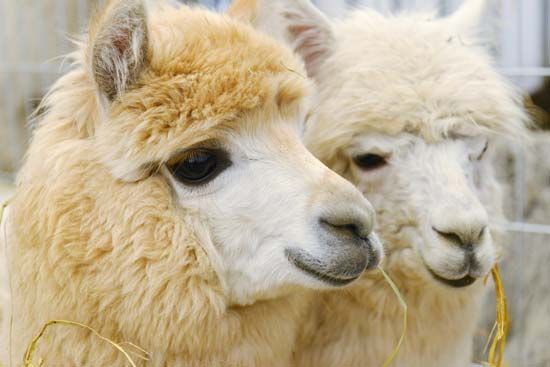
- Coat: Alpacas possess a shaggy coat that varies significantly in color. Natural shades range from black and brown to lighter tones of tan, gray, pale yellow, and white.12
These animals are highly specialized for life in high-altitude, marshy environments, with a natural lifespan ranging from 15 to 20 years.1
Sources
- alpaca — Encyclopædia Britannica
- What’s the Difference Between Llamas and Alpacas? — Encyclopædia Britannica
- camel - Natural history — Encyclopædia Britannica
- llama — Encyclopædia Britannica
- Pre-Columbian civilizations - Agricultural adaptation — Encyclopædia Britannica
Published on · 3 min read