Babirusa
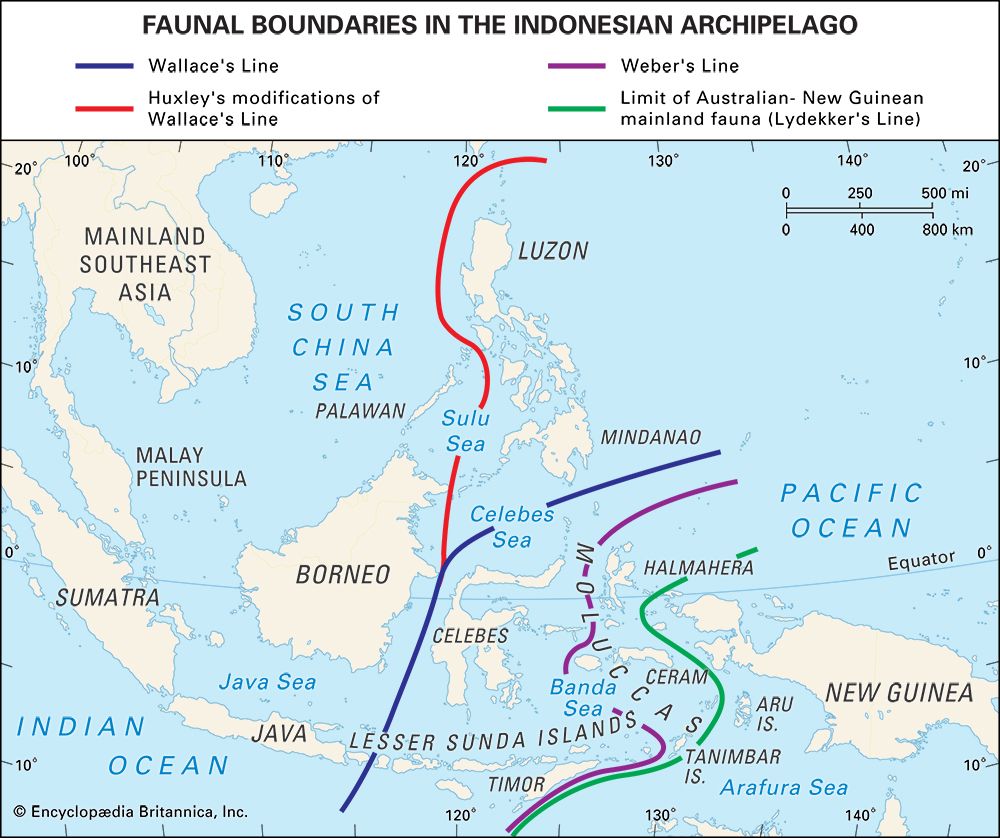
The babirusa (Babirousa babyrussa) is a unique species of wild swine belonging to the family Suidae, native to Celebes and the Molucca islands.
What is babirusa?
The babirusa (Babirousa babyrussa) is a unique species of wild swine belonging to the family Suidae, native to Celebes and the Molucca islands.1
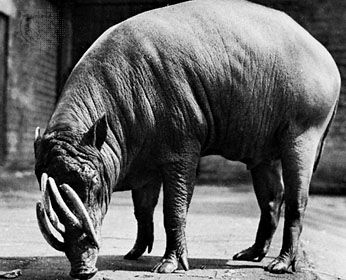
Standing about 65–80 cm (25–30 inches) at the shoulder, this stout-bodied animal is characterized by its rough, nearly hairless grayish hide. The most striking feature of the male babirusa is the extreme development of its canine teeth, or tusks. The upper tusks grow upward from the base, piercing the skin of the muzzle and curving backward toward the forehead.1
As a retiring, nocturnal animal, the babirusa inhabits dense jungles, where it is known to be a fast runner and a capable swimmer. It typically forages in soft soil near rivers and swamps. While it is often hunted locally for its meat, the species remains a fascinating example of the diverse wildlife found in the East Indies.1
What other animals belong to the Suidae family?
The family Suidae consists of hoofed, omnivorous mammals commonly known as pigs and their relatives. While modern classifications distinguish them from the family Tayassuidae (peccaries), the Suidae family includes several distinct groups native to the Old World.234
Members of the Suidae family include:
- Babirusa: A unique, largely hairless species native to the Indonesian islands, known for the male’s distinctive, curving upper tusks.2
- Boar: Often referring to the wild boar (Sus scrofa), which is the ancestor of many domestic pig breeds.2
- Bush pig: A species native to Africa, known for its social behavior and adaptability to various habitats.2
- Pig: This category encompasses both domestic swine found worldwide and various wild species.2
- Warthog: A well-known African suid characterized by its large head, prominent facial warts, and upward-curving tusks.2
These animals are generally stout-bodied with coarse hair and muzzles ending in a cartilage disk used for rooting in the soil.2
How does the babirusa’s habitat in the Celebes islands affect its survival?
The babirusa’s survival is deeply tied to the dense jungle environments of the Celebes and Molucca islands. As a retiring, nocturnal animal, the babirusa relies on the cover of these thick forests to remain elusive and avoid threats. Its ability to swim readily and run quickly allows it to navigate the complex, water-rich terrain of its habitat effectively.1
However, the babirusa’s reliance on specific foraging areas—particularly soft soil near rivers and swamps—makes it predictable to predators and human hunters. Because the species is considered a source of food, it is frequently hunted locally. This pressure, combined with its specialized habitat requirements, creates significant challenges for the long-term survival of the population in the wild.1
What are some other unique adaptations found in wild pigs?
Wild pigs, or suids, possess several unique adaptations that facilitate their survival in diverse environments:
- Foraging Muzzles: All suids have a muzzle that terminates in a rounded cartilage disk. This specialized structure is highly effective for rooting in the soil to uncover food.2
- Defensive Tusks: Unlike many domestic breeds, wild pigs possess well-developed, tusklike teeth. These are used both for foraging and as formidable defensive weapons against threats.5
- Camouflage Patterns: Many piglets are born with longitudinal stripes or flecks, which provide natural camouflage in forest environments. Notably, this trait is absent in the warthog and the babirusa and the babirusa.6
- Social Flexibility: Wild pigs often live in groups called “sounders” that maintain a home range containing necessary resources like water and wallowing sites. While they lack the complex territorial defense seen in some other artiodactyls, this social structure allows them to adapt to changing conditions by moving to new areas.6
Sources
- babirusa — Encyclopædia Britannica
- suid — Encyclopædia Britannica
- Suidae — Merriam-Webster
- artiodactyl - Annotated classification — Encyclopædia Britannica
- artiodactyl - Social behaviour — Encyclopædia Britannica
- artiodactyl - Modifications of the skin — Encyclopædia Britannica
- Pig — Encyclopædia Britannica
Published on · 3 min read