Barasingha
The barasingha (Rucervus duvaucelii), also known as the swamp deer, is a graceful species of deer native to the grasslands and open forests of India and…
What is barasingha?
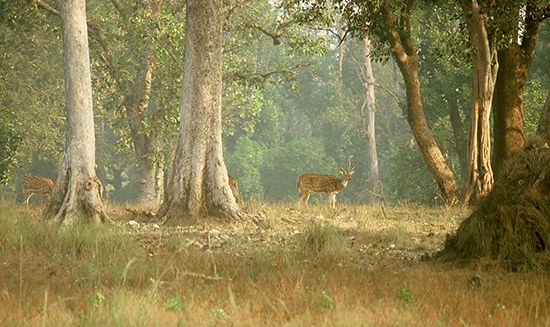
The barasingha (Rucervus duvaucelii), also known as the swamp deer, is a graceful species of deer native to the grasslands and open forests of India and Nepal.12
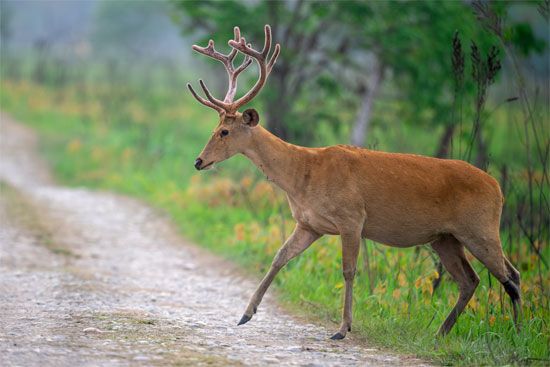
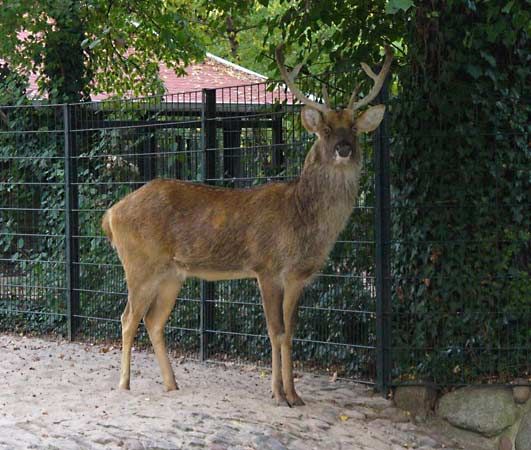
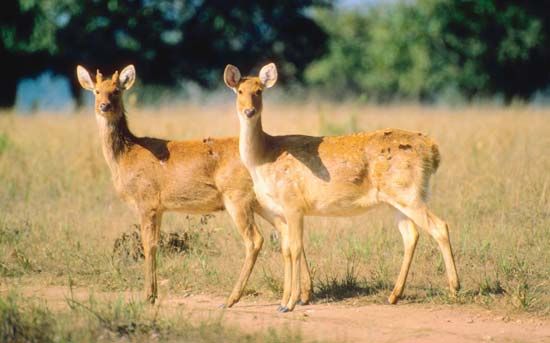
Standing approximately 1.1 meters (45 inches) at the shoulder, the barasingha exhibits a seasonal coat: reddish or yellowish brown with white spots in summer, and a heavier, brown coat in winter. The species is named for its distinctive antlers; the name barasingha translates from Hindi to “12-horned,” referring to the numerous tines on the male’s antlers, though some individuals may possess up to 20 prongs.132
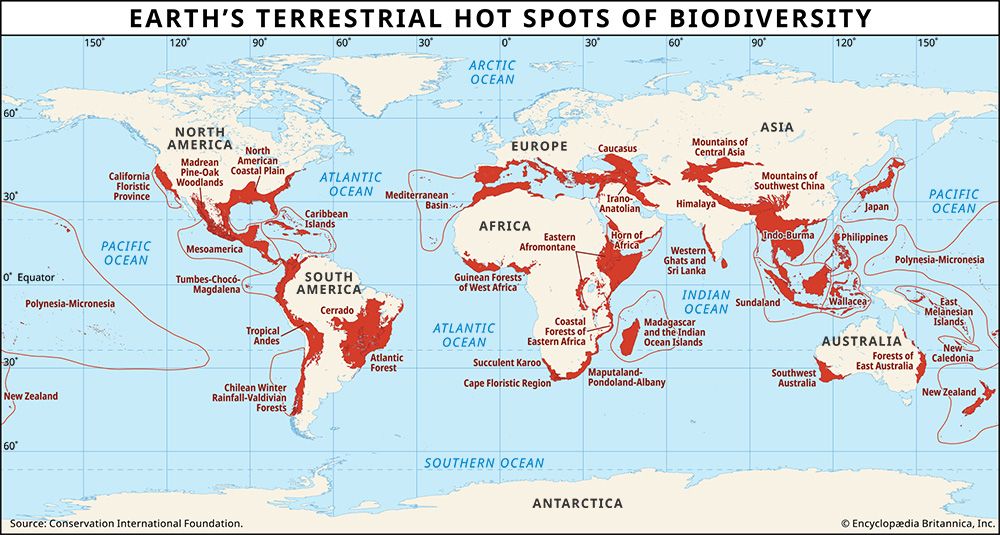
These deer are primarily grazers, often found in reed beds, forests, and hilly terrain, where they feed on dry and moderately coarse grasses. Currently listed as a vulnerable species, the barasingha is now restricted to scattered populations within protected national parks and reserves.412
What are the main differences between barasingha and other deer species?
The barasingha (Rucervus duvaucelii) is distinct from many other deer species primarily due to its unique antler structure and specialized habitat requirements. While most deer species possess antlers that branch into a standard number of points, the barasingha is named for its exceptionally complex antlers, which typically feature 10 to 14 tines, and occasionally as many as 20, creating a sprawling, multi-pronged appearance.1
Additionally, the barasingha is highly adapted to specific environments, favoring the swampy grasslands and open forests of India and Nepal. Unlike many deer that are more generalized in their habitat, the barasingha relies on these specific wetland ecosystems, which has contributed to its status as an endangered species as these habitats have become fragmented.1
How do the antlers of a barasingha differ from those of other deer?
The antlers of a barasingha (Cervus duvauceli) are distinguished by their exceptional complexity compared to many other members of the deer family. While most deer species possess antlers that branch into a standard, predictable number of points, the barasingha—whose name translates to “12-horned”—is characterized by long antlers that branch into a high number of tines. This creates a sprawling, multi-pronged appearance that is a hallmark of the species.1
In general, antlers are “bone horns” grown and shed annually by males of almost all deer species, serving as weapons for combat or organs for courtship display. The growth of these structures is metabolically demanding, requiring significant minerals, protein, and energy. Because the energy requirements for antler growth increase exponentially with body size, larger species like the barasingha must occupy nutrient-rich habitats to support such ornate development. While other deer have evolved various shapes and sizes of antlers, the barasingha’s specific, highly branched structure is a unique adaptation within its endangered population.51
What conservation efforts are being made to protect the barasingha?
Conservation efforts for the barasingha (Cervus duvaucelii) primarily focus on in situ conservation, which protects the species by preserving its natural habitat. Because the barasingha is listed as an endangered species, these efforts are critical to preventing its extinction.16
A notable success story is found in Kanha National Park, where the park’s management model has significantly bolstered the population. Key strategies include:
- Habitat Restoration: Park officials actively manage the environment by controlling invasive weeds, restoring grasslands, preventing forest fires, and maintaining essential water sources and soil quality.6
- Protected Areas: By designating national parks and wildlife sanctuaries, authorities ensure the barasingha has secure, protected territory to roam.6
- Monitoring and Management: Long-term monitoring of wildlife populations allows for data-driven management decisions. These efforts have been highly effective, with the barasingha population in Kanha increasing from approximately 66 individuals in the 1970s to 800 by 2020.6
These initiatives demonstrate the importance of protecting entire ecosystems to ensure the survival of vulnerable species.6
Sources
- barasingha — Encyclopædia Britannica
- barasingh — Merriam-Webster
- artiodactyl - Food habits — Encyclopædia Britannica
- State Animals of India — Encyclopædia Britannica
- deer - Morphology and behaviour — Encyclopædia Britannica
- Kanha National Park — Encyclopædia Britannica
- Nepal - Animal life — Encyclopædia Britannica
Published on · 3 min read