Alpheus River
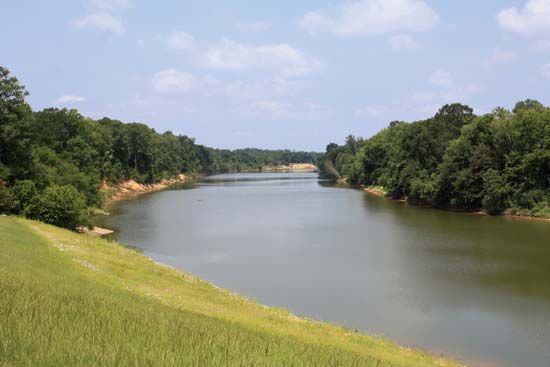
The Alpheus River is the longest river in the Peloponnese region of Greeceplace/Peloponnese) region of Greece. It originates near Dhaviá in central Arcadia…
What is the geographical location of the Alpheus River in Greece?
The Alpheus River is the longest river in the Peloponnese region of Greeceplace/Peloponnese) region of Greece. It originates near Dhaviá in central Arcadia and flows for approximately 70 miles (110 km).1
After traversing the plain of Megalópolis through a rugged gorge, the river turns northwest before emptying into the Ionian Sea. The river is notable for its tendency to disappear into the limestone mountains of Arcadia and reemerge further downstream, a phenomenon that inspired the ancient legend of the river god Alpheus.1
How long is the Alpheus River, and what are its major tributaries?
The Alpheus River flows for approximately 70 miles (110 km) through the Peloponnese region of Greece.1
Its two primary tributaries are:
- Ládhon: This tributary features the hydroelectric Ládhon Dam near the village of Trópaia, which has formed a lake covering 4 square miles (10 square km).1
- Erímanthos: A major contributor to the river’s course as it flows toward the Ionian Sea.1
What is the mythological significance of the Alpheus River in Greek legends?
The Alpheus River holds significant status in Greek mythology, primarily linked to the river god Alpheus. The river’s physical tendency to disappear into limestone mountains and reemerge downstream inspired several legends:
- The Myth of Arethusa: The river god fell in love with the nymph Arethusa. To escape his pursuit, she fled to the island of Ortygia near Syracuse, where Artemis transformed her into a spring. Alpheus reportedly pursued her by flowing beneath the Ionian Sea to unite his waters with hers.12
- The Labors of Heracles: In the legend of Augeas, the hero Heracles was tasked with cleaning the king’s immense stables in a single day. He accomplished this feat by diverting the course of the Alpheus River through the stables to wash them out.3
What role did the Alpheus River play in ancient Greek civilization?
The Alpheus River played a vital role in ancient Greek civilization, primarily as a geographic and spiritual anchor for the sanctuary of Olympia. Located near the western coast of the Peloponnese, the site of the ancient Olympic Games was situated near the confluence of the Alpheus and Cladeus rivers.1
The river’s influence on ancient life included:
- Athletic and Cultural Context: The hippodrome, where ancient horse races were held, was located in the open valley of the Alpheus River. This area was central to the cultural life of the Greek world, hosting events that drew participants and spectators from across the Mediterranean.21
- Mythological and Religious Significance: The river was named after the ancient river god Alpheus, whose legend was deeply embedded in the local culture. The river’s unique behavior—disappearing into limestone mountains and reemerging—was a source of wonder and myth, linking the Peloponnese to distant lands like Sicily in the Greek imagination.5
- Symbolic Purity: The river was associated with the purification of sacred spaces, most famously in the myth of Heracles, who diverted the Alpheus to cleanse the stables of Augeas.52
Sources
- Alpheus River — Encyclopædia Britannica
- Alpheus — Merriam-Webster
- Arethusa — Encyclopædia Britannica
- Augeas — Encyclopædia Britannica
- Olympia — Encyclopædia Britannica
- Olympia - The remains of Olympia — Encyclopædia Britannica
Published on · 2 min read