American Quarter Horse
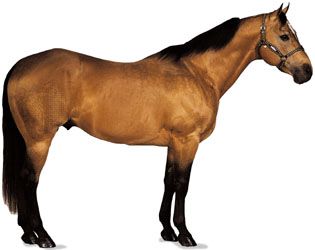
The American Quarter Horse is a versatile breed valued for its agility, speed, and calm temperament. Today, these horses serve a variety of roles, primarily…
What are the primary uses and roles of American Quarter Horses today?
The American Quarter Horse is a versatile breed valued for its agility, speed, and calm temperament. Today, these horses serve a variety of roles, primarily centered on their historical strengths in performance and ranch work.1
Key uses and roles include:
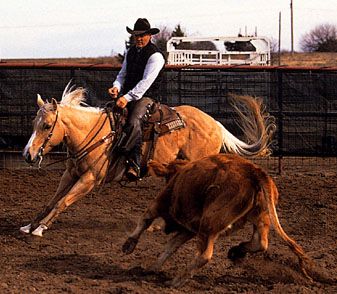
- Ranch Work: Due to their natural “cow-sense,” they are highly effective at cutting cattle from herds, a task that requires quick starting, turning, and stopping abilities.1
- Performance and Racing: Known as the “drag racers” of the horse world, they are prized for their power and speed over short distances, particularly in quarter-mile races.123
- General Riding and Sport: Their cooperative nature makes them excellent mounts for general riding. They are also frequently used as polo ponies.2
Managed by the American Quarter Horse Association, the breed remains one of the most popular and numerous in the world, reflecting its enduring utility across both agricultural and competitive settings.13
How does the American Quarter Horse excel in short-distance racing?
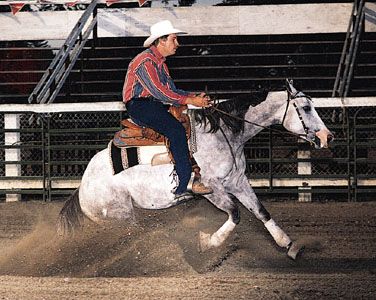
The American Quarter Horse excels in short-distance racing primarily due to its unique physical build and inherent physiological traits. Unlike Thoroughbreds, which are optimized for stamina over longer distances, the Quarter Horse is characterized by heavy muscular development, a deep, broad chest, and a compact frame that facilitates explosive power.41
Their ability to perform in quarter-horse racing is defined by several key factors:
- Rapid Acceleration: The breed is specifically known for its capacity to start quickly and sprint with high speed from a standing start.51
- Physical Mechanics: Their anatomy, including strong muscles connected to efficient limb structures, allows for the quick turning and stopping necessary for both racing and their historical role in working cattle.41
- Genetic Heritage: The breed’s performance capabilities were refined through selective breeding, incorporating Thoroughbred bloodlines—notably from the stallion Janus—to enhance their natural speed and agility.54
These traits allow them to reach high speeds over distances typically ranging from 220 to 870 yards, often resulting in highly competitive, close-finish races.51
How does the American Quarter Horse compare to other popular horse breeds in terms of versatility?
The American Quarter Horse is widely recognized for its exceptional versatility, a trait that distinguishes it from many other specialized breeds. While breeds like the Standardbred are primarily focused on harness racing or the American Saddlebred on specialized gaits for shows, the Quarter Horse is valued for its ability to transition seamlessly between diverse roles.13
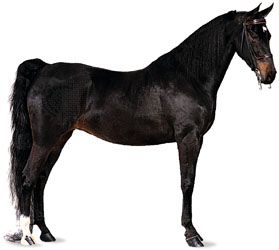
Its versatility is comparable to the Morgan horse, which is also noted for being a robust, intelligent, and multi-purpose mount capable of riding, carriage pulling, and farm labor. However, the Quarter Horse is uniquely defined by its “cow-sense” and explosive speed, making it a premier choice for:3
- Ranch Work: Its agility and quick-stopping ability make it ideal for cutting cattle.13
- Performance Sports: Beyond quarter-horse racing, it serves effectively as a polo pony.3
- General Riding: Its calm, cooperative temperament makes it a favorite for recreational riding.1
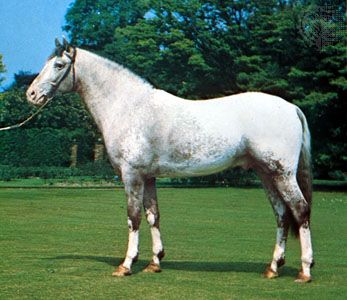
While breeds like the Appaloosa are also noted for diverse farm use, the Quarter Horse’s combination of a calm disposition and high-performance athleticism remains a hallmark of the breed.13
How has selective breeding influenced the American Quarter Horse over time?
Selective breeding has been fundamental in shaping the American Quarter Horse from its colonial origins into a specialized performance animal. The breed began in the 1660s as a cross between native horses of Spanish origin and imported English horses. Over time, breeders integrated significant Thoroughbred bloodlines to enhance speed and agility, most notably through influential sires such as Janus, Steel Dust, and Peter McCue.14
As the American frontier expanded, the breed’s purpose shifted from short-distance racing to the demands of the open range. Selective breeding prioritized traits essential for working cattle, such as natural “cow-sense,” a calm disposition, and the physical capacity for explosive acceleration, sharp turning, and rapid stopping.1
This evolution was formalized in 1940 with the organization of the American Quarter Horse Association, which established a stud book to standardize the breed’s characteristics. Today, these efforts have resulted in a distinct, stocky, and muscular animal optimized for both high-speed quarter-horse racing and versatile ranch work.14
Sources
- American Quarter Horse — Encyclopædia Britannica
- horse - American breeds — Encyclopædia Britannica
- American quarter horse — Merriam-Webster
- quarter-horse racing — Encyclopædia Britannica
- How fast can horses run? — Encyclopædia Britannica
- quarter horse — Merriam-Webster
Published on · 3 min read