Angora Goat
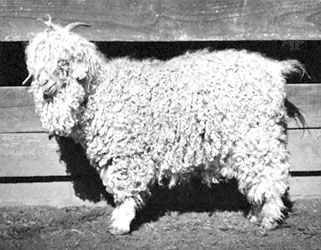
The Angora goat is a breed of domestic goat historically originating from the region of Ankara (formerly Angora), Turkey. These animals are primarily raised…
What is Angora goat?
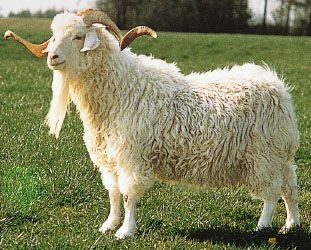
The Angora goat is a breed of domestic goat historically originating from the region of Ankara (formerly Angora), Turkey. These animals are primarily raised for their long, silky, and lustrous hair, which is known as mohair.123
Breed Characteristics
- Physical Appearance: Angora goats are generally smaller than other domestic goats and sheep, with mature animals standing about 1 meter (3.5 feet) tall at the shoulders. They are characterized by long, drooping ears and spiral-shaped horns that point backward.24
- Coat: Their bodies are covered in soft, white, silky hair that grows in uniform locks or ringlets. This fiber is composed of keratin and is prized for being strong, resilient, and durable.23
- Management: As browsers, they prefer brushwood and leaves. Because they have high nutritional requirements to support fiber production and are sensitive to cold and damp conditions, they require careful management, including supplemental feeding and adequate shelter.2
While the term “angora” is sometimes confused with the wool of the Angora rabbit, the fiber from the Angora goat is distinctively known as mohair.25
How does mohair differ from sheep’s wool?
While both mohair and wool are primarily composed of the protein keratin and share similar chemical properties, they differ significantly in their physical structure and performance characteristics.26
Key differences include:
- Scale Structure: The outer layer of mohair fiber has about half the number of scales found in fine wool. Because these scales lie nearly flat with minimal overlapping, the surface of mohair is smoother than that of wool.2
- Felting: Due to its unique scale structure, mohair is much more resistant to felting—the tendency of fibers to mat together—than sheep’s wool.26
- Appearance: Mohair is prized for its natural luster and high sheen, whereas wool is typically characterized by greater crimp (waviness).26
- Texture and Durability: Mohair is exceptionally strong, resilient, and durable. While it absorbs and retains moisture similarly to wool, it is generally more sensitive to chemical treatments.2
What is the difference between Angora goat hair and Angora rabbit fur?
Although both the Angora goat and the Angora rabbit share a namesake origin in Ankara, Turkey, the fibers they produce are distinct in name, texture, and physical properties.52
- Angora Goat (Mohair): The fiber harvested from the Angora goat is known as mohair. It is characterized by its long, lustrous, and smooth appearance. Because its fibers have fewer scales that lie nearly flat, mohair is strong, resilient, and durable, and it is notably resistant to felting.432
- Angora Rabbit (Angora Wool): The fiber harvested from the Angora rabbit is simply called angora4. This fiber is prized for being exceptionally fine, soft, and warm. Unlike the smooth, shiny locks of mohair, angora rabbit fur is known for its “halo”—a soft, flyaway texture that creates a fuzzy appearance in finished garments.5
While the term “angora” was historically used to describe both fibers, modern usage distinguishes them to avoid confusion, reserving “mohair” for the goat’s fleece and “angora” for the rabbit’s fur.5
Why are Angora goats considered more sensitive to weather than other goat breeds?
Angora goats are notably sensitive to cold and damp conditions, which can pose significant health risks to the herd. This sensitivity is particularly pronounced in Angora kids, necessitating careful management to ensure their survival.3
The breed’s vulnerability to weather is a primary reason why early attempts to establish Angora herds in Europe during the 16th century were largely unsuccessful, as the climate was deemed unsuitable for the animals. To maintain a healthy herd in less-than-ideal environments, breeders must provide adequate shelter and, in some cases, artificial heating. Additionally, because these goats have high nutritional requirements to support the energy-intensive production of their mohair fleece, they require consistent, high-quality nutrition to remain resilient against environmental stressors.3
Sources
- Angora goat — Merriam-Webster
- mohair — Encyclopædia Britannica
- Angora goat — Encyclopædia Britannica
- 7 More Knitting Words to Keep You Warm | Angora and Mohair — Merriam-Webster
- Angora goat: Top Questions — Encyclopædia Britannica
- specialty hair fibre — Encyclopædia Britannica
- Goat breeds — Encyclopædia Britannica
Published on · 3 min read