Appaloosa
The Appaloosa horse breed originated in western North America, specifically within the territory of the Nez Percé people. The breed is said to have descended…
Where did the Appaloosa breed originate, and which Native American tribe is closely associated with its development?
The Appaloosa horse breed originated in western North America, specifically within the territory of the Nez Percé people. The breed is said to have descended from wild mustangs, which were the progeny of horses brought to the continent by Spanish explorers. The name “Appaloosa” is derived from the Palouse River region of Idaho and Washington1.12
The Nez Percé are the Native American tribe most closely associated with the development of the breed. After acquiring horses in the early 18th century, the tribe became renowned for their equestrian skills and their unique practice of selective breeding. By carefully managing their herds, the Nez Percé were instrumental in creating the Appaloosa, eventually building one of the largest and most impressive horse herds on the continent.13
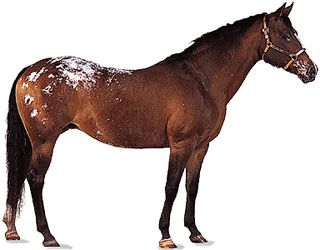
What are some common colors and patterns found in Appaloosa horses?
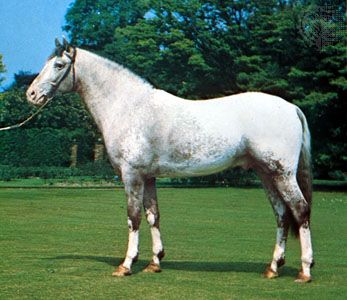
Appaloosa horses are recognized for their wide variety of coat colors and distinctive patterns. While they can exhibit any of the regular coat colors found in horses, they are most famous for their unique spotting, often referred to as the leopard complex.14
Common patterns include:
- Blanket Pattern: A solid-colored body with a large white patch over the hips and loin, which may be interspersed with small, round spots that match the base body color.14
- Leopard Pattern: A white coat covered with dark, colored spots across the entire body.1
- Spotted Patterns: Variations where a solid-colored horse features white dots or flecks distributed across its body.1
These patterns are highly variable, and the leopard complex mutation responsible for these traits is ancient, with evidence of spotted horses appearing in cave paintings dating back 25,000 years. While some Appaloosas may appear solid-colored, they are genetically linked to these specific spotting characteristics.412
How has modern breeding affected the Appaloosa’s characteristics compared to its historical predecessors?
The provided search results do not contain information regarding how modern breeding practices have specifically altered the characteristics of the Appaloosa compared to its historical predecessors. While the records confirm that the Nez Percé were instrumental in the breed’s development through selective breeding and that the Appaloosa Horse Club was organized in 1938, the available data does not detail the subsequent evolution of the breed’s physical or behavioral traits under modern management.
How did the Appaloosa breed nearly become extinct, and how was it revived?
The provided search results do not contain specific information regarding the decline of the Appaloosa breed toward extinction or the details of its subsequent revival. While the records confirm that the Nez Percé people were instrumental in developing the breed through selective breeding and that the Appaloosa Horse Club was organized in 1938, the historical narrative concerning a near-extinction event is not addressed in the provided documentation.
Sources
- Appaloosa — Encyclopædia Britannica
- Appaloosa — Merriam-Webster
- Nez Percé — Encyclopædia Britannica
- horse - Colour and pattern — Encyclopædia Britannica
Published on · 2 min read