Amethystine Python
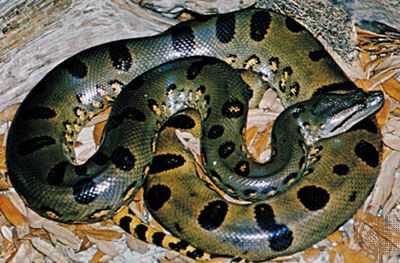
The amethystine python (Simalia amethistina) is a long, slender, nonvenomous snake belonging to the family Pythonidae. Native to Indonesia, New Guinea, and…
What is amethystine python?
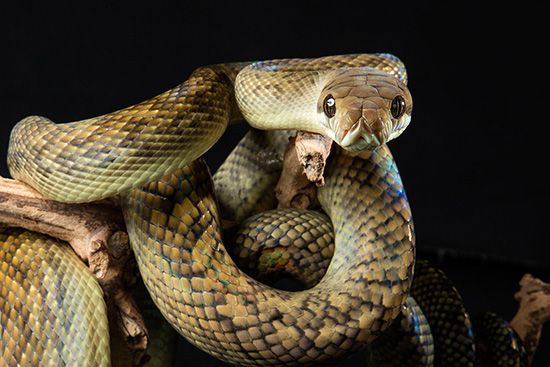
The amethystine python (Simalia amethistina) is a long, slender, nonvenomous snake belonging to the family Pythonidae. Native to Indonesia, New Guinea, and northern Australia, it primarily inhabits coastal rainforests. It is recognized as the longest python in Australia, with adults typically measuring 3–3.7 meters (10–12 feet), though some individuals have reached over 8.5 meters (28 feet).1
The species is named for the blue-purple iridescence of its scales, which sparkle in sunlight like the amethyst gemstone. These pythons are nocturnal constrictors equipped with heat-sensing pit organs that allow them to detect infrared radiation to locate prey, such as birds and mammals. As an oviparous species, females exhibit maternal care by coiling around their eggs and using muscle contractions to maintain a stable incubation temperature.1
How do heat-sensing pits help snakes hunt?
Heat-sensing pits, or pit organs, function as highly sensitive infrared receptors that allow certain snakes—including pit vipers, boas, and pythons—to detect and strike at warm-blooded prey in the dark.23
These organs act as directional distance receptors. In pit vipers, the organs consist of deep chambers separated by a thin, innervated membrane, while pythons and boas possess similar depressions along their lip scales known as labial pits. These membranes are densely supplied with nerve fibers that respond to rapid changes in thermal radiation.23
When warm prey enters the snake’s range, the heat energy radiated onto the membrane triggers an increase in nerve impulse frequency. Because the pits are positioned on the head, they provide the snake with a “cone of reception” that allows it to localize the heat source. While snakes often use vibrations, sight, and smell to initially detect prey, the pit organs are essential for confirming the target’s identity and accurately aiming a strike.32
What are the differences between venomous snakes and constrictors?
The primary distinction between venomous snakes and constrictors lies in their specialized methods for securing and immobilizing prey.
Venomous Snakes
Venomous snakes utilize specialized salivary glands to produce potent toxins, which are delivered into prey through modified teeth. These injector teeth vary by species:4
- Viperids: Possess long, tubular fangs on a rotatable maxillary bone.45
- Elapids: Feature short, fixed hollow fangs.45
- Rear-fanged snakes: Use grooved teeth on the posterior of the maxillary to conduct venom as they bite and chew.45
Venom acts to rapidly immobilize prey by causing systemic effects, such as blood-vessel injury, coagulation defects, or interference with respiratory and motor functions. Some venomous snakes strike and release their prey, tracking the animal until it succumbs, while others hold on to ensure the toxin is delivered.4
Constrictors
Constrictors, such as pythons and boa constrictors, are nonvenomous. Instead of chemical immobilization, they use physical force:6
- Method: After striking and securing prey with their teeth, they rapidly wrap their bodies around the animal in a series of coils.4
- Mechanism: These coils tighten until the prey can no longer breathe, leading to death by suffocation or, in some cases, organ failure due to restricted blood flow.46
- Anatomy: Unlike venomous snakes, constrictors rely on immense muscular strength rather than toxic secretions to subdue their meals.4
While both groups have evolved sophisticated sensory tools—such as the Jacobson’s organ for chemical sensing and, in many species, pit organs for detecting heat—their ultimate strategies for handling prey represent two distinct evolutionary paths.45
How do other reptiles care for their eggs?
Parental care among reptiles varies significantly, ranging from species that abandon their eggs immediately to those that provide extensive protection.
Minimal Parental Care
For the vast majority of reptiles, including most turtles, lizards, and snakes, parental care is limited to the selection of a nesting site and the construction of an egg chamber.8
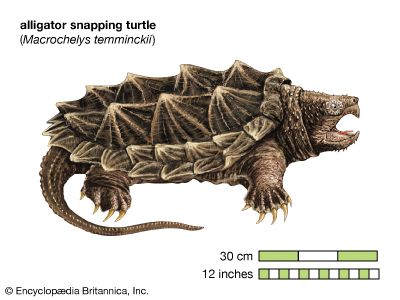
- Turtles: Females typically use their hind limbs to excavate a nest, deposit their eggs, and cover the chamber with soil before departing, leaving the eggs and hatchlings to survive on their own.89
- Lizards and Snakes: While some species simply drop eggs in suitable locations, others dig burrows or utilize natural crevices in rock or tree bark. Once the eggs are laid, the female usually leaves the site.8
Active Parental Care
A few species exhibit more involved behaviors:
- Brooding: Some lizards and snakes remain with their clutch, often curling their bodies around the eggs throughout the incubation period.8
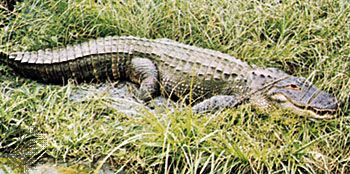
- Crocodilians: Crocodiles provide the most intricate care. Females build elaborate nest mounds of soil and vegetation and remain nearby to guard the eggs from predators. Upon hearing the hatchlings chirp, the mother uncovers the nest, assists them in emerging, and carries them to the water in her mouth. She may continue to protect her young for several months.810
Sources
- amethystine python — Encyclopædia Britannica
- reptile - Chemoreception — Encyclopædia Britannica
- Thermoreception - Reptiles and amphibians — Encyclopædia Britannica
- What are the differences between pythons and boa constrictors? — Encyclopædia Britannica
- snake - Specializations for securing food — Encyclopædia Britannica
- What are the differences between anacondas and boa constrictors? — Encyclopædia Britannica
- snake - Skull and sense organs — Encyclopædia Britannica
- reptile - Embryonic development and parental care — Encyclopædia Britannica
- crocodile - Reproduction — Encyclopædia Britannica
- turtle - Nesting and egg laying — Encyclopædia Britannica
- sea turtle: Top Questions — Encyclopædia Britannica
Published on · 4 min read