Amu Darya
The name Oxus is the historical designation by which the Amu Darya was known to the Western world during Greek and Roman antiquity.
What is the historical significance of the Amu Darya’s ancient name, Oxus?
The name Oxus is the historical designation by which the Amu Darya was known to the Western world during Greek and Roman antiquity.12
Its primary historical significance lies in its role as a major geographical landmark that defined regional boundaries in Central Asia. Specifically, the river served as the western boundary for the historical region of Transoxania—a name literally meaning “That Which Lies Beyond the River”—which encompassed the territory between the Oxus and the Syr Darya (known to the Greeks as the Jaxartes). This region became a vital center of civilization, hosting renowned urban hubs such as Bukhara and Samarkand, and later served as the heart of the Timurid empire.34
While the river was well-known in antiquity, it remained largely peripheral to European geographical knowledge until the 18th century, when systematic exploration began under the reign of Peter I the Great.1
What types of wildlife and plant species are found in the Amu Darya river ecosystem?
The flora and fauna of the Amu Darya ecosystem vary significantly by elevation and have been profoundly impacted by environmental changes in the region.
Plant Life
The vegetation along the river is defined by its location:
- Mountain Regions: In higher elevations, the riverbanks are lined with junipers and poplars, accompanied by sweetbrier and blackberries.2
- Lower Elevations: Willows, buckthorn, poplars, and oleasters are the predominant species.2
- Floodplain Forests: The riverbanks and islands historically feature tugai—dense floodplain forests consisting of black poplar, willow, reed, and cane.5
- Delta Region: While the delta was once an impenetrable tangle of vegetation, the depletion of water has led to a landscape now dominated by salt- and drought-resistant plants.2
Wildlife
The Amu Darya ecosystem was historically rich in biodiversity, though human-induced water diversion and pollution have caused severe declines.26
- Mammals: The tugai forests have traditionally served as a habitat for jackals, wild boars, and the rare pink deer.5
- Fish: Before the river became heavily polluted, it supported populations of edible carp, barbel, and pike. Currently, the lower reaches and the former delta are nearly devoid of fish and bird life.52
How has the Amu Darya river influenced the history and development of Central Asia?
The Amu Darya, historically known as the Oxus, has been a fundamental force in the development of Central Asia. Its influence is best understood through its role as a geographical anchor and a catalyst for civilization.
Defining Regional Identity
The river served as a critical boundary that defined the historical region of Transoxania—literally “That Which Lies Beyond the River.” Situated between the Amu Darya and the Syr Darya, this area became a flourishing center of Muslim civilization during the Middle Ages. The river’s presence supported the growth of world-renowned urban centers such as Bukhara and Samarkand, which served as hubs for trade, scholarship, and culture.
Political and Imperial Significance
The region surrounding the Amu Darya was the heart of the Timurid empire in the 15th century. The conqueror Timur established his power base in Transoxania, using the region’s resources and strategic location to launch campaigns that stretched from India to the Mediterranean Sea. Under his successors, the area experienced a cultural renaissance, fostering advancements in science and astronomy.
Environmental and Modern Impact
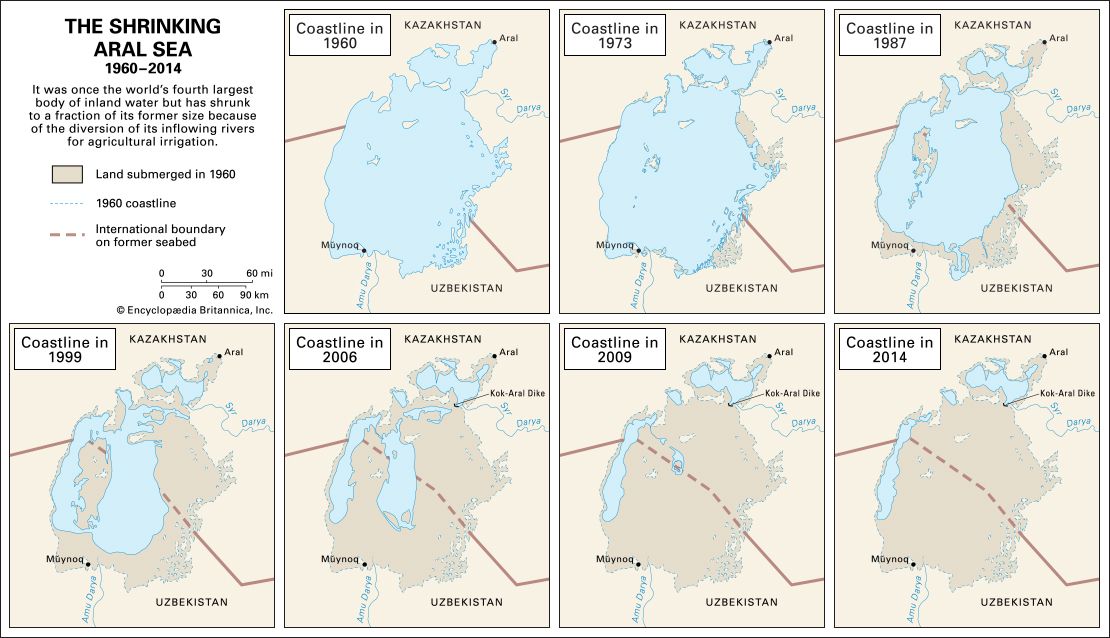
While the river historically sustained life in an arid landscape, 20th-century water diversion for large-scale cotton irrigation significantly altered its course and ecological health. This human intervention led to the dramatic shrinking of the Aral Sea and increased soil salinity, illustrating the river’s ongoing, complex relationship with the region’s economic development and environmental stability.
What is the geographical location and course of the Amu Darya river?
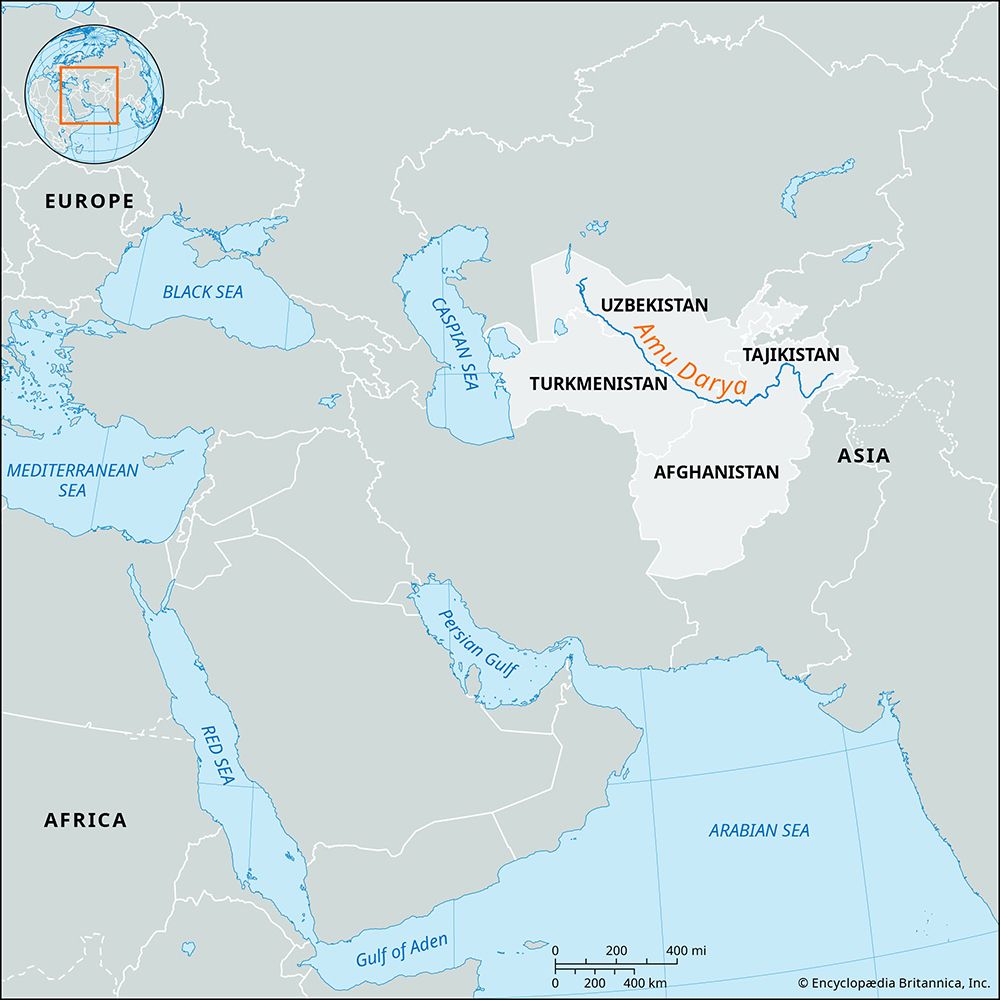
The Amu Darya, historically known as the Oxus, is a major river in Central Asia. It is formed by the confluence of the Vakhsh and Panj rivers, with its ultimate headwaters originating in the Pamirs and Hindu Kush mountains.2
Course and Geography
The river flows in a west-northwest direction, spanning approximately 879 miles (1,415 km), or 1,578 miles (2,540 km) when measured from the source of the Panj. Its course is characterized by several distinct segments:2
- Upper Course: Forms part of the northern border of Afghanistan with Tajikistan, Uzbekistan, and Turkmenistan.2
- Mid-Course: Traverses the arid Turan Plain, acting as a boundary between the Karakum Desert and the Kyzylkum Desert.2
- Lower Course: Forms the boundary between Uzbekistan and Turkmenistan. Historically, the river terminated in the Aral Sea, but extensive water diversion for irrigation has caused the river to no longer reach its historic terminus.2
Sources
- Transoxania — Encyclopædia Britannica
- Amu Darya — Encyclopædia Britannica
- Amu Dar'ya — Merriam-Webster
- history of Central Asia — Encyclopædia Britannica
- Uzbekistan - Drainage — Encyclopædia Britannica
- Turkmenistan - Plant and animal life — Encyclopædia Britannica
- Timur — Encyclopædia Britannica
Published on · 3 min read