Anacardiaceae
The Anacardiaceae family, commonly known as the cashew or sumac family, plays a significant role in various ecosystems, primarily through its diverse fruit…
What role do Anacardiaceae plants play in their ecosystems?
The Anacardiaceae family, commonly known as the cashew or sumac family, plays a significant role in various ecosystems, primarily through its diverse fruit production and chemical adaptations.
Ecological Contributions
- Food Source: Many members of the family, such as mango, cashew, and hog plum, produce fleshy drupes that serve as important food sources for wildlife.12
- Chemical Defense: A defining characteristic of the family is the presence of resin ducts in the bark and tissues. These resins, which often contain toxic compounds like urushiol, serve as a defense mechanism against herbivores. While these compounds can cause dermatitis in humans—notably in species like poison ivy and poison oak—they protect the plants from being consumed by many animals.321
- Habitat and Adaptation: These plants are widely distributed in tropical and subtropical regions, with some species highly tolerant of dry habitats and poor soils, allowing them to thrive in challenging environments.12
Are there any notable medicinal or industrial uses for plants in the Anacardiaceae family?
Plants in the Anacardiaceae family are highly valued for both their industrial applications and their traditional medicinal properties.
Industrial Uses
The family is a significant source of resins, gums, and tannins used in various manufacturing processes:
- Lacquers and Varnishes: The Chinese lacquer tree (Toxicodendron vernicifluum) provides a durable lacquer that is resistant to heat, acids, and alkalis. The mastic tree produces mastic, a high-quality varnish used for protecting metals and artwork.47
- Tanning Agents: Several species, including quebracho and sumac, are major sources of tannins used in the leather industry.47
- Cashew Derivatives: Cashew shell liquid is used in automotive brake linings, clutch facings, and as a laminating agent for glass fibers and paper. It also serves as a wood preservative and an ingredient in specialized varnishes.8
- Inks and Adhesives: The resin of the dhobi nut is used as a marking ink, and various species provide gums that serve as adhesives.7
Medicinal Uses
Many parts of these plants, particularly the mango, are utilized in traditional healing systems like Ayurveda:
- Therapeutic Applications: Extracts are used for their antiseptic, astringent, diuretic, and anthelmintic properties.9
- Specific Treatments: The bark is traditionally used for rheumatism and diphtheria, while tree gums have been applied to treat scabies and cracked feet.9
- Bioactive Compounds: Modern research highlights mangiferin as a primary antioxidant that supports gastrointestinal health and provides antidiabetic benefits.9
Are there any endangered species within the Anacardiaceae family?
What are some common ornamental plants from the Anacardiaceae family?
Several plants in the Anacardiaceae family are widely cultivated for their aesthetic appeal in landscaping and gardens. Common ornamental species include:
- Smoke Tree (Cotinus species): These shrubs or small trees are prized for their unique, airy inflorescences that resemble clouds of smoke, often in shades of red, cream, or yellow. The Eurasian smoke tree (Cotinus coggygria) is particularly popular in temperate regions for its purplish foliage and dramatic appearance.1011
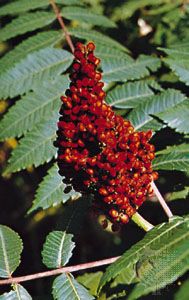
- Sumac (Rhus genus): Many sumac species are grown for their graceful habit and spectacular autumn foliage, which ranges from orange-red to purple. Varieties such as the smooth sumac and staghorn sumac are frequently used in landscape design for their color and texture.1211
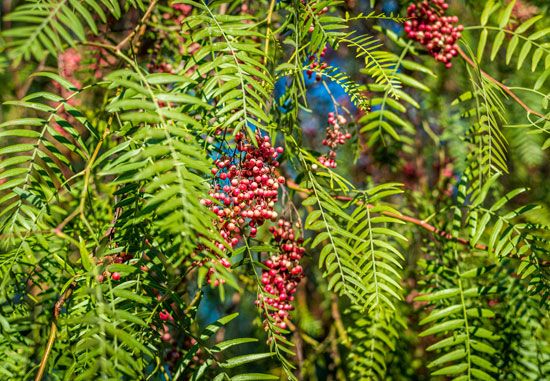
- Pepper Tree (Schinus species): The Peruvian pepper tree (Schinus molle) and the Brazilian pepper tree (Schinus terebinthifolius) are often planted in subtropical areas for their feathery, evergreen leaves and clusters of bright red berries. While valued for their hardiness and rapid growth, they can become invasive in certain environments, such as Florida.41311
Sources
- list of plants in the family Anacardiaceae — Encyclopædia Britannica
- Anacardiaceae — Merriam-Webster
- Sapindales - Anacardiaceae — Encyclopædia Britannica
- Anacardiaceae — Encyclopædia Britannica
- Myrtales - Natural history — Encyclopædia Britannica
- seed - Dispersal by ants — Encyclopædia Britannica
- palm - Economic importance — Encyclopædia Britannica
- Fruit farming - Waste materials, other uses — Encyclopædia Britannica
- Mango — Encyclopædia Britannica
- smoke tree — Encyclopædia Britannica
- Brazilian pepper tree — Merriam-Webster
- sumac — Encyclopædia Britannica
- pepper tree — Encyclopædia Britannica
Published on · 3 min read