Arctic Tern
The Arctic tern (Sterna paradisaea) is a tern species renowned for performing the longest annual migration of any bird. These birds breed in the southerly…

What is Arctic tern?
The Arctic tern (Sterna paradisaea) is a tern species renowned for performing the longest annual migration of any bird. These birds breed in the southerly reaches of the Arctic and winter in the Antarctic, completing a remarkable round-trip journey of approximately 60,000 to 82,000 km (roughly 37,000 to 51,000 miles).123
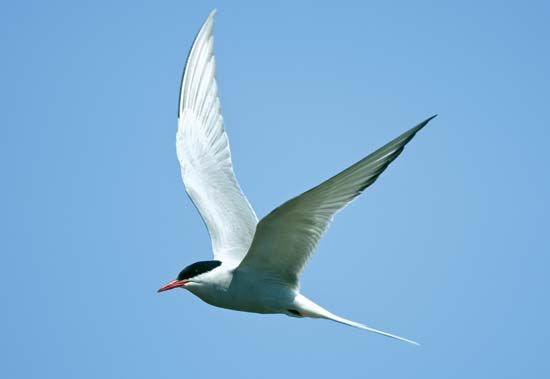
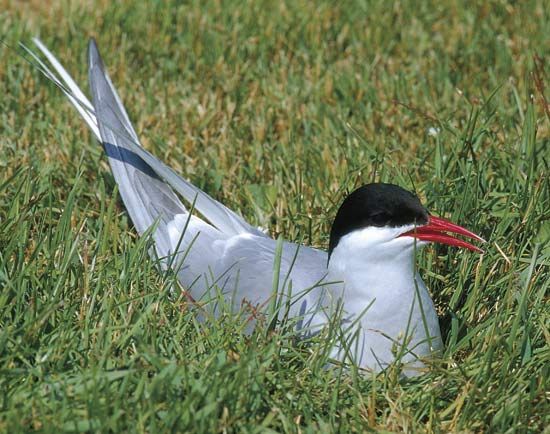
Physically, the Arctic tern is a slender, graceful water bird characterized by a white body, a black cap, and grayish wings, making it similar in appearance to the common tern. Like other terns, they are gregarious and typically breed in large colonies on the ground, often on islands or tundra. Their diet consists primarily of small fish and crustaceans, which they catch by hovering over the water and plunging in.1243
Beyond their migratory feats, Arctic terns are known for being fierce in the defense of their colonies, often participating in mobbing attacks against predators.4
How do Arctic terns navigate such long distances?
Arctic terns navigate their extensive annual migrations by utilizing a combination of sophisticated biological mechanisms that allow them to orient themselves and maintain a consistent course across the globe.
Research into avian migration indicates that birds rely on several key navigational cues:
- Celestial Bearings: Birds use the Sun during the day and stars at night to determine their position. By gauging the Sun’s angle or the patterns of the night sky, they can establish a navigational “grid” to calculate latitude and longitude.6
- Internal Clocks: To compensate for the Sun’s movement throughout the day, birds utilize an internal clock that allows them to maintain a constant direction regardless of the time.6
- Magnetic Sensitivity: It is widely understood that birds possess a sensitivity to the intensity and direction of the Earth’s magnetic field, which serves as a compass to guide them over vast distances.67
While some seabirds are known to drift with prevailing winds to cover long distances, the Arctic tern’s precise ability to return to specific breeding grounds suggests a reliance on these complex navigational systems.17
What challenges do these birds face during their migration?
The Arctic tern’s extraordinary migration—a round-trip journey of up to 82,000 km—exposes the species to significant environmental and ecological challenges. Because their survival is tied to specific migration routes and the availability of food, they are highly vulnerable to changing conditions.
Key challenges include:
- Climate Change: The Arctic is warming at a rate significantly higher than the global average. This leads to the rapid melting of sea ice, which alters the marine ecosystems that terns rely on for food. Furthermore, warming temperatures can cause shifts in the timing of biological events, such as the hatching of insects or the availability of prey, potentially creating a mismatch between the birds’ arrival and the peak abundance of food resources.1
- Habitat Degradation: Human activities, including oil drilling, construction, and pollution, threaten the integrity of the tundra ecosystems where these birds breed. Increased industrial and recreational access to high northern latitudes can place additional stress on nesting colonies.1
- Environmental Variability: Migration is a complex physiological process triggered by both internal rhythms and external cues. While birds are prepared for flight by hormonal changes, they rely on favorable ecological conditions to initiate and sustain their journey. Unpredictable meteorological events or sudden shifts in weather can force birds to alter their plans or face catastrophic outcomes if food supplies are insufficient.9
How do Arctic terns differ from other types of terns?
Arctic terns (Sterna paradisaea) share many physical characteristics with other terns, such as a slender build, long pointed wings, forked tails, and a black cap or crest. However, they are distinguished from other species primarily by their extraordinary migratory behavior and specific ecological adaptations.13
Key differences include:
- Migration Distance: The Arctic tern holds the record for the longest annual migration of any bird. While many terns are migratory, the Arctic tern travels a round-trip distance of 60,000 to 82,000 km (approximately 37,000 to 51,000 miles) between its breeding grounds in the Arctic and its wintering areas in the Antarctic.13
- Migratory Routes: Unlike many other seabirds that may drift with prevailing winds, Arctic terns follow specific, extensive routes. For example, North American populations cross the Atlantic from west to east before following the European coastline, demonstrating a highly precise navigational capability.7
- Nesting Habits: While many terns nest on islands, offshore bars, or isolated beaches, Arctic terns are specifically adapted to breed in the southerly reaches of the Arctic, often nesting on the tundra.39
Sources
- Arctic tern — Encyclopædia Britannica
- arctic tern — Merriam-Webster
- Tern — Encyclopædia Britannica
- Charadriiform - Locomotion and feeding behaviour — Encyclopædia Britannica
- Charadriiform - Gulls (suborder Lari) — Encyclopædia Britannica
- Migration - Birds — Encyclopædia Britannica
- Migration - In coastal and pelagic regions — Encyclopædia Britannica
- Homing — Encyclopædia Britannica
- Polar ecosystem - Biota of the Arctic — Encyclopædia Britannica
- Tundra - Effects of human activities and climate change — Encyclopædia Britannica
- Migration - Physiological stimulus of migration — Encyclopædia Britannica
Published on · 3 min read