Angelfish
Freshwater angelfish (Pterophyllum), members of the cichlid family, are highly valued by aquarists for their striking appearance and unique behaviors. Their…
What makes angelfish popular in aquariums, and what are some challenges in keeping them?
Freshwater angelfish (Pterophyllum), members of the cichlid family, are highly valued by aquarists for their striking appearance and unique behaviors. Their popularity stems from their elegant, thin, deep-bodied shape, elongated fins, and distinctive vertical markings. Beyond their aesthetic appeal, they are favored for breeding because of their fascinating parental care, which includes feeding their young on specialized mucous secretions produced by their bodies.12
While these fish are popular, keeping them successfully requires attention to their specific needs. As native inhabitants of tropical South America, they require appropriate environmental conditions to thrive. Being carnivorous, they also necessitate a diet that meets their nutritional requirements. Furthermore, because they are cichlids, they may exhibit territorial or protective behaviors, particularly when caring for their eggs and young, which should be considered when selecting tank mates.1
What are the different color variations and patterns found in angelfish?
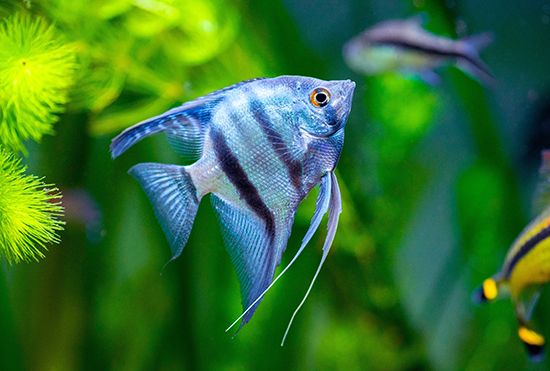
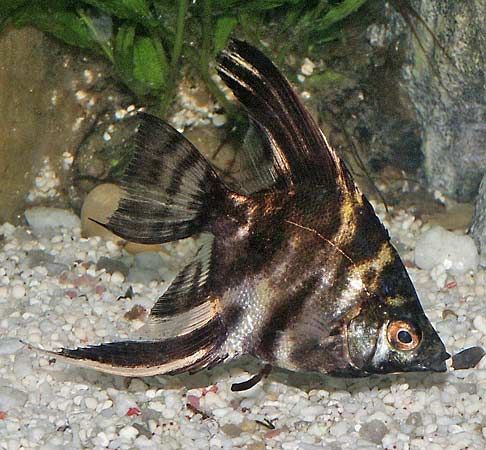
Freshwater angelfish (Pterophyllum) typically feature a silvery base color accented by vertical dark markings. However, selective breeding has resulted in variations that may appear solid black or partially black.1
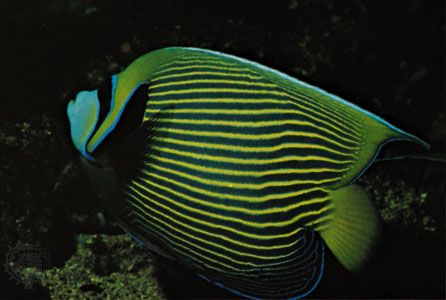
In contrast, marine angelfish belonging to the family Pomacanthidae exhibit a much broader and more vibrant range of colors and patterns. These marine species are often characterized by complex, multi-colored designs, such as:
- Black and gold: Seen in the Centropyge bicolor of the Indo-Pacific.1
- Black and yellow: Exemplified by the French angelfish (Pomacanthus paru).13
- Blue and yellow: Displayed by the queen angelfish (Holacanthus ciliaris) of the Atlantic.1
A notable feature of many marine angelfish is that their coloration changes significantly as they mature, meaning the patterns seen in juveniles often differ greatly from those of the adults.1
How do angelfish differ from other types of tropical fish?
Angelfish are distinct from other tropical fish due to their unique physical structures and specialized behaviors, though they belong to the diverse order Perciformes.
Freshwater angelfish (Pterophyllum) are cichlids characterized by their thin, deep-bodied shape and elongated dorsal, anal, and pelvic fins. Unlike many other aquarium species, they are renowned for their parental care, specifically their ability to feed their young on specialized mucous secretions produced by their own bodies.12
Marine angelfish, belonging to the family Pomacanthidae, differ from similar-looking butterfly fishes by the presence of a sharp spine on each cheek. While many tropical fish are categorized by their diet or habitat, these marine angelfish are notable for their complex, vibrant color patterns that often change drastically as the fish matures from a juvenile to an adult.1
Where are angelfish typically found in the wild?
Angelfish are found in two distinct environments depending on their classification:
- Freshwater Angelfish: Members of the genus Pterophyllum are native to the freshwaters of tropical South America.1
- Marine Angelfish: Members of the family Pomacanthidae are found in tropical marine environments, specifically across the Atlantic and Indo-Pacific regions. These species are typically associated with coral reefs.1
Sources
- angelfish — Encyclopædia Britannica
- perciform - Aquarium fishes — Encyclopædia Britannica
- black angelfish — Merriam-Webster
- cichlid — Encyclopædia Britannica
- perciform - Annotated classification — Encyclopædia Britannica
Published on · 2 min read