Bream
The term "bream" refers to several distinct types of fish, most notably the common European freshwater species (Abramis brama), which belongs to the carp…
What is bream?
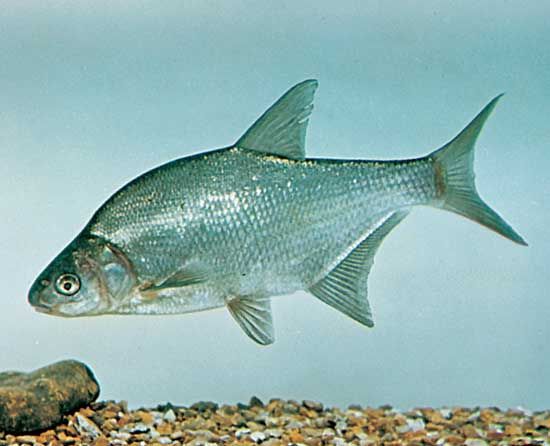
The term “bream” refers to several distinct types of fish, most notably the common European freshwater species (Abramis brama), which belongs to the carp family, Cyprinidae.12
This European bream is characterized by a deep, flat-sided body, a small head, and a silvery appearance with a bluish or brown back. Typically reaching lengths of 30–50 centimeters, these fish inhabit lakes and slow-moving rivers, where they live in schools and feed on small animals like mollusks and worms.1
The name is also applied broadly to a variety of other fish, including:
- Sea breams: Marine fish belonging to the family Sparidae, which are related to the porgy.12
- Freshwater sunfishes: Various species in the genus Lepomis, such as the bluegill.2
- Other relatives: The silver bream (Blicca bjoorkna) and the golden shiner.1
What are the main differences between freshwater and sea bream?
The term “bream” is a common name applied to several unrelated fish species, leading to significant biological and environmental differences between those labeled as freshwater bream and those known as sea bream.
Key Differences
- Biological Classification: The common European freshwater bream (Abramis brama) belongs to the carp family, Cyprinidae. In contrast, sea breams belong to the family Sparidae, which are marine fish related to the porgy.12
- Habitat: Freshwater bream are typically found in lakes and slow-moving rivers. Sea breams are marine species, meaning they inhabit saltwater environments.12
- Taxonomic Diversity: While “freshwater bream” often refers specifically to Abramis brama, the name is also used for various freshwater sunfishes, such as the bluegill (Lepomis). “Sea bream” serves as a broad category for numerous species within the Sparidae family.21
While these fish share the name “bream,” they occupy distinct ecological niches and belong to different evolutionary lineages.12
How do fish in the carp family typically behave in their environment?
Fish in the carp family (Cyprinidae) exhibit a variety of behaviors depending on the specific species and their environment:
- Social Structure: Many carp, such as the bream, live in schools, while others, like the common carp, may live alone or in small groups.13
- Feeding Habits: Carp are generally omnivorous, feeding on a range of items including plankton, invertebrates, mollusks, worms, and detritus. When rooting for food along the bottom of ponds or rivers, they often disturb the sediment, which increases water turbidity and can negatively impact local plants and animals..britannica.com/plant/plant) and animals.13
- Environmental Adaptation: These fish are often hardy and capable of colonizing diverse waterways. In temperate zones, some species, such as the common carp, become torpid during the winter, retreating to the bottom of deeper water to stop feeding and avoid freezing.3
- Reproduction: Spawning typically occurs in the spring. Females often deposit their eggs on aquatic vegetation or detritus in shallow, warm water.3
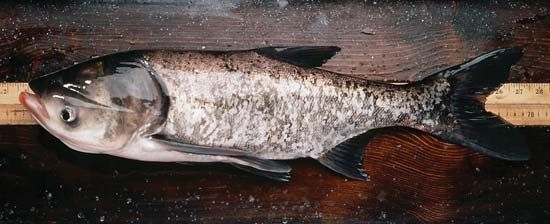
Because of their rapacious feeding and ability to adapt to new environments, certain species—particularly Asian carp—are considered invasive in many regions, as they can disrupt native aquatic ecosystems by competing for resources and altering habitat conditions.34
What are some other common types of fish found in European rivers?
European rivers are home to a diverse array of fish species beyond the common carp. Here are some other notable types of fish found in these freshwater environments:
- Northern Pike: A voracious, solitary predator found throughout Europe, northern Asia, and North America. They are easily recognized by their elongated bodies, shovellike snouts, and large mouths filled with sharp teeth.73
- Pike Perch: Also known as the zander, this carnivorous game fish is native to the lakes and rivers of eastern and central Europe. It is more slender than a typical perch and is a prized food fish.8
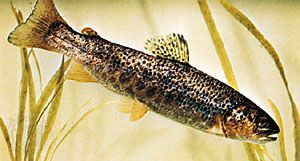
- Salmonids: This family includes various species of trout and salmon. Many are indigenous to the cooler freshwater environments of the Northern Hemisphere, such as the brown trout, which is widely established across European waters.93
- Smelts: These are small fishes found in the fresh waters of Europe, Asia, and North America. While some species are permanent freshwater inhabitants, many are anadromous, meaning they migrate between fresh water and the sea.3
Sources
- bream — Encyclopædia Britannica
- bream — Merriam-Webster
- carp — Encyclopædia Britannica
- atheriniform - Natural history — Encyclopædia Britannica
- aquaculture - Carp — Encyclopædia Britannica
- Asian carp — Encyclopædia Britannica
- pike perch — Encyclopædia Britannica
- protacanthopterygian - Importance — Encyclopædia Britannica
- pike — Encyclopædia Britannica
- protacanthopterygian - Distribution and abundance — Encyclopædia Britannica
Published on · 3 min read