Boarfish
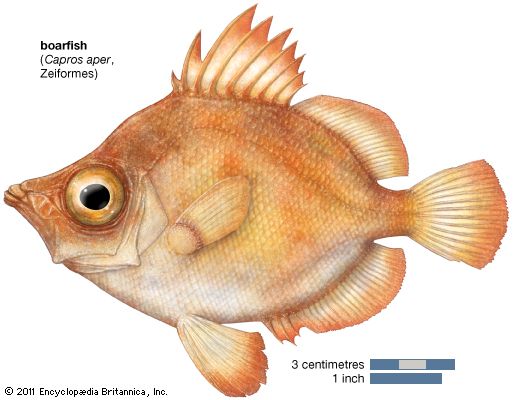
The term boarfish refers to several distinct types of marine fish, primarily characterized by a snout that resembles that of a hog.
What is boarfish?
The term boarfish refers to several distinct types of marine fish, primarily characterized by a snout that resembles that of a hog.1
In a scientific context, the name specifically identifies the family Caproidae, which consists of six species within the order Zeiformes. These fish are found in deep waters across the Atlantic, Pacific, and Indian oceans. They are known for their vibrant red coloration and a laterally compressed, diamond-shaped body that is nearly as high as it is long. A representative species, Antigonia capros, typically grows to about 18 cm (7 inches) in length and features three distinct anal spines.2
Additionally, the name is sometimes applied to various tropical percoid fishes belonging to the family Histiopteridae.1
What does it mean for a fish to be laterally compressed?
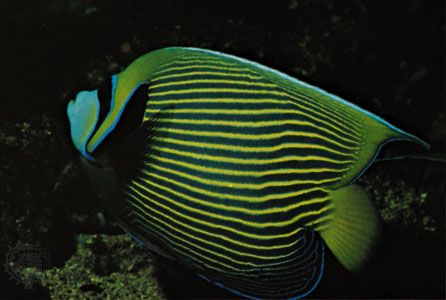
When a fish is described as laterally compressed, it means its body is flattened from side to side. This body shape is a common adaptation among species that inhabit quiet, weedy environments like lakes, ponds, and backwaters, such as sunfish and freshwater angelfish.34
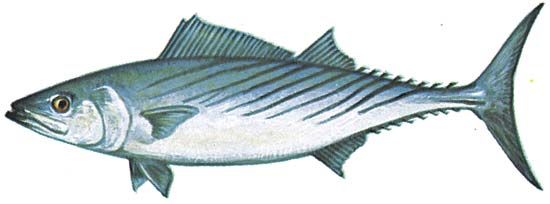
While these fish are generally not built for the high-speed, sustained swimming seen in streamlined, fusiform fish like tunas, their laterally compressed form allows them to maneuver effectively in complex habitats and perform short, quick bursts of speed to escape predators. Extreme examples of this body type include the hatchetfish and various knifefishes.43
How do deep-sea fish adapt to their environment?
Deep-sea fish have evolved specialized traits to survive in an environment defined by extreme pressure, near-freezing temperatures, and total darkness. These adaptations vary significantly depending on whether the fish inhabit the mid-water column or the ocean floor.5
Mid-Water Adaptations
Species living in the mid-water often possess features designed to navigate and hunt in the dark:
- Bioluminescence: Many species use bioluminescence to produce light through chemical reactions. This light, often blue-green, helps them attract prey or potential mates.56
- Physical Morphology: To maximize their chances of survival, these fish frequently have enlarged eyes to detect faint light and huge mouths to capture scarce food.5
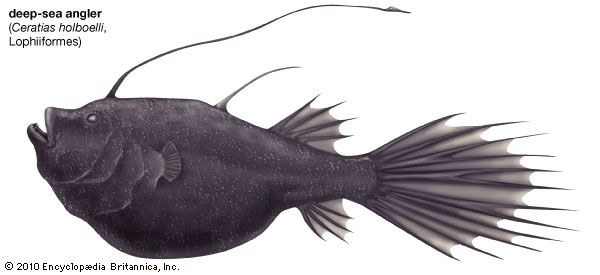
- Predatory Strategies: Some, such as deep-sea anglerfishes, use extended dorsal fin spines as lures to draw prey within reach. Others, like viperfishes, utilize fanglike teeth to secure their catch.5
Benthic (Bottom-Dwelling) Adaptations
In contrast, fish that live on the ocean floor typically lack luminous organs and have smaller eyes and mouths. Because they live at extreme depths, they have adapted to immense hydrostatic pressure by lacking air-filled compartments, such as swim bladders or lungs, which would otherwise compress or rupture.57
What are some other examples of fish in the order Zeiformes?
The order Zeiformes includes several distinct families of marine fishes, all of which are characterized by their laterally compressed, deep bodies and specialized swimming modes. Beyond the well-known boarfish (family Caproidae) and the dory (family Zeidae), other examples include:112
- Grammicolepididae: These fishes are mesopelagic and are distinguished by their very small mouths and scales that are drawn out into oblique bands.1
- Oreosomatidae: These are benthic (bottom-dwelling) fishes found worldwide. A notable characteristic of this family is that their larvae are covered with large, spinous tubercles.112
- Zeniontidae and Macrurocyttidae: These are two smaller, less-characterized families within the order.1
All members of the order Zeiformes typically possess stiff bodies and long dorsal and anal fins, which they use to move through the water with a slow, stealthy undulation rather than by flexing their bodies.12
Sources
- boarfish — Encyclopædia Britannica
- boarfish — Merriam-Webster
- fish - Locomotion — Encyclopædia Britannica
- ostariophysan - Swimming — Encyclopædia Britannica
- deep-sea fish — Encyclopædia Britannica
- Marine bioluminescence — Encyclopædia Britannica
- Respiratory system - Fishes — Encyclopædia Britannica
- fish - Structural diversity — Encyclopædia Britannica
- Photoreception - Lens eyes — Encyclopædia Britannica
- Biosphere - Hydrostatic pressure — Encyclopædia Britannica
- paracanthopterygian - Ecology and behavior — Encyclopædia Britannica
- dory — Encyclopædia Britannica
- atheriniform - Annotated classification — Encyclopædia Britannica
- atheriniform - Natural history — Encyclopædia Britannica
- clupeiform - General features — Encyclopædia Britannica
Published on · 3 min read