Aniene River
In Roman times, the Aniene River served as a vital source of water for the city of Rome through the construction of two major aqueducts: the Anio Vetus and…
How does the Aniene River contribute to the water supply of Rome?
In Roman times, the Aniene River served as a vital source of water for the city of Rome through the construction of two major aqueducts: the Anio Vetus and the Anio Novus. These engineering structures utilized the force of gravity to transport water from the river to the capital, supporting the city’s extensive network of fountains and baths.12
In the modern era, the river’s role in water management has shifted. While it remains a significant tributary of the Tiber River, the heavy utilization of its waters by hydroelectric plants and contemporary aqueduct systems has significantly reduced the volume of its flow, notably impacting the famous cascades at Tivoli.1
How has the Aniene River been used for hydroelectric power generation?
The Aniene River has been extensively utilized for hydroelectric power generation, a practice that has significantly altered the river’s natural landscape. Specifically, the diversion of the river’s waters for these hydroelectric projects, alongside their use for modern aqueducts, has drastically reduced the volume of the river’s flow.14
This reduction is most notably observed at Tivoli, where the river descends from the mountains to the plain. Historically, the series of falls at this location were a major scenic attraction, featuring waterfalls reaching 354 feet (108 meters) in height. Due to the heavy industrial and utility demands placed on the river, these once-famous cascades have been diminished to a mere trickle.14
How does the Aniene River connect to the Tiber River system?
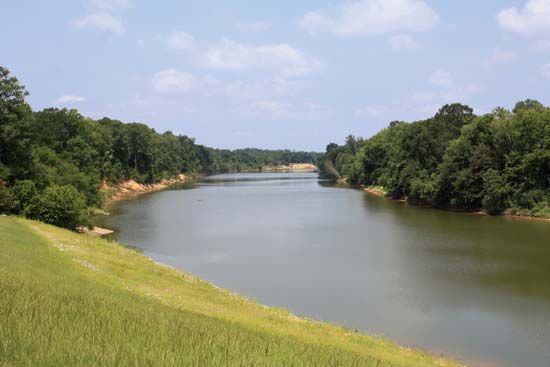
The Aniene River serves as a major tributary to the Tiber River system in central Italy. Rising from springs in the Simbruini Mountains near Subiaco, the river travels 67 miles (108 km) through a narrow valley past Tivoli. It then meanders through the Campagna di Roma before joining the Tiber just north of the city of Rome.1
As one of the Tiber’s primary tributaries—alongside the Chiascio, Nestore, Paglia, and Nera—the Aniene contributes to the overall drainage basin of the Tiber, which eventually flows into the Tyrrhenian Sea near Ostia Antica.13
What role did the Aniene River play in the development of ancient Roman aqueducts?
The Aniene River played a vital role in the infrastructure of the Roman Empire by serving as a primary water source for the capital. During the Roman era, two major aqueducts, the Anio Vetus and the Anio Novus, were constructed to transport water from the river to the city of Rome.1
These engineering projects were part of a broader effort to supply the growing population with fresh water, which was essential for public health, the operation of elaborate bath complexes, and the city’s famous fountains. By tapping into the Aniene, Roman engineers utilized the force of gravity to move water through a sophisticated network of underground conduits and stone arches, ensuring a consistent supply for the urban center. Additionally, the emperor Nero further utilized the river’s upper course near Subiaco by creating a series of artificial lakes, which supported both his private villa and the surrounding landscape.21
Sources
- Aniene River — Encyclopædia Britannica
- aqueduct — Encyclopædia Britannica
- Tiber River — Encyclopædia Britannica
- Tivoli — Encyclopædia Britannica
Published on · 2 min read