Annapurna
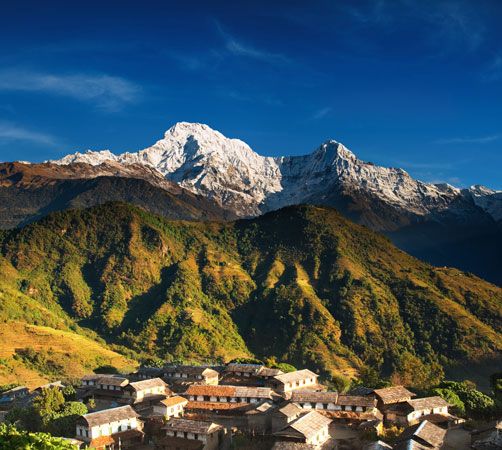
The Annapurna massif is a prominent mountain range of the Himalayas located in north-central Nepal. It forms a ridge approximately 30 miles (48 km) long…
What is the Annapurna massif and where is it located in Nepal?
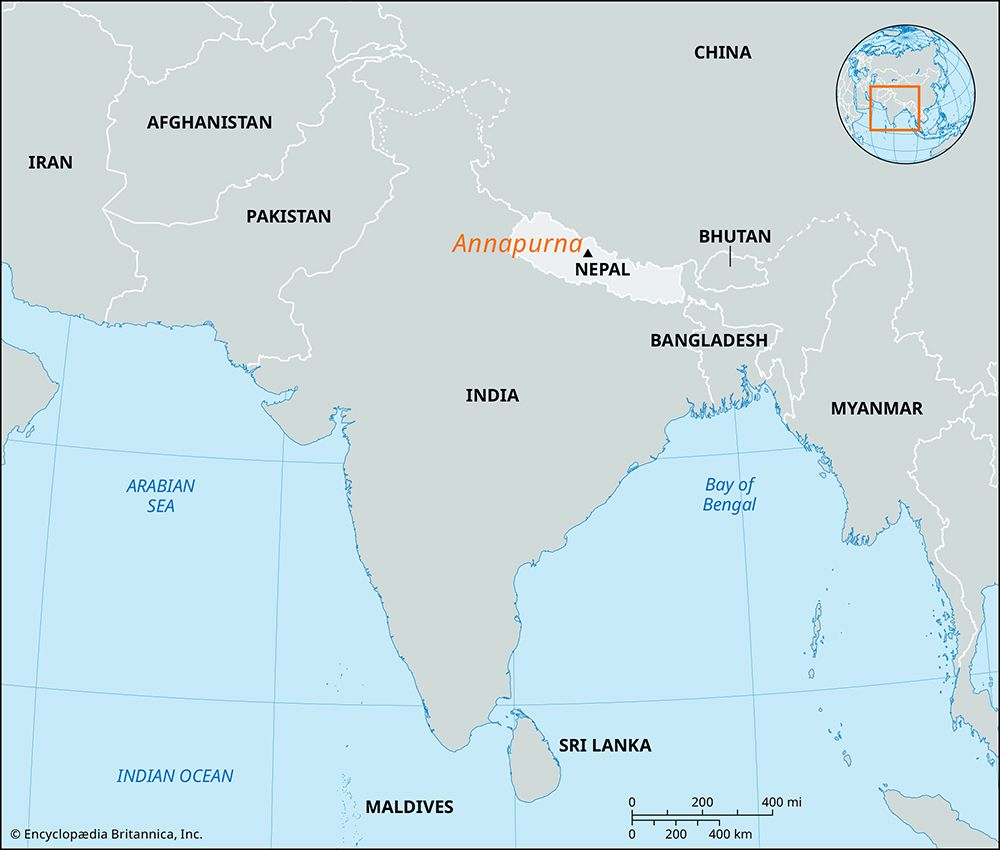
The Annapurna massif is a prominent mountain range of the Himalayas located in north-central Nepal. It forms a ridge approximately 30 miles (48 km) long, situated north of the town of Pokhara between the gorges of the Kali Gandak and Marsyandi rivers.1
The massif is composed of four primary summits:
- Annapurna I: Standing at 26,545 feet (8,091 meters), it is the world’s 10th highest peak and holds historical significance as the first peak over 26,000 feet to be successfully summited, an achievement reached in 1950.1
- Annapurna II: Located at the eastern end of the range, reaching 26,040 feet (7,937 meters).1
- Annapurna III and IV: These peaks lie between the first two, with elevations of 24,786 feet (7,555 meters) and 24,688 feet (7,525 meters), respectively.1
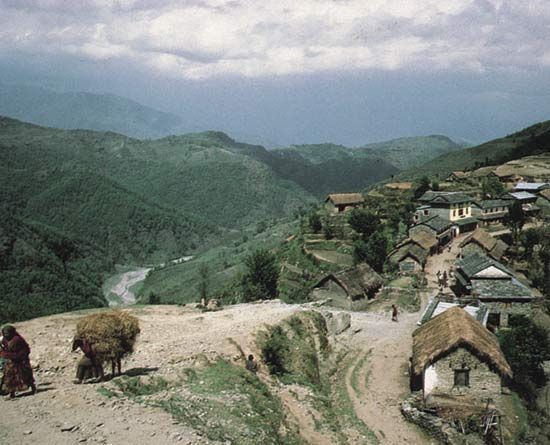
As part of the Great Himalaya range, the area is characterized by its rugged, high-altitude terrain.2
How many major peaks make up the Annapurna massif and what are their heights?
The Annapurna massif consists of four main summits. Their respective heights are as follows:
Peak
Height (Feet)
Height (Meters)
Annapurna I
26,545
8,091
Annapurna II
26,040
7,937
Annapurna III
24,786
7,555
Annapurna IV
24,688
7,525
These peaks are situated along a ridge approximately 30 miles long in north-central Nepal, forming part of the Himalayas.1
What is the significance of Annapurna I in the history of mountaineering?
Annapurna I holds a landmark position in the history of mountaineering as the first peak exceeding 26,000 feet (8,000 meters) to be successfully summited.1
This historic achievement occurred on June 3, 1950, when a French expedition led by Maurice Herzog reached the top, with Herzog and Louis Lachenal completing the climb. While climbers had previously reached significant altitudes on Mount Everest by 1924, the success on Annapurna I marked a major milestone in the mid-20th-century era of Himalayan exploration, preceding other notable first ascents such as those of Nanga Parbat, K2, and the eventual conquest of Everest in 1953.13
How does the Annapurna massif compare to other major mountain ranges in the Himalayas?
The Annapurna massif is a distinct 30-mile-long ridge located in north-central Nepal, situated between the Kali and Marsyandi river gorges. While it is a prominent feature of the region, it functions as a component of the Great Himalaya Range, which serves as the backbone of the entire Himalayan mountain system.14
Compared to other ranges within the Himalayas, the Annapurna massif is characterized by its extreme elevation. It contains Annapurna I, which ranks as the world’s 10th highest peak and is one of the 10 peaks in the Great Himalaya Range that exceeds 26,250 feet (8,000 meters). In contrast, the Lesser Himalayas to the south feature mountains rising to 15,000 feet, while the Outer Himalayas consist of lower elevations and flat-floored valleys. Unlike the highly dissected plateaus of the Lesser Himalayas or the structural basins like the Vale of Kashmir, the Annapurna massif is defined by its high-altitude, snow-capped summits.14
Sources
- Annapurna — Encyclopædia Britannica
- Nepal - Relief — Encyclopædia Britannica
- mountaineering - History — Encyclopædia Britannica
- Himalayas - Physiography of the Himalayas — Encyclopædia Britannica
Published on · 2 min read