Annonaceae
The Annonaceae family, which includes the custard apple genus (Annona), is recognized for its local importance in traditional medicine across tropical…
What is the significance of Annonaceae in traditional medicine?
The Annonaceae family, which includes the custard apple genus (Annona), is recognized for its local importance in traditional medicine across tropical regions.1
Specific medicinal applications often involve the use of roots, leaves, and fruits:
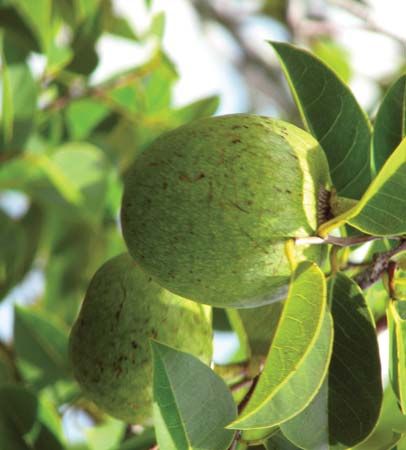
- Digestive Health: Teas prepared from the roots of the sugar apple (Annona squamosa) are used as a purgative, while leaf-based teas are employed as a mild laxative and a tonic for the digestive tract.2
- Wound Care: Poultices made from the leaves of various species, including the sugar apple and the atemoya, are applied to dress infected wounds.2
- Parasite Control: The seeds of the soursop contain toxins that are used locally as a repellent against parasites.2
- Historical Uses: The dried fruits of Xylopia aethiopica were once utilized in Europe as a drug and a condiment.3
While these plants hold cultural and medicinal significance, it is important to note that some species, such as Unonopsis veneficiorum, contain potent toxins used by indigenous tribes for hunting, highlighting the necessity of caution regarding plant-based remedies.4
Where are Annonaceae plants typically found in the world?
Plants in the Annonaceae family are primarily found throughout the tropics worldwide. They are particularly characteristic of lowland evergreen forests in Africa and Asia. While the family is predominantly tropical, its distribution also extends into subtropical and some temperate regions.167
Key details regarding their geographical presence include:
- Tropical Regions: The majority of the family’s 130 genera and 2,220 species thrive in tropical environments.1
- Regional Diversity: Members of the family are found in various parts of the world, including South America, West Africa, and across the Asia-Pacific region, with some species present in Australia, New Guinea, and Fiji.217
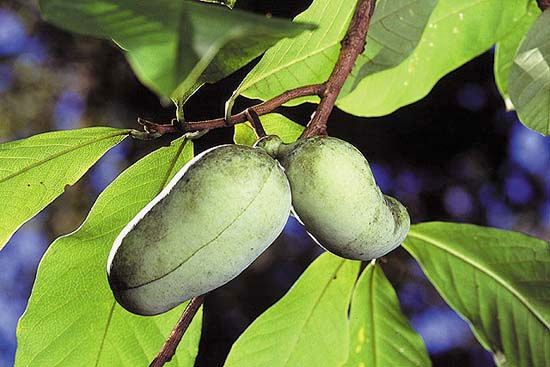
- Temperate Exceptions: The genus Asimina is a notable exception, as it is restricted to eastern North America. Specifically, the pawpaw (A. triloba) is the only temperate-adapted species in the family, with a range extending as far north as the lower Great Lakes.1
What are some well-known or economically important species in the Annonaceae family?
The Annonaceae family is economically significant primarily for its edible fruits and versatile timber. Several species are widely cultivated and valued for their commercial and local utility.
Edible Fruit Species
The genus Annona is the most economically prominent, producing several highly prized fruits:
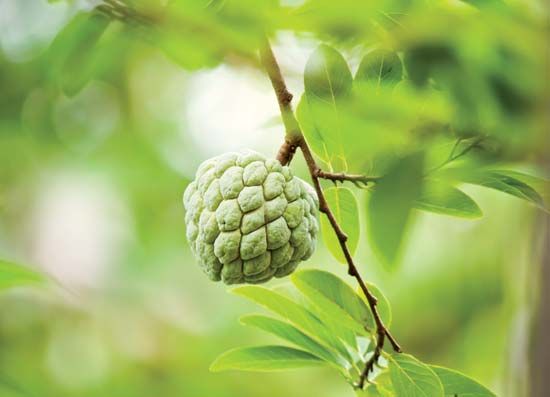
- Custard apple (A. reticulata): Known for its sweet, custard-like flesh.
- Soursop (A. muricata): A large, spiny fruit with aromatic, fibrous flesh used in drinks and desserts.
- Sweetsop (A. squamosa): Also called sugar apple, it is highly esteemed in India and Pakistan for its sweet, segmented pulp.
- Cherimoya (A. cherimola): A creamy-textured fruit grown in cool, frost-free mountain valleys.
- American pawpaw (Asimina triloba): A temperate species native to the eastern United States, valued for its sweet, custard-like fruit.
- Biriba (Rollinia mucosa): Widely cultivated in Brazil for its delicious fruit.
Timber and Industrial Species
Many members of the family provide valuable wood products:
- Lancewood (Oxandra lanceolata): The most important commercial timber source in the family, used for scientific instruments, tool handles, and sporting goods.
- African whitewood (Enantia chlorantha): Used for furniture, veneers, and as a source of yellow dye.
- Otu (Cleistopholis patens): Provides a soft, light wood similar to balsa, used for floats and life rafts.
- Mast tree (Monoon longifolium): A popular ornamental tree in Sri Lanka and India, also used for making matches and crates.
How do the leaves and bark of Annonaceae plants differ from other plant families?
The leaves and bark of plants in the Annonaceae family possess distinct morphological characteristics that help distinguish them from other plant families.
Leaf Characteristics
- Arrangement: The leaves are simple and arranged alternately in two rows along the stems.11
- Structure: They lack stipules and typically feature smooth margins.811
- Appearance: A notable feature is a characteristic metallic sheen found on the foliage of many species.8
- Fragrance: The leaves are often fragrant, a trait shared with the wood of these plants.11
Bark and Wood Characteristics
While specific bark anatomy is less frequently contrasted with other families in general descriptions, the wood and bark of many species are noted for being fragrant. Furthermore, the bark, along with the leaves and roots, is frequently utilized in folk medicine. Some species, such as the alligator apple, have bark or root tissues that are functionally distinct, such as being used for fishing floats or bottle corks due to their physical properties.11
Sources
- custard apple — Encyclopædia Britannica
- Annonaceae — Merriam-Webster
- Magnoliales - Fruit — Encyclopædia Britannica
- Magnoliales - Chemicals — Encyclopædia Britannica
- Magnoliales - Timber — Encyclopædia Britannica
- Magnoliales - Distribution and abundance — Encyclopædia Britannica
- magnoliid clade - Distribution — Encyclopædia Britannica
- Annonaceae — Encyclopædia Britannica
- sugar apple — Merriam-Webster
- Soursop — Encyclopædia Britannica
- Magnoliales - Annonaceae — Encyclopædia Britannica
Published on · 4 min read