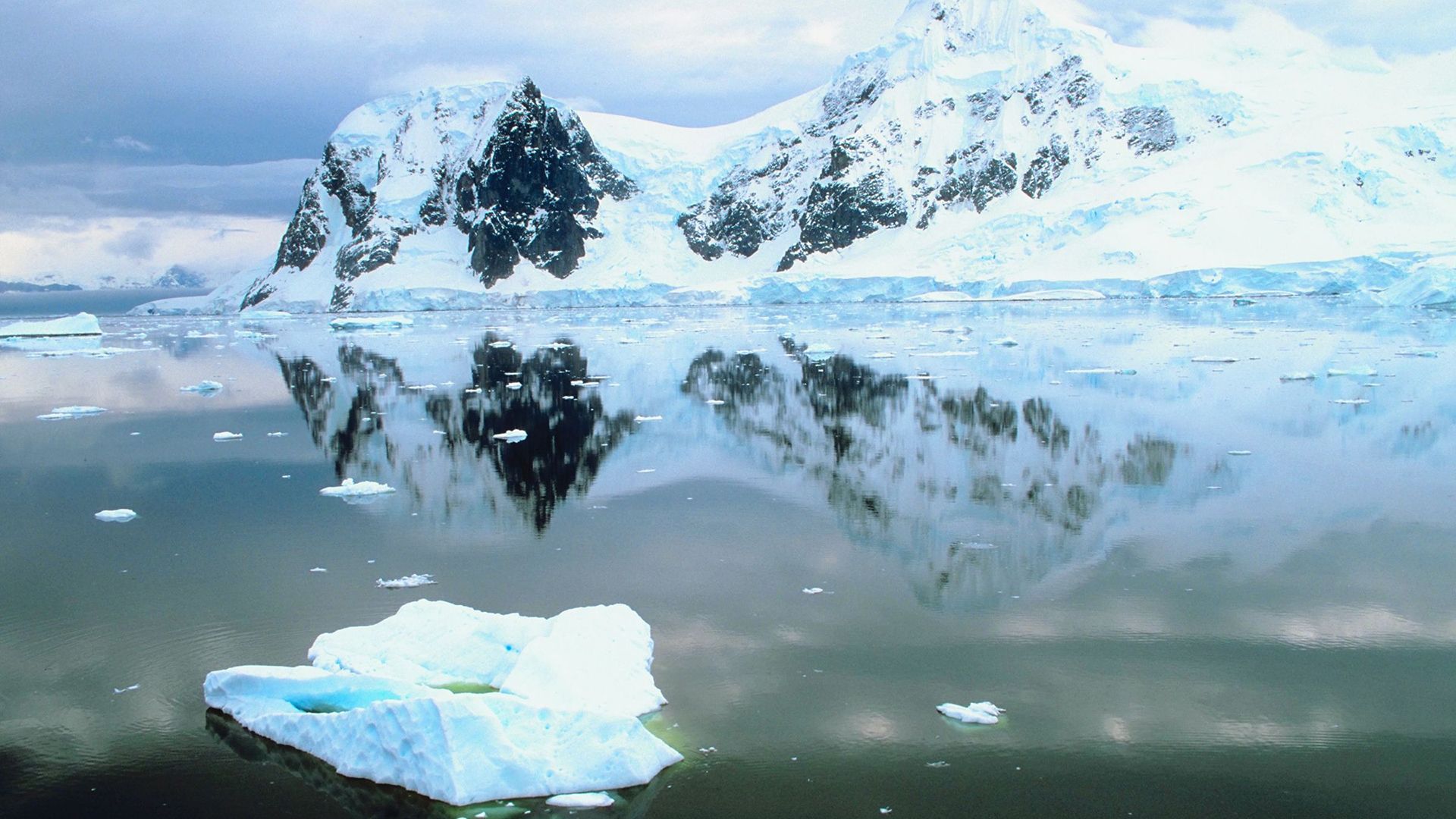
Antarctic Intermediate Water
Antarctic Intermediate Water (AAIW) is a distinct water mass found throughout the southern oceans at depths ranging from approximately 1,650 to 4,000 feet…
What is Antarctic Intermediate Water?
Antarctic Intermediate Water (AAIW) is a distinct water mass found throughout the southern oceans at depths ranging from approximately 1,650 to 4,000 feet (500 to 1,200 meters).1
It is characterized by temperatures between 37° and 45° F (3° to 7° C) and relatively low salinity levels of 33.8 to 34.5 parts per thousand. This water mass forms at the Antarctic Convergence in a latitudinal belt between 50° and 60° S. At this location, surface water is cooled and reaches a density that causes it to sink beneath the surface before flowing laterally toward the north.1
As it moves, AAIW becomes modified by mixing with other waters, yet it remains identifiable in temperature and salinity profiles as far north as 35° N in the Atlantic Ocean. It plays a crucial role in global thermohaline circulation, acting as a low-salinity sheet that marks the lower boundary of the subtropical thermocline and helps compensate for the sinking of North Atlantic Deep Water.12
What is the difference between Antarctic Intermediate Water and Antarctic Bottom Water?
Antarctic Intermediate Water (AAIW) and Antarctic Bottom Water (AABW) are both critical components of the global thermohaline circulation, but they differ significantly in their formation, density, and depth.
Key Differences
Feature
Antarctic Intermediate Water (AAIW)
Antarctic Bottom Water (AABW)
Depth
Approximately 1,650 to 4,000 feet (500 to 1,200 meters)
The lowermost layer, extending to the seafloor
Formation
Forms at the
Antarctic Convergence
(50°–60° S) where surface water cools and sinks
Forms primarily on the continental shelves of the
Weddell Sea
and
Ross Sea
during winter
Characteristics
Temperature of 37°–45° F (3°–7° C); salinity of 33.8–34.5 ppt
Temperature of -0.9° C (30.4° F); salinity of 34.62 ppt
Movement
Flows laterally northward at intermediate depths
Flows northward along the deep seafloor, crossing the Equator
Formation and Role
- AAIW: This water mass forms a low-salinity sheet that marks the lower boundary of the subtropical thermocline. It helps compensate for the sinking of North Atlantic Deep Water by upwelling into the thermocline.3
- AABW: This is the densest water mass in the ocean. It is created when the partial freezing of seawater over the Antarctic continental shelf produces salt-free ice and highly dense, cold residual brine. Because of its extreme density, it sinks to the bottom and spreads across the global ocean basins, providing oxygen to the deep sea.32
How does the Antarctic Circumpolar Current influence global ocean temperatures?
The Antarctic Circumpolar Current (ACC) plays a fundamental role in regulating global ocean temperatures and climate by acting as a massive, wind-driven circumpolar belt that encircles Antarctica.52
Thermal Isolation and Regulation
The ACC effectively isolates Antarctica from the warmer surface waters of the subtropics. By maintaining this barrier, it helps preserve the cold, low-salinity state of the Southern Ocean, which serves as a primary site for the formation of deep and bottom water. This process is essential to the global thermohaline circulation, as the current lifts dense deep water to the surface, where it is cooled by Antarctic air masses and converted into Antarctic Bottom Water and Antarctic Intermediate Water.6
Heat Exchange and Atmospheric Influence
Beyond its role in deep-water formation, the ACC influences global temperatures through several mechanisms:
- Poleward Heat Transfer: Large meanders and eddies within the current facilitate the poleward transfer of heat, which helps balance the oceanic heat loss to the atmosphere in the Antarctic region.2
- Thermal Gradients: At the Antarctic Convergence, the current creates strong thermal gradients in the sea surface. These gradients influence the heating of the atmosphere and help position the jet stream, thereby steering weather systems across the hemisphere.7
- Global Connectivity: By linking the Atlantic, Pacific, and Indian oceans, the ACC serves as a critical conduit for the global distribution of heat, nutrients, and oxygen, moderating the climate on a planetary scale.528
What is the thermohaline circulation and why is it important for the climate?
The thermohaline circulation (THC) is a global system of slow-moving ocean currents driven by horizontal differences in temperature and salinity, rather than by wind. This process involves the sinking of cold, dense surface water in polar regions—notably in the North Atlantic and near Antarctica—which then spreads along the seafloor and gradually upwells to replace surface waters elsewhere.89
This circulation is vital for the global climate because it acts as a massive conveyor belt that redistributes heat, nutrients, and oxygen across the planet. Specifically, the THC transports warm surface waters from the subtropics toward the poles. In the North Atlantic, this poleward heat transfer is responsible for moderating the climate of northwestern Europe, providing significantly warmer winter conditions than would otherwise be expected at those latitudes. By facilitating this large-scale heat exchange, the thermohaline circulation plays a fundamental role in regulating Earth’s climate patterns.81011
Sources
- Antarctic Intermediate Water — Encyclopædia Britannica
- ocean current - Thermohaline circulation — Encyclopædia Britannica
- bottom water — Encyclopædia Britannica
- Antarctica - The surrounding seas — Encyclopædia Britannica
- Antarctic Circumpolar Current — Encyclopædia Britannica
- ocean current - The Antarctic Circumpolar Current — Encyclopædia Britannica
- Climate - Circulation, currents, and ocean-atmosphere interaction — Encyclopædia Britannica
- thermohaline circulation — Encyclopædia Britannica
- seawater - Density of seawater and pressure — Encyclopædia Britannica
- convection: Top Questions — Encyclopædia Britannica
- Climate - Thermohaline circulation — Encyclopædia Britannica
Published on · 4 min read