Bottom Water
Organisms that inhabit the seafloor are collectively known as the benthos. These organisms are categorized by their size and their specific relationship to…
What types of organisms are typically found in bottom water environments?
Organisms that inhabit the seafloor are collectively known as the benthos. These organisms are categorized by their size and their specific relationship to the substrate:
- Epifauna: Organisms that live upon the seafloor or on bottom objects.
- Infauna: Organisms that live within the seafloor sediments.
The benthos is further classified by size:
- Macrobenthos (larger than 1 mm): Dominated by polychaete worms, pelecypods, anthozoans, echinoderms, sponges, ascidians, and crustaceans.
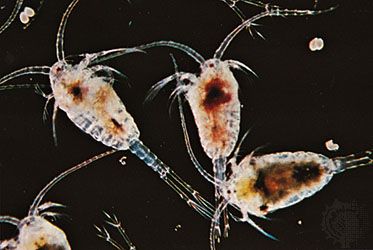
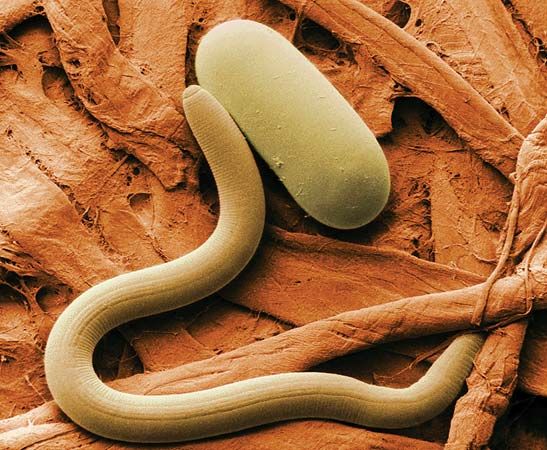
- Meiobenthos (0.1 to 1 mm): Includes organisms such as copepods, ostracodes, cumaceans, nematodes, turbellarians, and foraminiferans.
- Microbenthos (smaller than 0.1 mm): Includes bacteria, diatoms, ciliates, amoeba, and flagellates.
The composition of these communities depends on factors like substrate type, depth, and light availability. For instance, hard or sandy bottoms often support suspension feeders, while soft bottoms are typically dominated by deposit eaters like polychaetes. Predators and scavengers in these environments include fish, starfish, snails, cephalopods, and larger crustaceans.1
What methods do scientists use to measure and analyze bottom water properties?
Scientists employ a variety of specialized instruments and methodologies to measure and analyze the physical, chemical, and geological properties of bottom water and the underlying seafloor.
Physical and Chemical Analysis
To understand the movement, mixing, and density of bottom water, researchers rely on precise measurements of temperature and salinity:
- Water Sampling: The Nansen bottle is a classic device used to collect water samples at specific depths, often equipped with a reversing thermometer to record accurate temperatures.4
- Profiling Systems: Modern Conductivity-Temperature-Depth (CTD) systems provide continuous, high-precision data. These use platinum electrodes for conductivity and thermistors for temperature to determine salinity and density with high accuracy.4
- Current Measurement: Direct measurements are obtained using current meters deployed on moorings, or via drifting floats tracked acoustically. Advanced systems like the Vector Averaging Current Meter (VACM) use solid-state electronics to record flow speed and direction.5
Seafloor and Sediment Exploration
Analysis of the seafloor involves both direct sampling and remote sensing:
- Sampling Devices: Scientists use grabbing devices (snappers) for surface sediments, dredges for rock collection, and coring devices—such as piston corers—to retrieve long, undisturbed sediment records.6
- Acoustic Mapping: Techniques like Seabeam and Gloria allow for the creation of accurate, two-dimensional maps of seafloor morphology.6
- Drilling: Specialized vessels like the JOIDES Resolution enable deep-sea drilling, allowing scientists to analyze crustal structure and sediment composition through wire-line logging tools.67
How does bottom water form and what are its main characteristics?
Bottom water is the dense, lowermost layer of the ocean, characterized by distinct temperature, salinity, and oxygen levels.6
Formation
Bottom water forms primarily in polar regions during the winter through a process of thermohaline circulation. As surface water cools or experiences net evaporation, it becomes dense enough to sink. In regions like the Weddell Sea and Ross Sea near Antarctica, the partial freezing of seawater creates salt-free ice and highly saline, cold residual brine. This brine is exceptionally dense, causing it to sink to the seafloor and flow northward as Antarctic Bottom Water.61011
Characteristics
- Density: It is the densest water mass in the ocean, driven by low temperatures and high salinity.611
- Temperature: It remains near the freezing point, typically around -0.9° C to -1.9° C at its source.6
- Oxygen: It is a vital source of dissolved oxygen for benthic life, though concentrations decrease as the water travels further from its origin.6
- Movement: It flows very slowly, typically at 1 to 2 cm per second, though it can reach higher velocities along the western margins of ocean basins.6
How does the density of bottom water compare to other ocean layers?
Bottom water is the densest layer of the ocean, occupying the lowermost depths. Its density is primarily controlled by a combination of low temperatures and high salinity, which together create a water mass significantly heavier than the overlying layers.126
In the ocean’s vertical structure, water masses are organized by density, with lighter water consistently overlying denser water. The transition between these layers is often marked by the pycnocline, a boundary zone where density increases rapidly with depth. Because bottom water is the most dense, it remains at the seafloor, effectively separated from surface processes by this stable density gradient.13111012
The extreme density of bottom water, such as Antarctic Bottom Water, is generated in polar regions through the formation of sea ice. As ice forms, it excludes salt, creating a cold, highly saline residual brine that sinks to the seafloor. This process is a fundamental driver of thermohaline circulation, which continuously replaces deep ocean water with these dense, sinking surface masses.1261415
Sources
- benthos — Encyclopædia Britannica
- Marine ecosystem - Geography, oceanography, and topography — Encyclopædia Britannica
- photic zone — Encyclopædia Britannica
- undersea exploration - Collection of biological samples — Encyclopædia Britannica
- undersea exploration - Water sampling for temperature and salinity — Encyclopædia Britannica
- bottom water — Encyclopædia Britannica
- undersea exploration - Exploration of the seafloor and the Earth’s crust — Encyclopædia Britannica
- undersea exploration - Measurements of ocean currents — Encyclopædia Britannica
- undersea exploration - Platforms — Encyclopædia Britannica
- ocean current - Thermohaline circulation — Encyclopædia Britannica
- seawater - Density of seawater and pressure — Encyclopædia Britannica
- pycnocline — Encyclopædia Britannica
- thermohaline circulation — Encyclopædia Britannica
- halocline — Encyclopædia Britannica
- Indian Ocean - Hydrology — Encyclopædia Britannica
Published on · 3 min read