Anteater
Anteaters are classified as mammals because they possess the defining biological characteristics of the class Mammalia. Like all mammals, anteaters nourish…
What are the main characteristics that define anteaters as mammals?
Anteaters are classified as mammals because they possess the defining biological characteristics of the class Mammalia. Like all mammals, anteaters nourish their young with milk produced by the mother’s mammary glands.1
Beyond this primary trait, anteaters exhibit other fundamental mammalian features:
- Viviparity: They are viviparous, meaning they give birth to live young rather than laying eggs.12
- Thermoregulation: They possess the ability to regulate their internal body temperature, allowing them to adapt to various environments.1
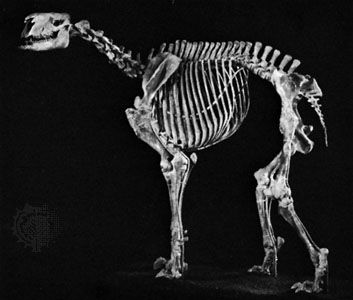
- Anatomical Structure: They share the distinct mammalian skeletal structure, including a lower jaw hinged directly to the skull and a middle ear containing three specialized bones that transmit sound.1
- Physiology: They possess a muscular diaphragm to assist in respiration and mature red blood cells that lack a nucleus.1
While anteaters are often noted for their specialized, toothless mouths and tubular muzzles used for feeding on insects, these are specific adaptations rather than the traits that define their broader classification as mammals.2
How many species of anteaters exist, and where are they typically found?
There are four recognized species of anteaters, which belong to the suborder Vermilingua. These animals are native to tropical savannas and forests ranging from southern Mexico through Central America and across much of South America, extending as far south as northern Argentina and Paraguay.2
The four species are categorized into two families:
- Family Myrmecophagidae:
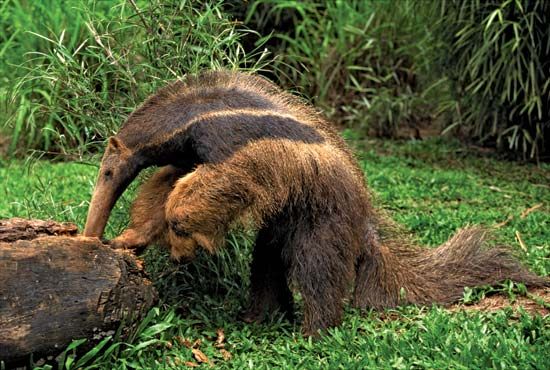
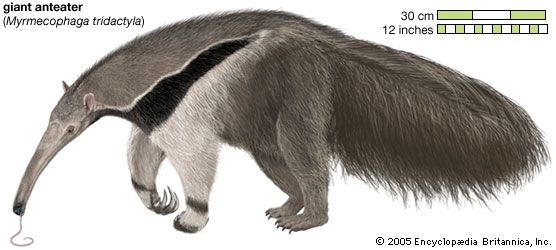
- Giant anteater (Myrmecophaga tridactyla): A ground-dwelling species found from Central America to the grasslands of Argentina.2
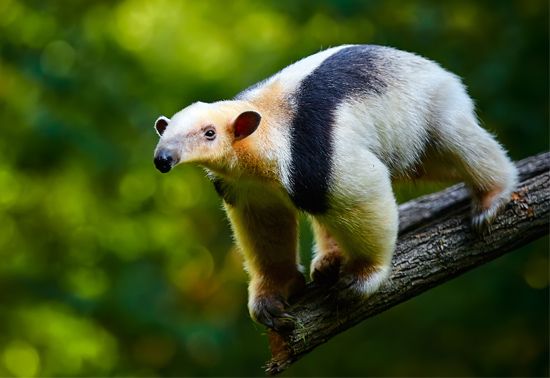
- Northern tamandua (T. mexicana): Found from eastern Mexico to northwestern South America.2
- Southern tamandua (T. tetradactyla): Found from the island of Trinidad southward to northern Argentina.2
- Family Cyclopedidae:
- Silky anteater (Cyclopes didactylus): The smallest species, which is nocturnal and arboreal, found from southern Mexico to Bolivia and Brazil.2
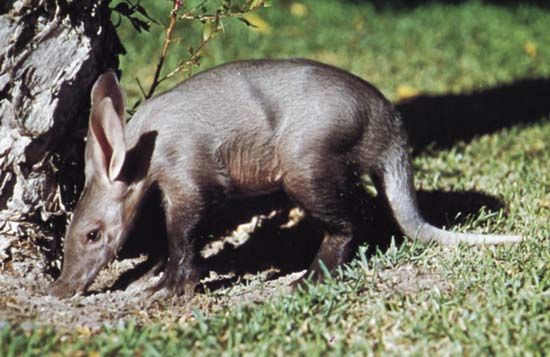
It is important to note that other animals often referred to as “anteaters,” such as the numbat, pangolin, echidna, and aardvark, are not members of the suborder Vermilingua and are not true anteaters.2
How do anteaters’ diets differ from other insectivorous mammals?
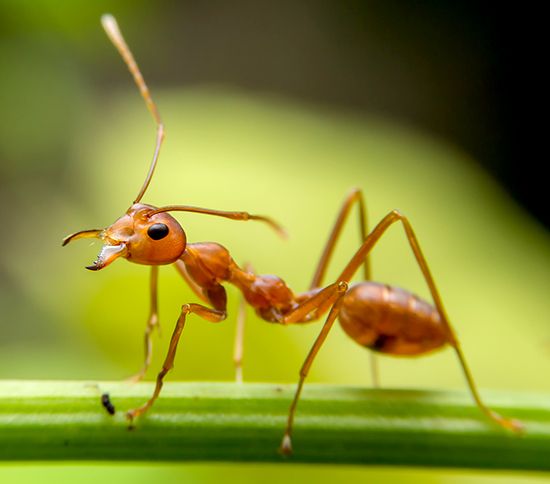
Anteaters (suborder Vermilingua) and other insectivorous mammals, such as the aardvark, pangolin, numbat, and echidna, exhibit a remarkable example of convergent evolution known as myrmecophagy, or “ant-eating.” While they share similar physical adaptations—such as elongated skulls, tubular muzzles, and wormlike, sticky tongues—their dietary strategies and behaviors differ in specific ways.234
Dietary Differences and Strategies
- Selectivity: Unlike some generalist insectivores, tamanduas are selective feeders. They consume relatively few ants from any single colony and actively avoid species that possess painful stings or bites, such as army ants.3
- Foraging Behavior: Anteaters use their powerful, curved front claws to tear open insect nests, then use their long, sticky tongues to extract prey. In contrast, the aardvark uses its keen sense of smell to track insects and its spade-like claws to rapidly excavate cement-hard termite mounds.34
- Anatomical Adaptations: While all these mammals have reduced or absent teeth, their physiological protections vary. For example, the aardvark possesses a thick hide that protects it from the bites and stings of its prey, and it can close its nostrils to prevent dust inhalation while feeding.4
What is an anteater?
An anteater is any of four species of toothless, insect-eating mammals belonging to the suborder Vermilingua. These animals are native to tropical savannas and forests ranging from southern Mexico to Paraguay and northern Argentina.2
Physically, anteaters are characterized by long tails, elongated skulls, and tubular muzzles. Because they lack teeth, they rely on large salivary glands to coat their long, wormlike tongues in sticky saliva to capture ants and termites. They use their powerful, curved front claws to tear open insect nests, which also serve as a primary means of defense.2
The suborder is divided into two families:
- Myrmecophagidae: Includes the giant anteater and the two species of tamandua.
- Cyclopedidae: Includes the silky anteater, the smallest and only strictly arboreal species.
While other animals like the aardvark, pangolin, numbat, and echidna are sometimes colloquially called “anteaters” due to their diet, they are not members of the suborder Vermilingua.2
Sources
- mammal — Encyclopædia Britannica
- anteater — Encyclopædia Britannica
- mammal - Food habits — Encyclopædia Britannica
- aardvark — Encyclopædia Britannica
- mammal - Teeth — Encyclopædia Britannica
- anteater — Merriam-Webster
Published on · 3 min read